Why is Kazakhstan rethinking its plans to join BRICS?


By Tural Heybatov
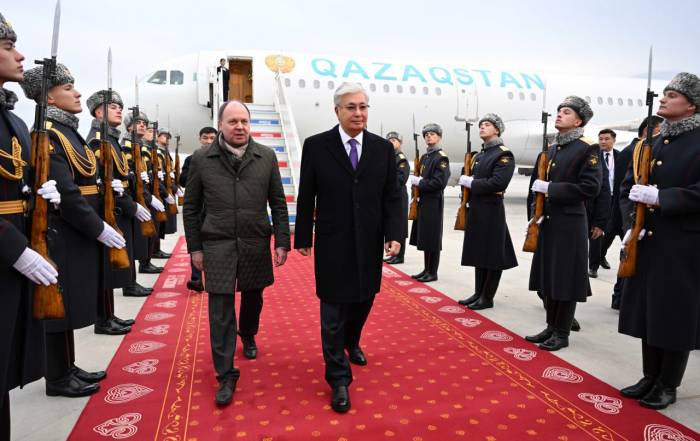
In an interview for News.Az , Magbat Spanov, an expert at the Institute of Innovative Economy and a professor at Al-Farabi Kazakh National University, shares his insights on the current state of economic cooperation between Kazakhstan and Russia, as well as the prospects for the development of Kazakhstan's energy sector. Spanov discusses Kazakhstan's involvement with BRICS, bilateral relations with Russia, and explains why the construction of new thermal power plants is so vital for the country.- President Kassym-Jomart Tokayev of Kazakhstan attended the BRICS summit in Kazan. Previously, it was noted that Kazakhstan had no plans to apply for membership in the organization. Nevertheless, the Kazakh leader has decided to participate in the event. What is the reason behind this?
- A recent statement by President Tokayev’s press secretary caused a stir in the country, as it contradicts the announcement made in August 2024 about Kazakhstan’s intention to join BRICS. When a contradictory position is presented just two months later, it raises serious questions about the reasons behind such a change. In my opinion, this reflects internal political struggles as well as significant pressure from Western countries. It is worth noting that Kazakhstan is actively selling its resources linked to rare earth metals and is searching for new gas sources. This sector is already partially controlled by American companies, naturally intensifying external pressure on the country. Moreover, Kazakhstan's budget heavily relies on the oil and gas sector, which is largely owned by Western companies, forcing Kazakhstan to navigate carefully.
I believe the press secretary's statement is primarily linked to behind-the-scenes pressure being exerted on Kazakhstan. BRICS represents a potential new center of global economic power, and Western countries, especially the G7, are watching its development with concern, understanding where it might lead. Hence, Kazakhstan likely chose this stance. However, to be honest, I think most Kazakhs did not understand the statement. Whether the country participates or not, Kazakhstan remains a sovereign state and must, first and foremost, act in its national interests. As an expert, I am convinced that national interests suggest Kazakhstan should participate in this organization, as many of our partners and allies are already operating within it. Therefore, I believe the statement was a significant mistake, as it should not have been made public.
- Numerous bilateral meetings are expected on the sidelines of the summit in Kazan. Notably, Russia and Kazakhstan maintain regular high-level contacts. How would you characterize their bilateral relations today?
- In the case of Kazakhstan and Russia, we share a very long common border. Therefore, all possible ties between our countries must be established based on this fact. Additionally, Kazakhstan is actively promoting the idea of the Middle Corridor. However, besides it, other transport routes, such as North-South, exist, and here Kazakhstan must cooperate with Russia for cargo transit across its territory. I believe there might be some misunderstandings between our countries, but everything is built on the Treaty of Eternal Friendship signed between Kazakhstan and Russia. Moreover, the relationship between Tokayev and Putin remains quite positive, allowing both sides to find common ground on many key issues.
One important aspect, often overlooked, is that it was at Tokayev's request that CSTO troops were deployed to Kazakhstan. This should also be considered in the context of our mutual relations. Therefore, even with certain issues related to the economy, customs space, or cross-border cooperation, Russia and Kazakhstan will find common ground. The governments of both countries manage to maintain dialogue, which is especially important given that Kazakhstan borders two of the largest BRICS countries — Russia and China. For us, it is crucial to have good relations with both powers, as, despite its large territory, Kazakhstan remains a sparsely populated country with a relatively modest level of economic development.
- Trade turnover between Kazakhstan and Russia from January to August 2024 amounted to $17.2 billion. Container transportation volumes from Russia to China via Kazakhstan increased by 63% this year, and along the China-Europe-China route through Russian and Kazakh territories by 65% compared to the same period in 2023. What do these figures indicate?
- Regarding trade turnover, it is evident that it will continue to grow in relations with Russia, considering that many "grey" schemes pass through Kazakhstan to supply Russia with various goods and products. Additionally, many Russian companies have moved to Kazakhstan or opened offices there to continue operations with Russia through Kazakh territory. I believe that overall, trade turnover between our countries will increase, given the interconnections and cooperation within the Eurasian Economic Union. It is important to note that by 2025, a single market for capital, labor, and other economic sectors is planned, which will further advance the development of our trade and economic relations.


Similar news