A few points on necessity of changing government’s battle formation


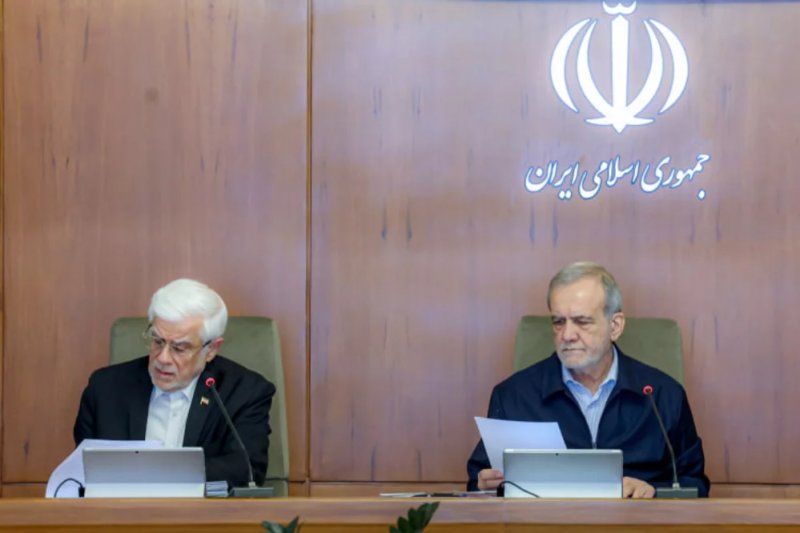
The text argues that a government structure that performed effectively during a short 40-day military conflict may not be suitable for confronting a prolonged economic siege.
It suggests that a different “battle formation” is required, adapted to what it describes as a new form of economic warfare affecting trade routes and national livelihoods, News.Az reports, citing Nour News.
It describes the current Iran–US confrontation as moving beyond simple war or negotiation into a phase of economic pressure, including restrictions on trade flows and port activity. According to the text, this situation is aimed at gradually weakening the country’s economy rather than through direct military confrontation.
RECOMMENDED STORIES
The article states that while the government previously managed to maintain relative stability in essential goods, currency, and markets during the military period, signs of instability have emerged under continued economic pressure, including rising exchange rates, gold prices, and fluctuations in housing and consumer goods.
It emphasizes that these challenges are partly driven by external pressures but also reflect a need for better structural preparedness. It calls for a redefinition of governance under these conditions, including faster decision-making, redesigned structures, and more adaptive economic strategies.
The text proposes that the government should adopt new methods such as expanding economic diplomacy with partner countries, using alternative trade mechanisms, and reducing reliance on traditional export routes. It highlights oil and agriculture as key sectors requiring strategic focus and diversification.
It also stresses the importance of combating corruption, hoarding, and inefficiency, especially under pressure conditions where such issues can intensify economic damage and weaken public trust.
Finally, it underlines the importance of managing public expectations through clear communication and consistent policy action, arguing that economic stability depends not only on numbers but also on confidence. It concludes that the current economic pressure should be treated as a serious test requiring continuous, coordinated, and innovative government action across all major institutions.
By Leyla Şirinova


Similar news