Why Google, Microsoft and xAI’s U.S. AI deal matters


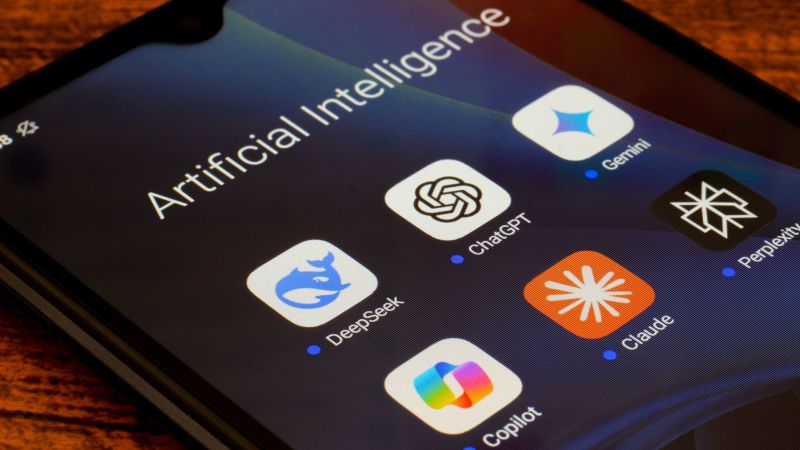
Artificial intelligence has entered a new political and technological era after reports emerged that major technology giants including Google, Microsoft and xAI agreed to allow the United States government to review advanced artificial intelligence systems before their public release.
The development immediately became one of the most discussed topics in the global technology industry and triggered widespread debate over AI safety, national security, privacy, innovation and government oversight.
RECOMMENDED STORIES
The agreement represents a major shift in the relationship between governments and private technology companies. For years, AI development was largely driven by competition between corporations racing to create increasingly powerful systems. Now governments are stepping deeper into the process as concerns grow over misinformation, cyber threats, autonomous systems and the potential misuse of highly advanced AI tools.
The announcement has sparked both optimism and fear. Supporters believe stronger oversight could reduce the risks associated with powerful AI models, while critics warn that government involvement could slow innovation, increase censorship concerns and reshape the balance of global technological power.
Below is a detailed FAQ explainer examining what this development means, why it matters and how it could affect the future of AI worldwide.
What exactly happened?
According to reports that rapidly spread across global media and technology circles, Google, Microsoft and Elon Musk’s xAI agreed to provide the U.S. government with access to review certain advanced AI systems before those systems become publicly available.
The move is reportedly designed to allow authorities to assess possible national security threats, cybersecurity vulnerabilities, misinformation risks and other dangers linked to increasingly sophisticated artificial intelligence technologies.
The agreement does not mean the government will directly control the companies’ AI products. Instead, it suggests the government will have early visibility into highly advanced models before their broader release.
This marks one of the clearest examples yet of direct cooperation between the world’s largest AI developers and state authorities.
Why is this development so important?
This moment is significant because it reflects the growing realization that artificial intelligence is no longer just another technology sector. AI is increasingly viewed as infrastructure with strategic importance similar to nuclear technology, aerospace innovation or military communications systems.
Governments around the world fear that uncontrolled AI development could create enormous risks. These concerns include:
Misinformation campaigns powered by AI
Advanced cyberattacks
Deepfake manipulation
AI assisted biological research misuse
Autonomous weapons systems
Economic disruption
Loss of human oversight
Election interference
At the same time, governments also fear falling behind rival nations in the AI race. The United States, China and the European Union are all competing to dominate the next generation of artificial intelligence technologies.
This agreement signals that Washington wants closer coordination with the companies building the world’s most powerful AI systems.
Which companies are involved?
The reported agreement involves several major players in the global AI industry.
Google has become one of the most aggressive AI developers through its Gemini models and DeepMind research division. The company is investing billions into advanced AI infrastructure and consumer AI products.
Microsoft has emerged as one of the biggest AI powerhouses thanks to its partnership with OpenAI and its rapid integration of AI tools into products such as Windows, Office and Azure cloud services.
xAI, founded by Elon Musk, is one of the newer but highly influential players in the industry. Musk has repeatedly warned about AI dangers while simultaneously investing heavily in next generation AI systems.
Although OpenAI was not always listed directly in initial reports, Microsoft’s deep involvement with OpenAI makes the connection especially important.
Why does the U.S. government want access to AI models before release?
Governments fear that advanced AI systems may become capable of actions that are difficult to predict or control.
Officials worry about several possible dangers:
AI models generating harmful biological research guidance
Mass production of misinformation
Automated cyberattacks
Manipulation of financial systems
National security vulnerabilities
Foreign influence campaigns
Potential military misuse
The government wants earlier visibility so risks can be identified before systems become widely accessible to the public or hostile actors.
This approach resembles how governments regulate industries such as aviation, pharmaceuticals and nuclear technology, where products often undergo review before release.
Does this mean AI will become regulated like nuclear technology?
Not exactly, but the comparison is becoming increasingly common.
Artificial intelligence is now viewed by many policymakers as a strategic technology capable of reshaping economies, warfare, communication and political systems.
Unlike nuclear weapons, AI is easier to distribute digitally and can spread globally within hours. That makes traditional regulation more difficult.
Still, governments are increasingly considering licensing systems, mandatory safety testing and oversight mechanisms for advanced AI models.
The latest agreement could become an early step toward a future international AI governance system.
Why are companies cooperating with the government?
Several reasons likely explain why technology firms are choosing cooperation instead of resistance.
First, companies understand that public fears about AI are growing rapidly. Cooperation with authorities may help demonstrate responsibility and reduce political backlash.
Second, firms may want to avoid stricter regulation later by showing willingness to self regulate now.
Third, national security concerns have become impossible for major tech firms to ignore. AI systems are increasingly connected to military strategy, intelligence operations and cybersecurity.
Finally, companies may believe cooperation gives them influence over how future AI regulations are designed.
Are people worried about censorship?
Yes. One of the biggest concerns surrounding government involvement in AI is the fear of censorship and excessive control.
Critics argue that allowing governments early access to AI systems could create pressure on companies to restrict politically sensitive content or shape information flows.
Some worry this could eventually lead to tighter monitoring of online conversations, AI generated media and digital communications.
Others fear that governments could use safety concerns as justification for broader surveillance powers.
The debate reflects a growing tension between technological innovation and political oversight.
Could this slow down AI innovation?
Possibly.
Supporters of rapid AI development argue that excessive government involvement could reduce competition and slow scientific breakthroughs.
They fear that mandatory reviews, licensing systems or security approvals could delay product launches and increase costs for smaller startups.
Some analysts also worry that large corporations could benefit most from regulation because smaller competitors may struggle to meet compliance requirements.
On the other hand, supporters of oversight argue that uncontrolled AI development could create catastrophic consequences if safety standards are ignored.
How does this affect the global AI race with China?
This question is central to the entire debate.
The United States sees artificial intelligence as a critical geopolitical competition area with China. Both countries are investing enormous resources into AI research, semiconductor production and military technology.
American officials worry that if U.S. companies face stricter rules while Chinese firms operate under different standards, the balance of technological power could shift.
At the same time, Washington believes closer coordination with domestic AI companies may strengthen national security and technological leadership.
China is also increasing government involvement in AI development, though through a very different political and regulatory model.
The result is an emerging global contest not only over AI capability, but also over how AI should be governed.
What are AI safety experts saying?
Many AI safety researchers support stronger oversight.
They argue that advanced AI systems are becoming so powerful that society needs safeguards before deployment.
Some experts compare current AI development to building an airplane while already flying it. They warn that companies are moving too quickly without fully understanding long term consequences.
Concerns include:
Loss of human control
Autonomous decision making
Manipulation of public opinion
AI generated disinformation
Large scale unemployment
Cybersecurity threats
Potential misuse by criminal groups
These researchers believe government review processes may reduce risks.
However, critics respond that governments themselves may misuse AI technologies, making concentrated oversight potentially dangerous.
Will ordinary users notice changes immediately?
Probably not immediately, but changes may become visible over time.
Consumers could eventually see:
More safety restrictions in AI tools
Stronger identity verification systems
Limits on certain prompts
Increased monitoring for harmful usage
Slower rollout of highly advanced features
More transparency requirements
AI products may also begin displaying clearer warnings about synthetic content, manipulated images or generated information.
Over time, AI systems could increasingly resemble regulated infrastructure rather than experimental consumer products.
How does this relate to deepfakes and misinformation?
Deepfakes are one of the biggest reasons governments are becoming more involved in AI oversight.
AI generated videos, images and voices are improving at extraordinary speed. Officials fear these tools could be used to manipulate elections, spread fake news or damage public trust.
The ability to create convincing fake audio and video content has become a major political and security concern globally.
Governments worry that future AI models may generate misinformation campaigns at massive scale with minimal human involvement.
Early review of AI systems may allow authorities to evaluate how easily models could produce dangerous synthetic media.
Could AI eventually require licenses to operate?
Some experts believe this is possible.
Future regulations could require companies developing extremely powerful AI systems to obtain government licenses or certifications before deployment.
This would resemble how pharmaceutical firms, airlines and nuclear facilities operate under regulatory oversight.
Possible future requirements may include:
Mandatory safety testing
Independent audits
Transparency reports
Cybersecurity standards
Restrictions on model capabilities
Monitoring systems
Emergency shutdown procedures
Although no universal framework currently exists, the discussion is becoming more serious every year.
How are investors reacting?
Financial markets are closely watching these developments.
Some investors believe government cooperation could increase public trust and stabilize the AI industry.
Others worry regulation may reduce profitability or slow growth.
Despite concerns, artificial intelligence remains one of the hottest investment sectors globally. Companies connected to AI infrastructure, cloud computing, semiconductors and data centers continue attracting enormous capital.
The broader market increasingly sees AI as one of the defining technologies of the century.
What role does Elon Musk play in this debate?
Elon Musk occupies a unique position in the AI discussion.
For years, Musk publicly warned about the dangers of artificial intelligence, calling it one of humanity’s greatest existential risks.
At the same time, he launched xAI to compete directly in the AI race.
Musk has repeatedly criticized what he views as irresponsible AI development while also arguing against excessive political control over technology.
His involvement reflects the contradictions shaping the modern AI landscape: companies want rapid innovation while also acknowledging potential dangers.
How does this affect privacy?
Privacy concerns are growing rapidly.
AI systems require enormous amounts of data for training and operation. As governments become more involved in oversight, many users fear expanded surveillance capabilities.
Questions include:
Who can access AI training data?
Can governments monitor AI interactions?
Will AI conversations remain private?
Could personal information be analyzed more deeply?
Technology companies insist they prioritize user privacy, but critics remain skeptical about how future oversight systems may evolve.
The tension between safety and privacy will likely become one of the defining political debates of the AI era.
What does this mean for OpenAI and ChatGPT?
Although the reports focused heavily on Google, Microsoft and xAI, OpenAI remains central to the broader AI ecosystem.
ChatGPT helped trigger the global AI explosion after demonstrating how powerful generative AI had become for mainstream users.
As governments increase oversight discussions, companies like OpenAI may face growing pressure regarding transparency, safety standards and deployment practices.
Future AI governance discussions will almost certainly involve OpenAI alongside other major players.
Are other countries likely to follow this model?
Yes.
Governments worldwide are closely monitoring how the United States handles AI regulation and oversight.
The European Union is already implementing extensive AI rules through its AI Act. Other countries including the United Kingdom, Canada and several Asian nations are also developing AI governance frameworks.
Some governments may pursue even stricter oversight than Washington.
Others may prioritize rapid innovation to attract investment and technological talent.
This could create very different global AI environments depending on region.
Could this lead to international AI treaties?
Possibly.
Many experts believe future AI governance may eventually require international agreements similar to climate treaties, nuclear non proliferation agreements or cybersecurity cooperation frameworks.
Artificial intelligence is global by nature. A powerful AI model released in one country can affect people worldwide within hours.
Future international discussions may focus on:
Military AI limitations
Deepfake regulation
Cross border data standards
AI safety testing
Cybersecurity cooperation
Ethical development rules
Whether countries can truly cooperate remains uncertain given growing geopolitical competition.
Why has this story become so widely searched?
The story combines several powerful themes that capture global attention:
Artificial intelligence
Government oversight
Big Tech power
National security
Privacy concerns
Future technology fears
Geopolitical competition
Economic disruption
People increasingly understand that AI is not just another digital tool. Many now see it as a transformative force that could reshape jobs, politics, warfare, education and daily life.
The idea that governments are moving closer to direct involvement with advanced AI systems signals that the technology has entered a new stage of importance.
What happens next?
The next phase will likely involve deeper negotiations between governments, technology companies and international organizations.
Possible developments include:
New AI safety frameworks
Expanded government review systems
Global AI standards
Industry self regulation
Increased public debate
Stronger cybersecurity rules
Transparency requirements
Election related AI restrictions
The relationship between states and AI companies will probably become one of the most important political and technological issues of the next decade.
The current agreement may ultimately be remembered as one of the first major moments when artificial intelligence stopped being viewed purely as a commercial innovation and started being treated as critical strategic infrastructure.
Final thoughts
The agreement involving Google, Microsoft and xAI reflects a turning point in the evolution of artificial intelligence. Governments are no longer standing at the sidelines watching AI development from a distance. Instead, they are moving closer to the center of decision making as concerns over security, misinformation and technological power intensify.
Supporters believe stronger oversight may reduce catastrophic risks and create safer AI systems. Critics fear increased political control, slower innovation and new threats to privacy and free expression.
What is clear is that artificial intelligence has become far more than a business competition between Silicon Valley companies. It is now deeply connected to geopolitics, national security, economics and the future structure of digital society itself.
The decisions made in the coming years about how AI is monitored, regulated and deployed may shape not only the technology industry but the future direction of global power in the twenty first century.
By Faig Mahmudov


Similar news