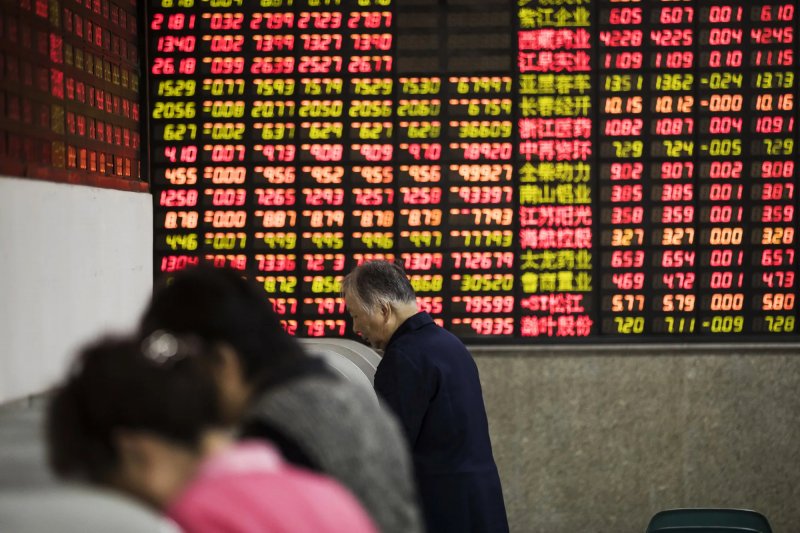
Markets in Greater China remained closed for Lunar New Year holidays, though several others resumed trading, News.Az reports, citing AP.
In Japan, the Nikkei 225 gained 0.8% to 57,582.93. South Korea’s Kospi surged 2.8% to 5,661.22 as trading reopened after earlier holidays. Australia’s S&P/ASX 200 rose 0.9% to 9,088.70.
RECOMMENDED STORIES
Across Southeast Asia, markets posted strong gains, with Thailand’s SET index climbing 0.9%. India’s BSE Sensex edged up 0.1%.
In Europe on Wednesday, London’s FTSE 100 advanced 1.2% after fresh U.K. inflation data strengthened expectations that the Bank of England could soon lower interest rates.
On Wall Street, the S&P 500 rose 0.6% to 6,881.31, while the Dow Jones Industrial Average added 0.3% to 49,662.66. The Nasdaq Composite climbed 0.8% to 22,753.63.
Nvidia rose 1.6% after Meta Platforms announced a long-term partnership to deploy millions of Nvidia chips and related equipment in its artificial intelligence data centers. Nvidia CEO Jensen Huang highlighted the scale of AI deployment at Meta, underscoring Nvidia’s central role in the AI boom. As the most valuable company on Wall Street, Nvidia’s gains had a significant impact on the broader market.
While AI development has driven optimism in U.S. equities, investors have also focused on potential risks, leading to volatility in recent weeks. Meta’s shares initially fell as much as 1.7% before rebounding to close 0.6% higher.
Concerns persist that advances in AI could disrupt industries such as software, legal services and logistics by reducing costs and undercutting traditional business models. Analysts say investors have aggressively sold shares in companies perceived as vulnerable, adopting what some describe as a “shoot first, ask questions later” approach.
Corporate earnings also supported markets. Outside the tech sector, Moderna jumped 6.1% after stating that regulators at the Food and Drug Administration would review its flu vaccine candidate after previously declining to consider it.
In the bond market, Treasury yields rose following stronger-than-expected U.S. economic data. The 10-year Treasury yield increased to 4.08% from 4.05% late Tuesday. Reports showed industrial production improved more than anticipated, while orders for computers, fabricated metal products and other durable goods — excluding aircraft and transportation equipment — also exceeded forecasts. Additionally, homebuilders began construction on more new homes in December than economists had predicted.
The solid economic data could encourage the Federal Reserve to keep interest rates steady. The Fed has paused its rate cuts, though many investors expect reductions to resume later this year, possibly during the summer after a new chair takes office.
Minutes from the Fed’s most recent meeting, released Wednesday, indicated that many officials want to see further declines in inflation before supporting additional rate cuts. While lower rates can stimulate the economy and boost asset prices, they also risk reigniting inflationary pressures.
In early Thursday trading, U.S. benchmark crude oil gained 30 cents to $65.36 per barrel, while Brent crude rose 27 cents to $70.62. Gold and silver prices remained steady, and bitcoin fell 1.3% to around $67,000.