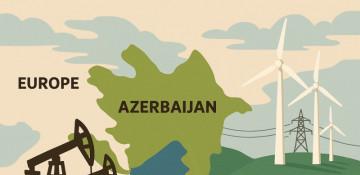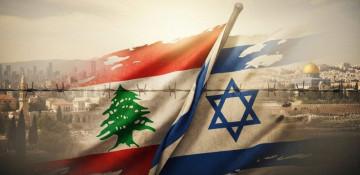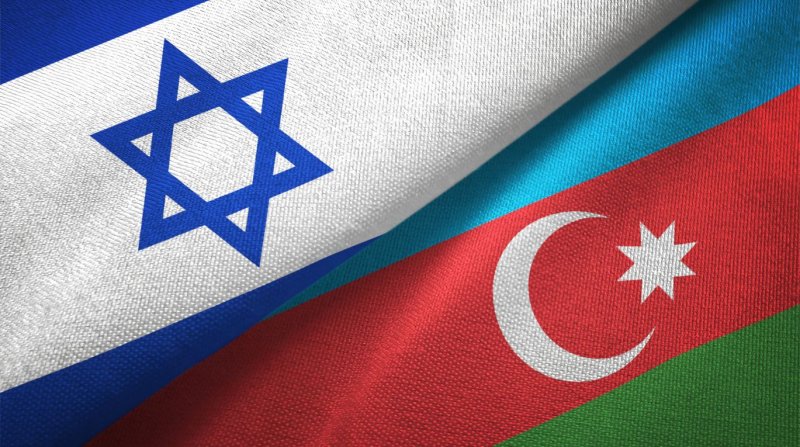
The State Oil Company of Azerbaijan (SOCAR), in line with its strategic development goals, continues to expand its production footprint abroad, particularly by implementing investment projects in exploration and production across the Mediterranean. Just a few days ago, the agreement signed in January 2025 between SOCAR and Israeli company Union Energy—regarding SOCAR’s acquisition of a 10% stake in the Tamar gas field, Israel’s second-largest natural gas project after Leviathan, located 90 km west of Haifa—was finalized, following its approval by the Israeli Ministry of Energy’s Oil and Gas Department.
According to Israeli sources, the project, with an estimated value of around $1 billion, received the green light after review and endorsement by the Antitrust Authority, including scrutiny of foreign investment implications. The same sources emphasize that this partnership represents a significant step toward enhancing the professional operation of the field, described as a "pillar of Israel's natural gas supply." They also note that the development marks "yet another stage in strengthening the strategic alliance" between Israel and Azerbaijan. As Israel's Minister of Energy, Eli Cohen, stated, “SOCAR’s entry as a partner in the Tamar field further proves Israel’s international standing and strength, its central role in the regional gas industry, and its strong ties with Azerbaijan.” (It is worth noting that Azerbaijan is Israel’s largest oil supplier.)
The Tamar field itself was discovered in 2009, and gas production began just four years later. Currently, it yields 10 billion cubic meters of gas annually, with plans to increase this figure to approximately 15 billion cubic meters in the near future.
In terms of energy cooperation, another notable development is the establishment in April 2025 of a joint venture between SOCAR and Union Energy, registered in Malta, with the aim of natural gas production. This information was released by Malta’s Competition and Consumer Affairs Authority (MCCAA).
Broadly speaking, Azerbaijan–Israel relations are progressing across nearly all sectors. In April 2025, Azerbaijan’s Ministry of Digital Development and Israel’s Ministry of Innovation, Science, and Technology signed a Memorandum of Understanding under a bilateral science cooperation program. The following month, during a meeting of the countries’ defense ministers, both sides highlighted the high level of their relations and exchanged views on the prospects for further military cooperation.
The overall spirit of Azerbaijan–Israel mutual understanding was further reflected in congratulatory messages sent to President Ilham Aliyev on Azerbaijan’s Independence Day by both Israeli President Isaac Herzog and Prime Minister Benjamin Netanyahu. Herzog described the strategic partnership with Azerbaijan as a “beacon of stability” for both Israel and the broader region, emphasizing how highly it is regarded in Israel.
For his part, Prime Minister Netanyahu pointed to the deep historical ties between the two nations, which he said have grown even stronger thanks to shared values and a robust friendship between their peoples. He noted that this partnership is built on mutual trust, goodwill, and genuine respect between their governments and societies. He also expressed particular gratitude for Azerbaijan’s role in facilitating dialogue between Israel and Türkiye, as well as its contribution to broader regional cooperation on a global scale. Netanyahu underscored that Azerbaijan has become one of Israel’s most reliable partners, with relations between the two countries now at their peak—something of great importance to both nations.
In an interview with The Jerusalem Post around the same time, Israeli Ambassador to Azerbaijan George Deek remarked that, despite all challenges, the relationship between Israel and Azerbaijan has become stronger, more strategic, and more visible. “Azerbaijan is close to everyone but dependent on no one,” he noted. “It is a prosperous country with a high quality of life for its people.” He also highlighted bilateral cooperation not only in energy but also in space and satellite technologies, innovation, and more. Of particular note, he stressed, is the fact that there has not been a single incident of antisemitism in Azerbaijan for over 800 years, and that the country is home to a thriving Jewish community. He also recalled Israel’s support for Azerbaijan during the Second Karabakh War in 2020.
Meanwhile, in his congratulatory message to President Herzog and the people of Israel on their Independence Day, President Ilham Aliyev reaffirmed Baku’s commitment to expanding cooperation with Israel, calling it a “close friend and reliable partner.”
On the Israeli–Palestinian issue, President Aliyev reiterated that Azerbaijan’s position remains unchanged. “We have always supported the two-state solution. The creation of an independent Palestinian state will put an end to this conflict,” he stated.
All of this clearly illustrates the multi-vector nature of Azerbaijan’s foreign policy. The steps taken by official Baku are guided solely by the country’s national interests—and therein lies Azerbaijan’s strength.