BlackRock and Vanguard: Who controls the global economy?


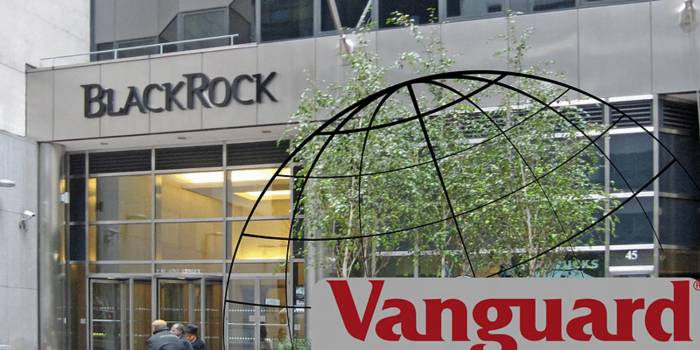
Photo: Reuters
The influence of global investment companies cannot be overstated, especially when it comes to BlackRock and Vanguard—two of the world’s largest financial institutions,News.az reports.
Together, they manage over $21 trillion in assets, a figure comparable to the GDP of leading global economies. Their decisions shape the strategic development of major corporations, national economies, and even entire regions. But how did these giants achieve such influence, and what does it mean for the future of the global economy?
BlackRock: The alchemist of finance and architect of capital
When Larry Fink and his team founded BlackRock in 1988, few could have predicted that a small risk management firm would evolve into the largest asset manager in history. Today, BlackRock oversees $11.5 trillion in assets—more than the combined GDP of Germany, the UK, and France.
The secret to BlackRock's success lies in its innovations. Its flagship platform, iShares, has made exchange-traded funds (ETFs) a staple of investment portfolios, from pension funds to central banks. But the real magic happens behind the scenes: Aladdin, a cutting-edge analytics platform, processes data and evaluates risks at lightning speed. Often referred to as the "brain" of the global market, Aladdin handles information on trillions of dollars’ worth of assets.
However, as BlackRock’s influence has grown, so have concerns. The company has aggressively acquired infrastructure assets, such as power plants, airports, and data centers, sparking fears of monopolization in strategic sectors. In 2024, BlackRock acquired Global Infrastructure Partners for $12.5 billion and Preqin for £2.5 billion, further consolidating its dominance in private equity and financial data.
Many experts are now asking: how much power is too much? The concentration of assets in a single company creates risks that could trigger a global crisis if BlackRock falters. The 2008 collapse of Lehman Brothers serves as a stark reminder of how one failure can destabilize the global economy.
Vanguard: Democracy or utopia?
If BlackRock is the diamond of financial technology, Vanguard, founded in 1975 by John Bogle, is the "people's" investment firm. Its unique ownership structure—where the company is owned by its clients through its funds—seems to position it as the antithesis of BlackRock. Vanguard manages $10.1 trillion in assets and offers low-cost index funds, which have become a market standard.
Yet Vanguard's "democracy" is more complex than it appears. While low costs and passive investing have made the market accessible to millions, passive strategies pose systemic risks. In times of market crises, all investors relying on passive funds are equally vulnerable, lacking the flexibility of actively managed portfolios.
In 2024, Vanguard made a surprising move by appointing Salim Ramji, a former BlackRock executive, as its CEO. This decision sparked debates: is it a partnership or rivalry? Perhaps it marks the beginning of a new era, where the two giants converge in their strategies.
Power concentrated in two titans
Together, BlackRock and Vanguard control nearly 10% of global assets. Their influence extends far beyond financial markets—they hold significant stakes in leading corporations like Apple, Microsoft, Amazon, and Tesla. Their voting power at shareholder meetings shapes the direction of technology, sustainable energy, and global trade.
Their reach also extends to public policy. These firms finance national infrastructure projects, including renewable energy transitions. They influence geopolitics through investments in countries participating in the Belt and Road Initiative and by holding substantial shares of U.S. and EU government bonds.
The price of capital concentration
Such asset concentration raises serious questions. If BlackRock and Vanguard jointly control a significant portion of global capital, does this effectively make them the de facto regulators of the global economy? Who decides how trillions of dollars are allocated? Most importantly, do their strategies align with societal interests?
The COVID-19 pandemic and the war in Ukraine have highlighted how quickly financial markets can shift under global pressures. In such conditions, the monopolization of financial resources adds stress to the stability of the global economy.
A future dominated by titans?
BlackRock and Vanguard have long outgrown the label of financial firms. They are now symbols of power, shaping the global economy. Yet their ambitions could either drive progress or become a source of instability.
When two giants manage assets exceeding the budgets of nations, the world needs greater transparency. As their influence continues to grow, society remains at the mercy of their decisions. The ultimate question is: will they use their immense power for the betterment of humanity, or will their potential missteps lead to the next global crisis?
Together, they manage over $21 trillion in assets, a figure comparable to the GDP of leading global economies. Their decisions shape the strategic development of major corporations, national economies, and even entire regions. But how did these giants achieve such influence, and what does it mean for the future of the global economy?
BlackRock: The alchemist of finance and architect of capital
When Larry Fink and his team founded BlackRock in 1988, few could have predicted that a small risk management firm would evolve into the largest asset manager in history. Today, BlackRock oversees $11.5 trillion in assets—more than the combined GDP of Germany, the UK, and France.
The secret to BlackRock's success lies in its innovations. Its flagship platform, iShares, has made exchange-traded funds (ETFs) a staple of investment portfolios, from pension funds to central banks. But the real magic happens behind the scenes: Aladdin, a cutting-edge analytics platform, processes data and evaluates risks at lightning speed. Often referred to as the "brain" of the global market, Aladdin handles information on trillions of dollars’ worth of assets.
However, as BlackRock’s influence has grown, so have concerns. The company has aggressively acquired infrastructure assets, such as power plants, airports, and data centers, sparking fears of monopolization in strategic sectors. In 2024, BlackRock acquired Global Infrastructure Partners for $12.5 billion and Preqin for £2.5 billion, further consolidating its dominance in private equity and financial data.
Many experts are now asking: how much power is too much? The concentration of assets in a single company creates risks that could trigger a global crisis if BlackRock falters. The 2008 collapse of Lehman Brothers serves as a stark reminder of how one failure can destabilize the global economy.
Vanguard: Democracy or utopia?
If BlackRock is the diamond of financial technology, Vanguard, founded in 1975 by John Bogle, is the "people's" investment firm. Its unique ownership structure—where the company is owned by its clients through its funds—seems to position it as the antithesis of BlackRock. Vanguard manages $10.1 trillion in assets and offers low-cost index funds, which have become a market standard.
Yet Vanguard's "democracy" is more complex than it appears. While low costs and passive investing have made the market accessible to millions, passive strategies pose systemic risks. In times of market crises, all investors relying on passive funds are equally vulnerable, lacking the flexibility of actively managed portfolios.
In 2024, Vanguard made a surprising move by appointing Salim Ramji, a former BlackRock executive, as its CEO. This decision sparked debates: is it a partnership or rivalry? Perhaps it marks the beginning of a new era, where the two giants converge in their strategies.
Power concentrated in two titans
Together, BlackRock and Vanguard control nearly 10% of global assets. Their influence extends far beyond financial markets—they hold significant stakes in leading corporations like Apple, Microsoft, Amazon, and Tesla. Their voting power at shareholder meetings shapes the direction of technology, sustainable energy, and global trade.
Their reach also extends to public policy. These firms finance national infrastructure projects, including renewable energy transitions. They influence geopolitics through investments in countries participating in the Belt and Road Initiative and by holding substantial shares of U.S. and EU government bonds.
The price of capital concentration
Such asset concentration raises serious questions. If BlackRock and Vanguard jointly control a significant portion of global capital, does this effectively make them the de facto regulators of the global economy? Who decides how trillions of dollars are allocated? Most importantly, do their strategies align with societal interests?
The COVID-19 pandemic and the war in Ukraine have highlighted how quickly financial markets can shift under global pressures. In such conditions, the monopolization of financial resources adds stress to the stability of the global economy.
A future dominated by titans?
BlackRock and Vanguard have long outgrown the label of financial firms. They are now symbols of power, shaping the global economy. Yet their ambitions could either drive progress or become a source of instability.
When two giants manage assets exceeding the budgets of nations, the world needs greater transparency. As their influence continues to grow, society remains at the mercy of their decisions. The ultimate question is: will they use their immense power for the betterment of humanity, or will their potential missteps lead to the next global crisis?


Similar news