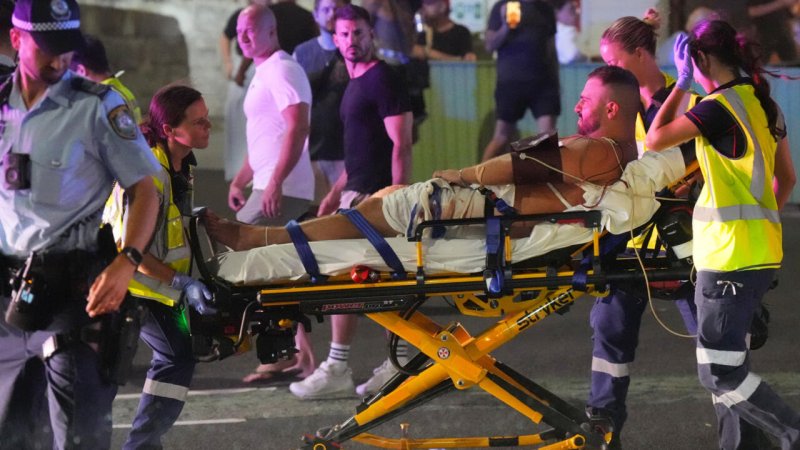
Australia is in mourning following a devastating mass shooting at a Jewish festival held at Bondi Beach on Sunday evening, December 14, 2025, in an incident authorities have formally classified as a terrorist attack motivated by antisemitism. At least 15 people were killed and dozens more injured, making the attack one of the deadliest acts of mass violence in the country in decades.
The shooting occurred during a public Hanukkah celebration known as “Chanukah by the sea”, a community event attended by hundreds of families, children, tourists and local residents. The gathering was taking place at Archer Park, adjacent to Bondi Beach, a location typically associated with leisure and large public crowds. Gunfire erupted in the early evening, turning the festive atmosphere into scenes of panic and chaos within moments.
According to police, the attack began shortly before 6:45 p.m. local time. Witnesses described hearing rapid gunshots followed by screams as people ran for cover. Parents attempted to shield children, while others fled toward nearby streets, shops and parked vehicles. Emergency services were alerted within minutes, prompting a large-scale response involving police, paramedics and fire crews.
Death toll and injuries
Authorities confirmed that at least 15 civilians were killed in the attack. The victims included men, women and children, with ages ranging from young minors to elderly members of the community. Several of those killed were actively involved in organizing or supporting the festival, which had been intended as a peaceful cultural and religious gathering marking the beginning of Hanukkah.
More than 40 people were injured, many suffering gunshot wounds and shrapnel injuries. At least two police officers were among the wounded after engaging with the attackers during the initial response. Several victims remained in critical condition in the hospital in the days following the shooting, with medical teams working around the clock to stabilize patients and perform emergency surgeries.
Hospitals across Sydney activated mass casualty protocols, diverting resources and staff to handle the influx of injured individuals. Family members gathered at emergency departments seeking information about loved ones, while authorities worked to identify victims and notify next of kin.
Suspects and police response
Police identified two attackers, described as a father and his adult son. During a confrontation with officers at the scene, the older suspect was shot and killed by police. The younger suspect sustained gunshot wounds and was taken into custody in critical condition. Authorities stated that the surviving suspect remains under police guard while receiving medical treatment.
Investigators revealed that the elder suspect held a valid firearms licence and legally owned multiple weapons, raising immediate questions about firearm licensing processes and oversight. Police recovered several firearms at the scene and from locations linked to the suspects.
Bomb disposal units were later deployed after improvised explosive devices were discovered in a vehicle associated with one of the attackers. The devices were safely removed and rendered inactive. Officials said the discovery indicated a high level of planning and the potential for even greater loss of life had the devices been used.
The incident was formally declared a terrorist act based on the targeting of a Jewish religious event, the presence of multiple weapons, and the discovery of explosive materials. Counterterrorism units were brought into the investigation, which remains ongoing.
Eyewitness accounts and civilian bravery
Eyewitnesses described scenes of fear and confusion as the attack unfolded. Video footage captured people running in all directions, dropping belongings and seeking shelter wherever possible. Some individuals hid behind cars, while others fled into nearby buildings or toward the beach.
Amid the chaos, one bystander was widely praised for intervening during the attack. The man tackled and disarmed one of the gunmen, an act that authorities believe prevented further casualties. Despite being injured in the process, his actions were credited with saving lives. Public figures and community leaders later hailed the intervention as an example of extraordinary courage under extreme circumstances.
Political reactions and national leadership
Australian Prime Minister Anthony Albanese condemned the shooting in strong terms, describing it as an act of pure evil and antisemitic terrorism that struck at the core of the nation’s values. He offered condolences to the families of the victims and pledged full federal support for the investigation and recovery efforts.
The Premier of New South Wales, Chris Minns, echoed those sentiments, stating that the attack was aimed at terrorizing a specific community and undermining social cohesion. He assured residents that authorities would take all necessary steps to ensure public safety and bring those responsible to justice.
In the aftermath of the attack, the federal government signaled its intention to review firearm regulations and licensing procedures. Officials indicated that potential reforms could include stricter background checks, limits on the number of firearms an individual can own, and more frequent reviews of license holders’ eligibility.
National security and antisemitism concerns
The Bondi Beach shooting has intensified debate about rising antisemitism and hate-motivated violence in Australia. Community organizations have reported an increase in antisemitic incidents in recent years, including harassment, vandalism and threats. Leaders from the Jewish community expressed deep concern that the attack represents an escalation from rhetoric and intimidation to mass violence.
Faith leaders and representatives from other religious and cultural groups joined in condemning the attack, calling for unity and solidarity. Many emphasized that Australia’s multicultural society depends on mutual respect and the protection of all communities from hatred and violence.
Security experts noted that while mass shootings remain rare in Australia, the incident highlights the evolving nature of domestic security threats. Analysts stressed the importance of intelligence sharing, early identification of radicalization, and strong engagement between law enforcement and communities to prevent future attacks.
International reactions and solidarity
Condemnation of the attack came from governments and leaders around the world. Messages of sympathy and solidarity were sent to australia and to jewish communities globally. Many leaders described the shooting as an attack on religious freedom and human dignity, emphasizing that violence against any group is unacceptable.
Jewish organizations internationally expressed grief and alarm, urging governments to strengthen protections for religious and cultural events. Support networks mobilized to provide assistance to victims’ families, including counselling, financial aid and community outreach.
Community impact and memorials
In Sydney, spontaneous memorials emerged at Bondi Beach and at synagogues across the city. Flowers, candles and handwritten messages were placed in memory of those killed. Vigils drew large crowds, with people from diverse backgrounds gathering to mourn and to express solidarity with the jewish community.
Schools, community centers and local governments offered psychological support services to those affected by the attack. Mental health professionals warned that the trauma of witnessing or experiencing such violence could have long-lasting effects, particularly on children and first responders.
Families of the victims spoke of profound loss and heartbreak, while also calling for resilience and unity. Several relatives urged authorities to ensure that lessons are learned from the tragedy to prevent similar attacks in the future.
Broader implications and debates
The shooting has reignited national discussions about gun control, despite australia’s reputation for strict firearm laws. Critics argue that existing regulations may contain loopholes that allow individuals to amass multiple weapons without sufficient scrutiny. Government officials acknowledged that the tragedy has exposed potential weaknesses that require urgent attention.
Beyond firearms policy, the attack has raised broader questions about how societies confront extremism, hate speech and polarization. Commentators noted that preventing violence requires not only law enforcement measures but also education, dialogue and community engagement.
Ongoing investigations
Police continue to investigate the background and motives of the attackers, including whether they acted alone or were influenced by extremist ideologies or networks. Forensic teams are examining weapons, digital devices and other evidence collected during raids and searches.
The surviving suspect is expected to face multiple serious charges once medically fit, including terrorism-related offenses and murder. Authorities have stated that no further immediate threats have been identified, but security remains heightened at public gatherings and religious sites nationwide.
Conclusion
The Bondi Beach shooting of December 14, 2025, has left an indelible mark on Australia. What began as a joyful celebration of faith and community ended in one of the country’s most tragic acts of mass violence. As investigations continue and the nation mourns, the attack has sparked urgent reflection on security, tolerance and the responsibility to protect all communities from hatred and terror.