Changan vs BYD: how two Chinese automakers are redefining the global car market


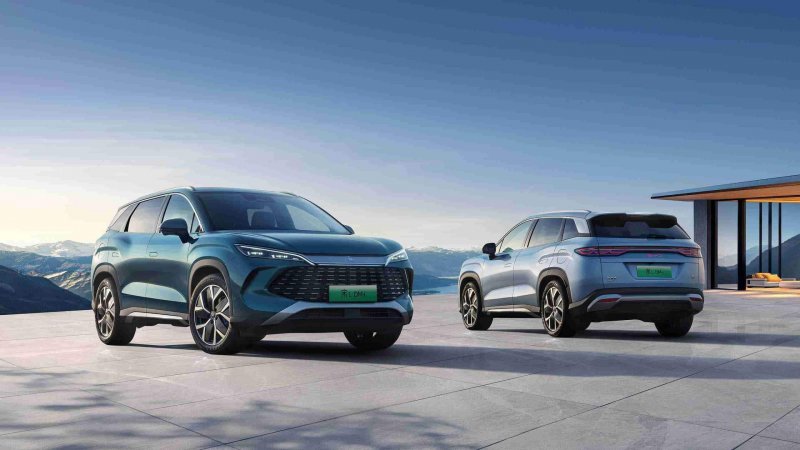
Chinese carmakers are no longer niche players in the global auto industry.
Over the past decade, they have expanded production, sharpened design quality, and invested heavily in electrification. Two names now stand out at the center of this shift: Changan Automobile and BYD. Both companies are growing rapidly in international markets, yet they are doing so with different strategies, product portfolios, and technology focuses.
Changan is one of China’s oldest automotive groups, with roots tracing back more than a century. Today, it operates as a major state-owned manufacturer producing a wide range of sedans, SUVs, and new-energy vehicles. The company built its reputation on reliable mass-market cars and long-standing joint ventures with global brands such as Ford and Mazda. This background helped Changan refine engineering quality and establish a strong manufacturing base.
BYD arrived in the automotive sector much later. Founded in the 1990s as a battery maker, the company entered vehicle production in 2003 and rapidly pivoted toward electrification. That early focus on electric and hybrid systems transformed BYD into one of the world’s largest producers of new-energy vehicles. Its vertically integrated business model allows the company to build key components in-house, from batteries and power units to semiconductors.
As both firms expand globally, analysts say the Changan–BYD comparison reflects a broader change in the industry. Traditional automakers are balancing conventional engines with electrification, while newer entrants are moving directly into electric mobility.
Different strategies in electrification
The clearest contrast between the two brands lies in their powertrain strategies. BYD has largely phased out conventional petrol-only models, concentrating instead on plug-in hybrids and fully electric vehicles. Its hybrid system, marketed under the DM-i label, prioritizes electric-first driving, with the petrol engine acting mainly as a support unit. This design can significantly reduce fuel consumption for daily commuters.
BYD has also invested heavily in battery research. The company’s Blade Battery technology is designed to deliver high safety levels and long-term durability. By maintaining control over battery production, BYD can reduce dependence on outside suppliers and keep costs competitive.
Changan has taken a more balanced route. While conventional internal combustion models remain a major part of its lineup, the company is expanding rapidly into new-energy vehicles. Its Deepal (Shenlan) brand focuses specifically on electric and hybrid cars as Changan accelerates its transition toward cleaner transport.
Market observers note that Changan’s dual-track approach allows it to retain strong demand among customers who still prefer petrol vehicles, while gradually building expertise in electrified technologies.
Competition in the SUV and sedan segments
The rivalry between the two automakers is most visible in popular mid-size sedan and SUV categories. Models such as the BYD Qin Plus and Changan Eado target value-driven family buyers, while SUVs including the Changan CS75 Plus and BYD Song Plus compete directly in the crossover market.
Changan vehicles are often positioned as comfort-oriented, with emphasis on quiet cabins, soft-touch interiors, and traditional driving dynamics. This makes them attractive to buyers transitioning from older petrol vehicles or those seeking practicality at an affordable price point.
BYD models, in contrast, are typically presented as technology-forward. Rotating infotainment screens, advanced battery displays, and software-centered control systems give many of its vehicles a distinctly modern feel. Electric torque also provides smoother acceleration compared with conventional petrol engines.
Growing global presence
Both companies are now selling vehicles far beyond the Chinese domestic market. BYD has expanded aggressively in Europe, Latin America, Southeast Asia, and the Middle East. It has also begun establishing local manufacturing bases in several overseas markets, reducing logistics costs and increasing brand trust.
Changan is also strengthening its overseas footprint, particularly in developing markets where price sensitivity remains high. Its petrol lineup gives it a competitive advantage in regions where electric-vehicle charging infrastructure is still limited.
Analysts point out that brand-building remains an important challenge. While both automakers have made strong gains, some international consumers still perceive Chinese brands primarily as cost-driven alternatives. Sustaining growth will require long-term after-sales support and proven reliability records in multiple regions.
Technology and innovation race
Software and smart-vehicle technology are now decisive factors in automotive competition. Both Changan and BYD are investing in artificial-intelligence-based driver assistance systems, connected-car ecosystems, and over-the-air update capabilities.
Chinese consumers increasingly view cars as digital products as much as physical machines. Navigation systems, voice assistants, personalized user settings, and in-car connectivity are critical selling points. This technological trend is now spreading to other markets where both brands operate.
Economic and environmental implications
The rise of Changan and BYD reflects China’s strategic push to become a leader in clean-energy manufacturing. BYD’s rapid electrification growth supports national environmental objectives, while Changan’s hybrid and efficiency-focused programs are moving in the same direction.
At the same time, price pressure remains intense. China’s domestic market is one of the most competitive in the world, with dozens of automakers fighting for share. This environment pushes both Changan and BYD to innovate quickly while maintaining cost discipline.
What it means for consumers
For buyers comparing the two brands, the decision often comes down to power preference and technology priorities. Customers focused on fuel savings and electrified driving are more likely to choose BYD, particularly given its experience in battery systems. Those seeking affordable petrol or mixed-power models with strong comfort features may find Changan appealing.
Industry analysts agree on one point: the competition between the two automakers benefits consumers by expanding choice and pushing innovation.
Looking ahead
The future direction of the Changan–BYD rivalry will be shaped by four key factors: technology leadership, cost control, brand development, and global expansion. Both companies are investing heavily in research, international production capacity, and next-generation vehicle platforms.
As governments worldwide tighten emissions rules and promote cleaner mobility, the influence of Chinese automakers is expected to grow further. In that landscape, Changan and BYD are likely to remain central players, each advancing along its distinct strategic path.
Their competition marks a new phase in the evolution of the global automotive industry, where electrification, software, and affordability increasingly define success.


Similar news