China and US reinitiate high-level military dialogues


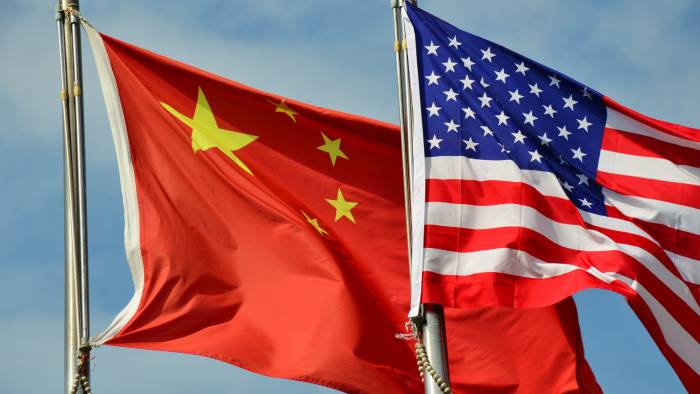
The United States and China are taking steps to resume top-level military-to-military communication, which analysts say is aimed at avoiding miscommunication and preventing tensions in the Indo-Pacific region from spiraling out of control.
The Chinese defense ministry said the two commanders had an “in-depth exchange of views on issues of common concern” while Paparo urged the Chinese military “to reconsider its use of dangerous, coercive and potentially escalatory tactics in the South China Sea and beyond.”
On Thursday, the Financial Times and The Wall Street Journal reported that Wu is expected to attend a defense conference held by the U.S. Indo-Pacific Command in Hawaii next week, citing anonymous U.S. defense officials.
Meanwhile, Michael Chase, the U.S. assistant secretary of defense for China, Taiwan and Mongolia, is holding defense policy coordination talks with Chinese defense officials while attending the annual Xiangshan Security Dialogue held in Beijing.
The U.S. delegation led by Chase will “engage with regional allies and partners on the sidelines of the Xiangshan Forum to underscore the United States' shared vision for the region ‘underpinned by a set of enduring beliefs,’” said the U.S. Department of Defense in a readout released Thursday.
The Biden administration has been working to restore communication between Chinese and American militaries since the U.S. president’s meeting with Chinese President Xi Jinping on the sidelines of the APEC Summit in California last November.
It also follows the first meeting between U.S. national security adviser Jake Sullivan and China’s vice chairman of the Central Military Commission, Zhang Youxia, last month.
During that meeting, Zhang said maintaining military security is “in line with the common interests of both sides” and Sullivan highlighted the two nations’ shared responsibility to “prevent competition from veering into conflict or confrontation.”
Some analysts see a potential for further communication and engagement between the two militaries.
“I won’t rule out the possibilities that Beijing and Washington may look to establish a hotline between the two militaries, and whether that mechanism could be extended to the theater command level remains to be seen,” Lin Ying-Yu, a military expert at Tamkang University in Taiwan, told VOA by phone.
While the resumption of top-level communication allows Beijing and Washington to avoid miscalculations, other experts say it is unclear whether China and the U.S. can establish a more sustainable mechanism to cope with potential crises.
“While having contact and knowing your interlocutors are positive things during non-crisis times, the real test is whether these contacts can hold back any unintended escalation when incidents happen,” said Ian Chong, a political scientist at the National University of Singapore.
Chong said since theater commanders from the U.S. and China oversee implementing rather than formulating policies, it is unclear whether the latest development can become established protocols.
“If there’s a persistence of [maintaining military-to-military communication], then it would suggest that it has become a policy,” he told VOA by phone.


Similar news