Education under pressure: how future skills, system reform reshaping societies


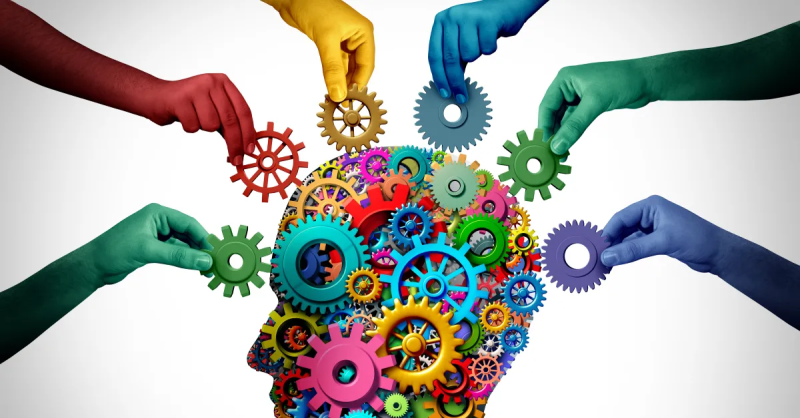
Education systems around the world are facing a structural stress test, News.Az reports.
Long regarded as stable institutions that evolve slowly over generations, schools and universities are now under pressure to adapt at unprecedented speed. Technological change, labor market disruption, demographic shifts, and social inequality have exposed deep gaps between what education systems deliver and what societies increasingly require.
As a result, education is no longer discussed solely as a social service or cultural investment. It has become a strategic issue tied directly to economic competitiveness, social cohesion, and national resilience.
From knowledge transmission to skills formation
For much of the twentieth century, education systems were designed around the transmission of standardized knowledge. Curricula emphasized memorization, discipline-based learning, and uniform assessment. This model matched industrial-era labor markets that valued routine skills and predictable career paths.
Today, that alignment has weakened. Employers increasingly prioritize adaptability, problem-solving, digital literacy, and communication over static knowledge. The ability to learn continuously has become more important than mastery of a single field.
Organizations such as OECD have repeatedly highlighted the growing mismatch between education outcomes and labor market needs. This gap is not limited to developing economies; it is visible across advanced education systems as well.
The future skills debate
The concept of “future skills” has become central to education policy discussions. While definitions vary, there is broad consensus around several core competencies: critical thinking, digital skills, creativity, collaboration, and emotional intelligence.
At the same time, technical skills linked to science, technology, engineering, and mathematics remain essential. However, even these fields are changing rapidly, requiring frequent re-skilling rather than one-time qualification.
This has challenged traditional education models that front-load learning early in life and assume stable knowledge over decades. Lifelong learning is no longer a slogan; it is becoming an economic necessity.
Digitalization and the transformation of learning
Digital technologies have transformed how knowledge is accessed and delivered. Online platforms, hybrid classrooms, and digital assessment tools have expanded educational reach and flexibility.
Yet digitalization has also exposed inequalities. Students without reliable internet access, devices, or digital literacy are at risk of falling behind. The digital divide in education mirrors broader socio-economic divides and, in some cases, amplifies them.
Institutions such as UNESCO warn that technology alone does not improve learning outcomes. Effective digital education requires teacher training, pedagogical adaptation, and supportive infrastructure.
Teachers at the center of reform
Despite technological change, teachers remain the most critical factor in education quality. However, teaching professions worldwide face declining prestige, workload pressure, and skill demands that exceed traditional training.
Teachers are now expected to manage diverse classrooms, integrate technology, support students’ mental well-being, and adapt curricula continuously. In many systems, compensation and professional development have not kept pace with these expectations.
As a result, teacher shortages and burnout are emerging as systemic risks. Education reform without sustained investment in teachers risks failure regardless of curriculum design or technology adoption.
Assessment, testing, and the limits of standardization
Standardized testing has long been a cornerstone of education systems, offering comparability and accountability. However, critics argue that excessive reliance on exams narrows curricula, encourages rote learning, and increases stress.
Future-oriented skills such as creativity, collaboration, and ethical reasoning are difficult to measure through traditional testing. This has sparked experimentation with alternative assessment models, including project-based learning, portfolio evaluation, and competency-based frameworks.
Balancing accountability with flexibility remains one of the most complex challenges in education reform.
Higher education and the changing value of degrees
Universities are also under pressure to redefine their role. Once seen as guaranteed pathways to upward mobility, higher education degrees no longer offer uniform returns in labor markets saturated with graduates.
Employers increasingly question whether degrees reliably signal job-ready skills. At the same time, rising tuition costs have intensified debates about affordability, student debt, and access.
This has driven interest in alternative pathways, including vocational education, micro-credentials, and industry-linked training programs. The future of higher education may lie in modular, flexible learning rather than fixed degree structures.
Vocational education and skills recognition
Vocational education and training, long undervalued in many societies, is regaining attention. Well-designed vocational systems offer direct alignment with labor market needs and faster transitions into employment.
Countries with strong vocational pathways often demonstrate lower youth unemployment and smoother school-to-work transitions. However, social perceptions continue to favor academic routes, limiting vocational education’s appeal.
Reframing vocational skills as high-value competencies rather than secondary options is essential for balanced workforce development.
Education inequality and social mobility
Education remains one of the most powerful tools for social mobility, yet inequalities persist and, in some cases, deepen. Family income, geographic location, and parental education strongly influence learning outcomes.
Early childhood education gaps often compound over time, making later interventions less effective and more costly. Addressing inequality requires targeted support, inclusive policies, and sustained investment rather than short-term reforms.
Failure to tackle education inequality risks entrenching social divisions and undermining trust in public institutions.
Mental health and student well-being
Student well-being has emerged as a central education concern. Academic pressure, digital exposure, and uncertain futures contribute to rising stress and anxiety among students.
Education systems increasingly recognize that learning outcomes are inseparable from mental health. Schools are expected to provide not only instruction but also emotional support and safe environments.
Integrating well-being into education policy requires coordination across health, social services, and education authorities.
Demographics and the future classroom
Demographic change is reshaping education systems in divergent ways. Aging societies face shrinking student populations and workforce shortages, while younger regions struggle with overcrowded classrooms and limited resources.
Migration adds complexity, introducing linguistic diversity and integration challenges. Education systems must balance inclusivity with standards, often under tight fiscal constraints.
Demographics underscore the need for adaptable, context-specific education policies rather than one-size-fits-all models.
Education as a strategic investment
Governments increasingly frame education as a long-term strategic investment rather than a budgetary cost. Human capital development is now central to economic planning, innovation strategies, and national competitiveness.
However, returns on education investment are not immediate. This creates tension between political cycles and long-term reform needs. Sustainable education policy requires continuity, evidence-based decision-making, and broad societal consensus.
Conclusion: learning systems for an uncertain future
Education systems stand at a crossroads. The pressures they face are structural, not temporary. Incremental adjustments may no longer be sufficient to meet the demands of rapidly changing societies and economies.
The challenge is not merely to modernize curricula or adopt new technologies, but to redesign learning systems around adaptability, equity, and lifelong development. Education must prepare individuals not for a single career, but for continuous change.
In an era of uncertainty, resilient education systems will be those that invest in people, empower teachers, and align learning with both human potential and societal needs.


Similar news