EU has rediscovered importance of Central Asia, says Kazakhstan’s deputy FM


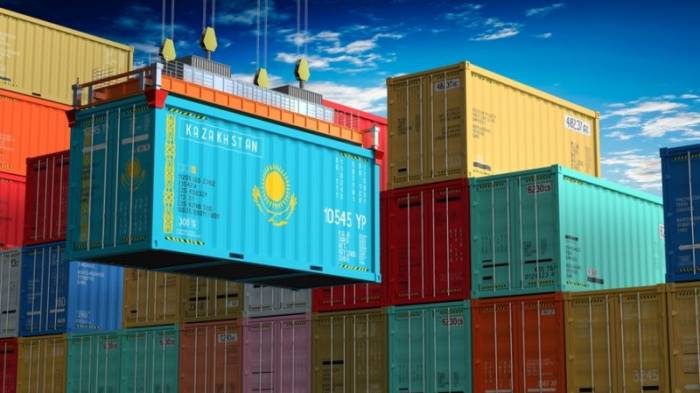
European capitals have “rediscovered” the importance of Central Asia with greater clarity, said Kazakhstan’s Deputy Foreign Minister Roman Vassilenko.
Speaking at a press briefing in Astana on 5 October, Vassilenko told Euractiv that regarding the outlook of Kazakhstan-EU relations in the next five years, with a new European Commission, his expectations are for a commitment to continue “in the same spirit”.“There is a clear focus of top-level government officials and business leaders in developing relations with Kazakhstan and the wider region,” Vassilenko remarked, emphasising the intense exchange of high-level visits, especially in the past two years.
Recently, Kazakhstan has received French President Emmanuel Macron, German Chancellor Olaf Scholz, Federal President Frank-Walter Steinmeier, and numerous other European officials.
Vassilenko did not shy from addressing the two biggest elephants in the room, China and Russia - arguing that these high-level visits send a powerful message to Beijing and Moscow, currently the more present actors in the Central Asian region.
Much to offer to the EU
According to the deputy foreign minister, the EU is seeing areas of cooperation with Kazakhstan, especially in the development of critical raw materials, a market mostly dominated by China.
“To European partners, we say - we welcome all your investments and technologies in exchange for access to these resources. We don’t simply need the money; we also want some processing to be based here so that we export more added value goods.”
Vassilenko said both sides are yet to deliver a formal EU-Central Asia summit to upgrade bilateral relations. “This is not just for the sake of having a summit; it is going to be a strong message that the EU and Central Asia are working together,” he added.
Growing bilateral trade
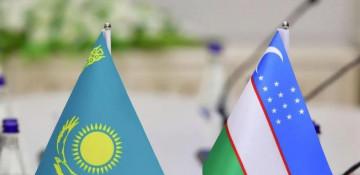
Of the five Central Asian countries, Kazakhstan has the closest relations with the EU, governed by the Enhanced Partnership and Cooperation Agreement (EPCA), which entered into force in 2020.
The bloc’s trade in goods with Kazakhstan totalled €42.4 billion in 2023. EU exports were worth €12.1 billion, and imports from Kazakhstan reached €30.3 billion. The trade balance was €18.2 billion in favour of Kazakhstan.
Exports from Kazakhstan to the EU are dominated by mineral products, while EU exports to Kazakhstan are more diverse, including machinery and transport equipment, chemical products, metals, plastics, and textiles.
A shifting international system
EU stakes in Central Asia, a region the union has kept at a distance, are increasing. In a move opposed by the Kremlin, Kazakhstan offered to provide oil to the EU, indicating a trend that finds the country increasingly looking toward the EU for partnership.
Although Kazakhstan is one of Russia’s key partners, it has refrained from supporting the Kremlin during the 2008 war with Georgia or Russia’s initial invasion of Ukraine in 2014, a trend also to be noted during the full-scale invasion of Ukraine.
It is something the European Parliament encourages, and the EU seeks to capitalise on by intensifying its engagement in the region at a time when Moscow’s influence is weakening due to the war with Ukraine and the concentration of troops at the front.
Despite being far from a total reorientation towards the West, Kazakhstan has an increasing number of projects with the EU, such as the Middle Corridor and the agreement on green hydrogen, an indicator of closer cooperation with Europe.
What the EU offers
The EU’s priorities in Central Asia are connectivity, security, and geopolitics, which align with the region’s own goals. To enhance its influence, the EU must increase efforts, offering a positive alternative to regional powers and maintaining its image as a benign actor.
Russia’s war in Ukraine has reoriented EU-Central Asia relations, emphasising the importance of ‘connectivity’ between the regions and opening up new spaces for dialogue and cooperation in a lot of areas beyond energy.
The EU has scope to support Kazakhstan with the development of its clean industry locally, facilitating domestic decarbonisation and socioeconomic development, rather than simply exporting raw materials.
Strengthening democracy and the rule of law with concrete initiatives to democratise Central Asia respecting human rights, good governance, and social development are also areas where the EU could be of assistance.
Although Kazakhstan and the entire region of Central Asia remain connected to Russia, the EU can foster gradual changes if both sides accept the partnership’s limit and avoid imposing external pressures.


Similar news