Europe and US aim to break COP29 deadlock with $300 billion offer


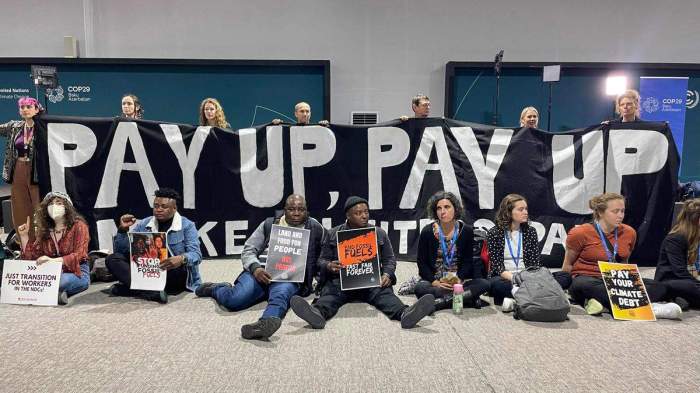
Photo Credit: AFP
Nearly 200 nations continued behind closed doors at UN talks in Baku on Saturday afternoon, negotiating a new climate finance deal as discussions ran overtime, News.az reports citing Bloomberg.
As a way to get a final agreement over the line, US and European Union negotiators proposed that developed nations increase a funding commitment to $300 billion a year, triple the current, but expiring annual pledge, people familiar with the matter said.A draft released before the summit’s scheduled close on Friday called for rich nations to offer $250 billion annually by 2035. It received immediate pushback from developing and vulnerable nations who have insisted far more money is needed to deal with the consequences of decades of unchecked greenhouse gas emissions.
The closed-door talks are still trying to work out the make-up of the core multibillion-dollar funding commitment, including the role of multilateral development banks, the people said, asking not to be named because the negotiations aren’t public. There’s also still discussions on how countries such as China and Saudi Arabia should play a role in providing climate finance overall, they said.
China said earlier this week it would only contribute climate finance voluntarily and did not want it included in COP29 pledge commitments.
It’s still not clear whether developing countries and small island states would be able to accept a figure that was well below their original ask.
Negotiators spent the night trying to hammer out a deal that will see wealthy nations provide funding to poorer countries to build green economies and resilience to global warming. Tense negotiations over the past two weeks in Baku have often spilled into the open as different sides tried to bridge deep divisions.
Members of country delegations were spotted sprawled on lounge chairs at the COP29 venue, Baku Olympic Stadium, in the early hours of Saturday as they tried to catch quick naps between meetings.
The main goal of this year’s negotiations is to replace an existing annual $100 billion climate finance pledge with one delivering far more to help poorer nations.
Even if a new proposal of $300 billion is accepted, many in the developing world will still be dissatisfied. Countries in the Global South have said their requirements to combat rising temperatures and restructure their economies run into the trillions of dollars a year.
The draft released Friday also called for total funding of at least $1.3 trillion annually — the bulk of it in private financing — by the middle of the next decade. Negotiators are still waiting for an updated proposal to be released by the COP29 presidency on Saturday.


Similar news