Eurozone business activity contracts amid Mideast war


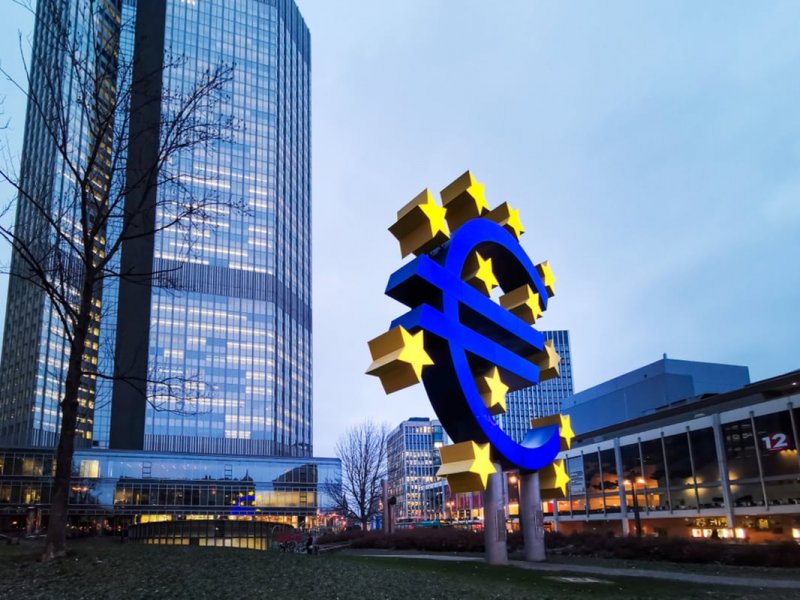
Business activity in the eurozone declined for the first time in 16 months in April, as the war in the Middle East pushed up energy prices and disrupted global supply chains, according to a closely monitored survey released on Thursday, News.Az reports, citing AFP.
The Flash Eurozone Purchasing Managers’ Index (PMI), published by S&P Global and widely regarded as a key indicator of overall economic health, fell to 48.6 in April from 50.7 in March.
A PMI reading above 50 signals economic expansion, while a figure below 50 indicates contraction.
“The eurozone is facing deepening economic challenges stemming from the war in the Middle East, creating a significant dilemma for policymakers,” said S&P Global’s chief business economist Chris Williamson.
“The conflict has driven the economy into contraction in April, while also sharply increasing inflation,” he added.
The decline in output was mainly driven by the services sector, which recorded its steepest contraction in more than five years.
In contrast, manufacturing production continued to grow, expanding at the fastest pace since August.
However, the survey noted that this growth was partly due to customers placing additional orders to build up inventories and secure supplies ahead of potential future price increases and possible shortages.
The drop in business activity was widespread across the eurozone, with both Germany and France — the two largest economies in the 20-member single currency area — recording contractions.
“In this environment, the European Central Bank faces the difficult decision of whether to raise interest rates in response to rising inflation, or to consider the possibility that the price spike may be temporary and instead focus on preventing a deeper economic downturn,” Williamson said.
Analysts have increased expectations that the Frankfurt-based European Central Bank may raise interest rates as early as this month in an effort to contain inflation.
By Nijat Babayev


Similar news