The EU without its own army: Can Europe become an independent geopolitical power centre?


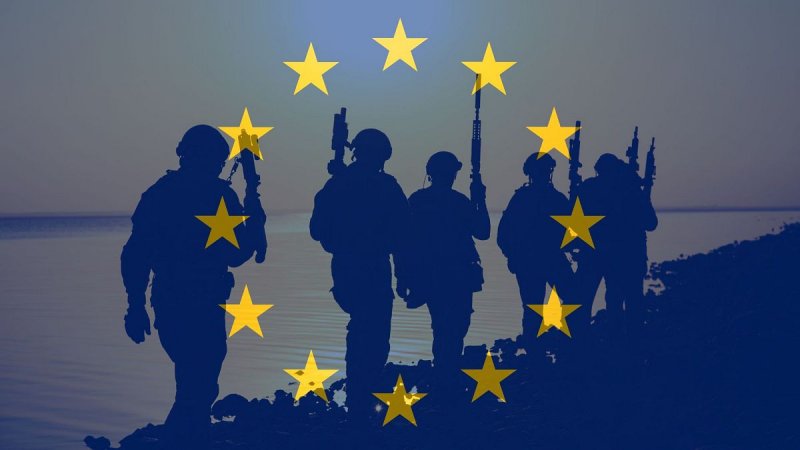
EU High Representative for Foreign Affairs and Security Policy Kaja Kallas has once again spoken out against the creation of a unified European army. According to her, defence remains the responsibility of individual nation states, each of which already has its own armed forces. Moreover, 23 EU countries are also NATO members, meaning that the formation of a parallel EU army would inevitably lead to a duplication of functions and command-related problems.
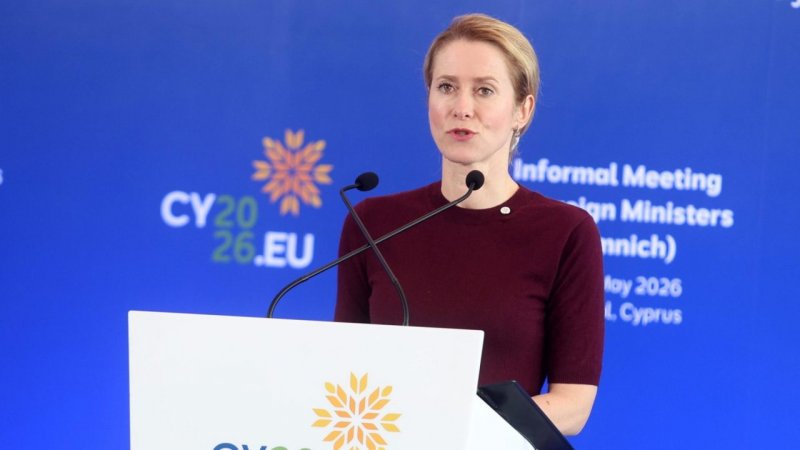
“I do not support the creation of an additional army. Every country already has its own armed forces, while 23 countries are also members of NATO. It is impossible to create a parallel army,” Kallas said on 8 June following an informal meeting of EU defence ministers in Cyprus.
From a military and technical perspective, the EU foreign policy chief’s position appears pragmatic. In a crisis, there must indeed be a clear chain of command: military personnel need to know who is issuing orders, while political leaders must understand which institution is responsible for making decisions. Establishing a separate EU command structure alongside NATO could create competition between two systems rather than provide additional strength.
RECOMMENDED STORIES
At the same time, however, Kallas’s statement exposes a deeper problem. The European Union aspires to become an independent geopolitical player but is unwilling to create one of the principal attributes of such a status: its own military and political mechanism capable of operating independently of the United States and NATO.
The EU was established primarily as an economic and peace project. Its institutions were designed to prevent new wars on the European continent, develop a single market and gradually bring European states closer together. This model proved successful in an era when Europe’s security was largely guaranteed by the United States.
 Source: Getty Images
Yet the modern international system increasingly bears little resemblance to the period in which the European Union took shape. Competition between major powers is intensifying, the use of military force is once again becoming an instrument of foreign policy, and international rules are increasingly giving way to the logic of national interests.
Against this backdrop, the EU faces an obvious contradiction. It claims the role of a defender of the international order, democratic values and multilateral diplomacy, yet it has only limited means of influencing the actions of other major powers.
Tensions between Washington and Brussels, including those surrounding statements by the US administration concerning Greenland, have forced European capitals to reconsider the reliability of the transatlantic partnership. Kallas herself claimed in March that Washington was attempting to divide Europe, while simultaneously acknowledging the EU’s continuing dependence on American military capabilities.
The European Union has also failed to secure a central role in negotiations on Ukraine, even though European countries regard the outcome of the conflict as a matter of their own security. In developments involving Iran and Venezuela, the EU has more often acted as an observer, limiting itself to diplomatic statements, calls for restraint and discussions about new sanctions.
The situation surrounding the Strait of Hormuz is equally revealing. In March, Kallas said that EU member states were not prepared to expand the mandate of a European naval operation to cover this strategically important area. This demonstrated how difficult it is for the European Union to move from political declarations to collective action in the security sphere.
Rejecting the idea of a unified army does not in itself mean abandoning efforts to strengthen European defence. Kallas has consistently advocated developing national armed forces, increasing military expenditure, expanding ammunition production and improving interoperability between EU armies. As early as January 2025, she expressed this position in the clearest possible terms: Europe does not need one common army, but rather 27 capable national armies that can work effectively together.
Nevertheless, even this more realistic model faces serious limitations. The defence systems of EU member states remain fragmented. Countries operate different types of weapons, impose different requirements on military equipment and frequently compete with one another for defence contracts. Despite ambitious plans to increase spending, the expansion of Europe’s defence-industrial production has proceeded more slowly than Brussels had hoped.
The main problem, however, is not merely the quantity of weapons or the size of military budgets. The EU lacks a single political centre capable of making foreign policy decisions rapidly.
The most important decisions in this field require the consent of all member states. As a result, one or several countries can block a common position on sanctions, military assistance, relations with third countries or overseas operations.
The idea of moving from consensus to qualified-majority voting is supported by several countries, including Germany and Sweden. Advocates of reform argue that the veto right has turned the EU into a slow-moving structure incapable of responding rapidly to international crises. France, Belgium and other countries, however, fear losing national control over matters of war, peace and security.
A more radical proposal is also under discussion: the establishment of an EU security council comprising a limited number of the largest or most influential states. Such a body could make decisions more rapidly and free the European Union from the need to secure the unanimous approval of all 27 members on every occasion.
The United Kingdom could theoretically be included in such a format. Despite leaving the EU, Britain has retained a special role in Europe’s security architecture as a nuclear power, a permanent member of the UN Security Council and one of NATO’s most important members.
However, creating a narrow group of countries empowered to make key decisions would inevitably provoke resistance from smaller EU states. They would fear that Germany, France, Italy, Poland and other major countries could determine common policy without adequately considering the interests of the Union’s remaining members.
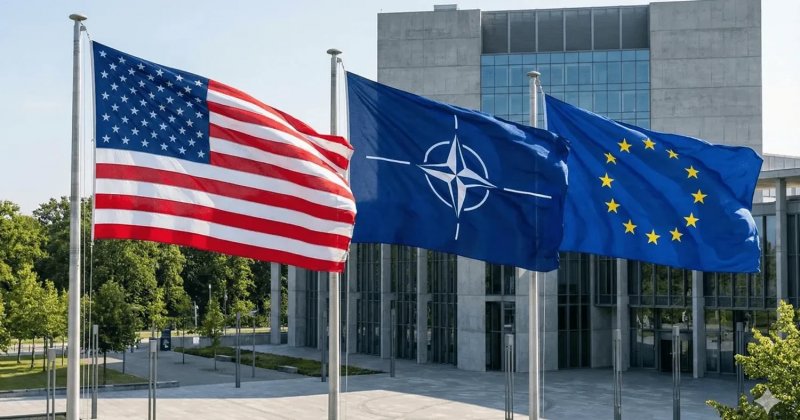
The relationship between such a structure and NATO would be no less contentious. A European security council or an independent EU military command could be viewed by Washington and some European allies as an attempt to create an alternative to the North Atlantic Alliance.
This is precisely why Kallas emphasises the need to strengthen NATO’s European pillar rather than establish a parallel army. This approach is particularly important for Central and Eastern European countries, which regard the American military presence as the primary guarantee of their security and remain cautious about the concept of European strategic autonomy.
 Source: Shutterstock
At the same time, completely abandoning an independent defence system would preserve Europe’s dependence on decisions made outside the European Union. Should the political priorities of the United States shift decisively towards the Indo-Pacific region, European countries would have to assume significantly greater responsibility for their own security.
The debate over a unified army is therefore only one part of a much broader discussion about the future of the European Union. The real question is not whether the EU needs new military formations, but whether it is prepared to transform itself from a predominantly economic union into a fully fledged political and strategic centre of power.
Increasing military expenditure or purchasing more weapons will not be enough. Europe must determine who makes decisions, who issues orders, how responsibility is allocated and under what circumstances the EU is prepared to use its economic, diplomatic and military capabilities.
Kaja Kallas’s statement shows that Brussels is not yet prepared to create a European army. However, it does not answer another, more difficult question: can the European Union strengthen its international position while remaining without a unified military-political centre and continuing to depend on a mechanism under which any member state can block a common decision?
As long as this question remains unresolved, the EU’s aspiration to become an independent geopolitical player will continue to confront the same old contradiction: Europe possesses enormous economic potential but still lacks sufficient political will and institutional mechanisms to convert that potential into genuine strategic influence.
By Tural Heybatov


Similar news