Death sentence, prison terms, arrests reported across Iran in security-related cases


Iranian authorities have carried out a series of judicial actions including a death sentence, prison terms, arrests and large-scale asset seizures in separate national security-related cases, according to the foreign-based Human Rights Activists News Agency (HRANA).
A 26-year-old man detained during nationwide protests in January 2026 has been sentenced to death by Branch 23 of the Tehran Revolutionary Court on the charge of moharebeh (“enmity against God”). The defendant, identified as Alireza Peighambari, was arrested on 9 January 2026 during protests and later released on bail in March–April 2026. He was retried in May and June 2026 before being taken back into custody and transferred to Greater Tehran Penitentiary. His sentence is currently under review by Branch 9 of Iran’s Supreme Court, News.Az reports, citing HRANA.
In a separate case, Zahra Shahidi, a 48-year-old protest detainee currently held in Evin Prison, has been sentenced to two years in prison. The ruling also resulted in the loss of her employment. Details regarding the issuing authority and specific charges have not been disclosed. Shahidi was transferred to the women’s ward of Evin Prison on 31 December 2025 after being arrested during the early days of the 2026 protests.
RECOMMENDED STORIES
Another case involves Karim Esmaeilzadeh, an Azerbaijani-Turkic activist whose sentence was upheld by Branch 31 of the East Azerbaijan Province Court of Appeals. He was convicted of “spreading falsehoods with the intent to disturb public opinion” and sentenced to one year in prison, a fine of 50 million tomans, and the blocking of his social media accounts.
He was arrested in October 2025 after appearing at the prosecutor’s office in Tabriz, later transferred to a Ministry of Intelligence detention facility and subsequently to Tabriz Prison. He was released on bail on 1 November 2025.
HRANA also reported the arrest of Pouya Esmaeili, an electrical engineer from Nowshahr in Mazandaran province, who was detained by security forces on 9 June and transferred to an undisclosed location. As of the time of reporting, no information has been made available regarding the reasons for his arrest or the charges against him.
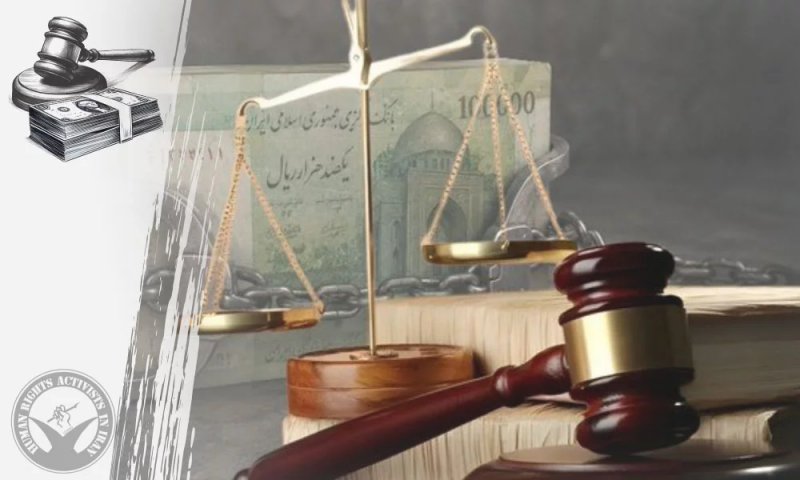
Separately, Iranian judiciary spokesperson Asghar Jahangir announced that more than 200 assets belonging to individuals accused of “collaborating with the enemy” and acting against national security have been identified and seized. He said the judiciary is continuing efforts to identify and confiscate additional assets, describing the measures as a deterrent against those who “betray the homeland”, HRANA reported.
Jahangir did not provide details on the identities of those affected, the legal basis for the seizures, or the number of cases involved. Earlier, judiciary head Gholamhossein Mohseni Ejei said judicial orders had been issued to confiscate assets linked to individuals described as “collaborating with the enemy”, adding that such offences could carry the death penalty in certain cases.
Following the directive, Iranian authorities reportedly launched the “Saham” electronic system, enabling courts and prosecutor’s offices to identify and freeze citizens’ assets. No further official information has been provided regarding safeguards or appeals mechanisms for affected individuals.


Similar news