Japan, Malaysia seek to enhance energy, maritime security cooperation


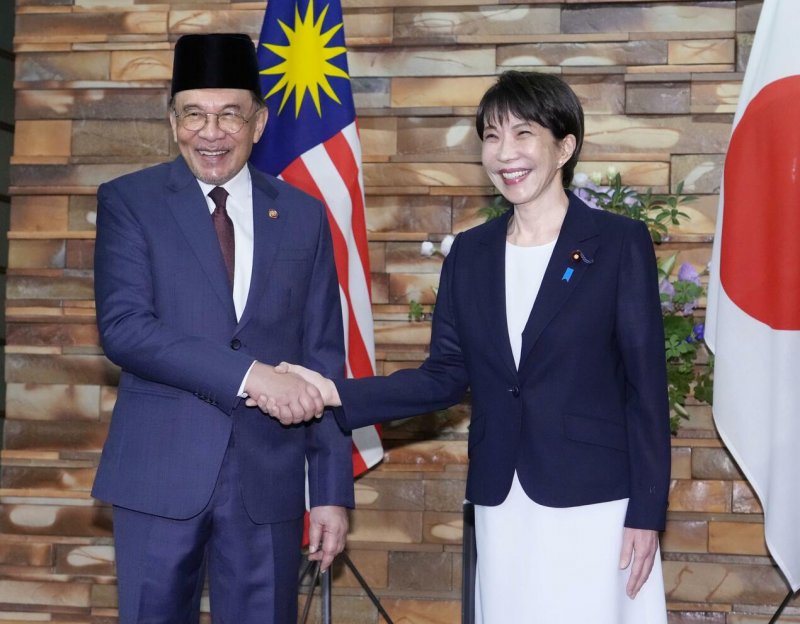
Japan’s Prime Minister Sanae Takaichi and her Malaysian counterpart Anwar Ibrahim agreed to deepen cooperation on energy and maritime security during talks in Tokyo on Wednesday, as Japan seeks to diversify energy supplies amid the Middle East conflict, News.Az reports, citing Kyodo.
Speaking to reporters after the summit, Takaichi said discussions on defense-related areas included the signing of a coast guard cooperation document aimed at ensuring safe and free navigation in regional waters. Both countries continue to support the vision of a free and open Indo-Pacific, as China’s influence in the region grows.
The meeting, held at the end of Anwar’s three-day visit to Japan, came as both sides aim to strengthen their “comprehensive strategic” partnership ahead of the 70th anniversary of diplomatic relations next year.
RECOMMENDED STORIES
Takaichi said she is confident the agreements will “enhance the autonomy and resilience of Japan and Malaysia, as well as the wider region,” adding that the summit served as an “opportunity to further deepen ties.”
The leaders also reaffirmed their commitment to strengthening regional energy security, as ongoing global economic uncertainty linked to disruptions around the Strait of Hormuz amid the U.S.-Israeli war against Iran raises concerns for resource-dependent Asian countries.
Anwar welcomed changes to Japan's defense policy in April that enabled the export of equipment with lethal capabilities to some partner countries as it "greatly expands the possibilities of defense cooperation between the two countries."
Japan is a major exporter of electrical equipment and auto parts to Malaysia. The joint statement said the countries have agreed to create a Japan-Malaysia AI Platform to support domestic artificial intelligence firms in responding to social challenges.
As the United States and China lead the global race for AI innovation, Takaichi has called on Southeast Asian nations to work with Japan in developing AI models that reflect local languages and cater to the region's economic and business needs.
The meeting was their first since talks in Kuala Lumpur in October on the sidelines of summit meetings involving the Association of Southeast Asian Nations.
Takaichi has emphasized diplomacy with Southeast Asian countries as part of her evolved free-and-open Indo Pacific approach, outlined in May to mark 10 years since her mentor, former Prime Minister Shinzo Abe, devised it as a veiled counter to China's growing clout in the region.
By Nijat Babayev


Similar news