February’s Snow Moon to light up the sky this week


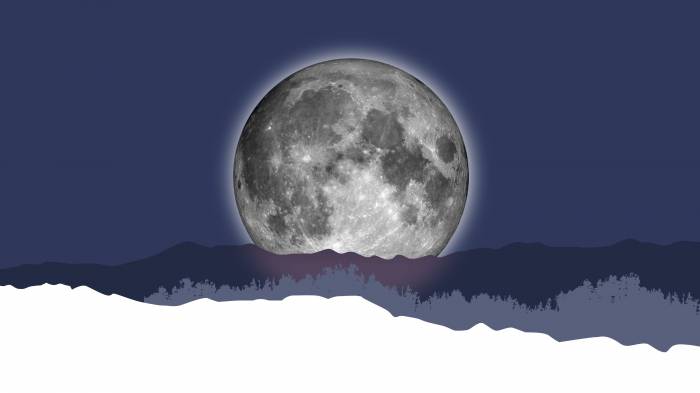
The February full moon, known as the Snow Moon, will reach its peak on Wednesday, February 12, 2025.
As it rises on the eastern horizon at dusk, skywatchers will witness a spectacular display of warm hues, with shades of orange and red adding to its celestial beauty, News.Az reports, citing foreign media.
Despite its grandeur, this Snow Moon will not coincide with a total lunar eclipse.
However, the following full moon—March’s Worm Moon—will bring a rare total lunar eclipse, the first of its kind since 2022, as mentioned in a report by NASA.
The total lunar eclipse will occur on the night of March 13 or the early hours of March 14, 2025, depending on the time zone.
This celestial event will be visible across North and South America, offering a rare chance for skywatchers to witness the Moon turn a deep red as it passes through Earth’s shadow.
During the eclipse, the Worm Moon will move through the darkest part of Earth’s shadow, known as the umbra, resulting in a stunning phenomenon often referred to as a Blood Moon.
- Penumbral Eclipse: The Moon moves through the outer shadow of Earth, causing a subtle dimming.
- Partial Eclipse: A portion of the Moon enters the umbra, creating a visible dark shadow on its surface.
- Total Lunar Eclipse: The Moon is completely engulfed in the umbra, taking on a reddish hue due to the filtering of sunlight through Earth's atmosphere.
The reddish-orange hue observed during a total lunar eclipse is caused by a phenomenon known as Rayleigh scattering—the same effect responsible for blue skies and red sunsets. When sunlight passes through Earth’s atmosphere, shorter wavelengths (blue and violet) scatter, while longer wavelengths (red and orange) pass through, casting a warm glow onto the Moon.
This effect makes it appear as though all the world’s sunrises and sunsets are being projected onto the lunar surface, creating the dramatic "Blood Moon" effect.


Similar news