Flood-hit Indonesia, Sri Lanka braces for more rain


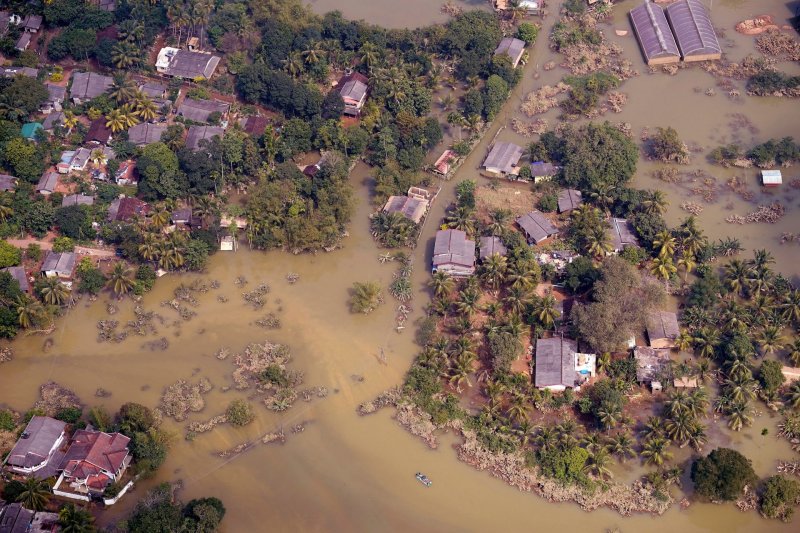
Rain forecasts in early December have raised concerns of further damage in flood-hit Indonesia and Sri Lanka, following earlier deluges that killed more than 1,800 people across four Asian countries.
In Indonesia, the death toll had reached 836 by December, with the majority of fatalities reported in North Sumatra and Aceh provinces, according to Abdul Muhari, spokesperson for the national disaster mitigation agency, News.Az reports, citing foreign media.
More than 800,000 people have been displaced, and over 500 remain missing. Patchy communications and electricity disruptions have made it difficult to confirm their whereabouts, Muhari added.
On December 7, Pope Leo XIV prayed for the victims of the natural disaster and for the families mourning their loved ones, Vatican News reported.
During the Angelus prayer, the Pope called on the international community to show concrete signs of solidarity by providing humanitarian aid.
“I am close to the peoples of South and Southeast Asia, who have been severely tested by the recent natural disasters,” he said. “I pray for the victims, for the families who mourn their loved ones, and for all those who are providing assistance. I urge the international community and all people of good will to support our brothers and sisters in those regions with concrete gestures of solidarity.”
Seasonal monsoons bring rainfall that farmers across Asia depend on, but climate change is making the phenomenon more erratic, unpredictable and deadly.
Two separate weather systems drenched all of Sri Lanka [Sunday Examiner, December 7], Sumatra, parts of southern Thailand and northern Malaysia in late November, and the scale of the disaster has made relief efforts challenging.
In Indonesia’s Banda Aceh, a reporter said the queue for fuel at one petrol station extended four kilometres.
In Sri Lanka, forecasters said the northeast monsoon would arrive from the afternoon of December 4.
Landslide alerts were renewed for some of the worst-hit areas of the central Kandy region, and residents were advised not to return home as the saturated slopes could collapse under more rainfall.
At least 479 people have been killed in Sri Lanka, and hundreds remain missing, with the president appealing for international support.
Authorities estimate they will need up to US$7 billion to rebuild homes, industries and roads, a tough ask for a country still emerging from its worst-ever economic crisis three years ago.
Meanwhile, deadly flooding, fuelled by a tropical depression and record dam discharges in Vietnam’s central provinces, prompted public and parliamentary demands for accountability from dam operators and an overhaul of the flood warning system.
The severe weather, which affected provinces including Dak Lak, Lam Dong and Khanh Hoa on December 3-4, resulted in widespread inundation and landslides.
In Lam Dong alone, the floods claimed one life, submerged 6,200 houses, destroyed over 4,000 hectares of crops, and killed more than 4,000 head of livestock and poultry.
The hardest-hit areas, such as Lien Huong, Ham Liem, Ham Thuan, and Ham Thang, recorded heavy damage, which authorities initially attributed to abrupt flood releases from local hydropower and irrigation reservoirs.
The Binh Thuan Irrigation Works Exploitation Company confirmed that the Song Quao reservoir was discharging water at a rate of 500 cubic metres per second, and the Song Long Song reservoir at an unprecedented 1,200 cubic metres per second—a record-high release since the lake was commissioned.


Similar news