Global markets brace for next moves by central banks


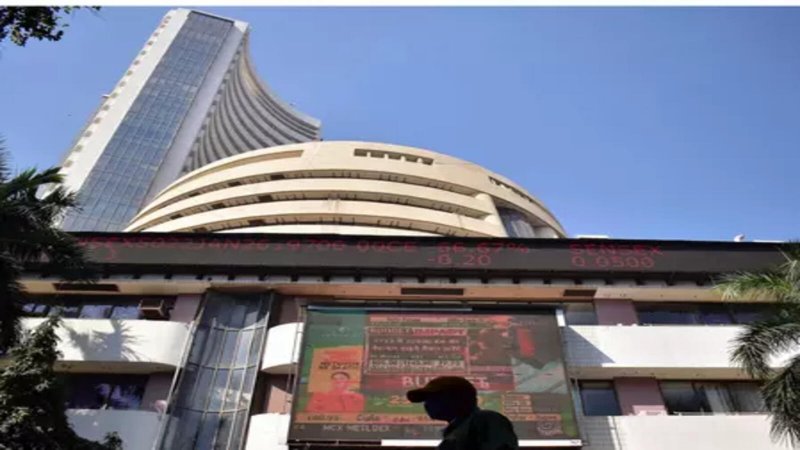
Global financial markets continue to orbit around one dominant question. What will central banks do next. While inflation has eased from its recent peaks in many economies, it has not disappeared. Growth is uneven, consumer confidence is fragile, and geopolitical uncertainty continues to distort trade flows. In this environment, monetary authorities remain the most powerful actors shaping investor behavior, currency movements, and long term economic expectations.
Central banks are no longer responding to crisis conditions alone. Instead, they are navigating a delicate transition period between aggressive tightening and a possible normalization phase. This transition is proving far more complex than many anticipated. Investors once expected clear and synchronized signals from major economies. What they are seeing instead is divergence. Different inflation paths, labor market conditions, and fiscal pressures are forcing central banks to move at different speeds and with different priorities.
RECOMMENDED STORIES
Financial markets tend to prefer predictability. Yet the current global environment offers very little of it. Central bank communication has therefore become almost as important as policy itself. Every statement, press conference, and data reference is scrutinized for subtle clues. Even a minor shift in tone can trigger large movements across equities, bonds, and currencies.
This sensitivity reflects a deeper truth. Monetary policy remains the primary anchor for market confidence. When that anchor appears unstable, volatility rises quickly. The result is a global investment climate defined by caution, short term positioning, and heightened attention to macroeconomic signals.
Inflation trends are cooling but the fight is far from over
Inflation has slowed across many advanced and emerging economies compared with the extreme levels seen in recent years. Energy prices have stabilized, supply chains have improved, and aggressive interest rate hikes have dampened demand. On the surface, these developments suggest progress. However, central banks remain wary of declaring victory too soon.
One of the biggest concerns is the persistence of core inflation. While headline inflation figures often capture public attention, policymakers focus more closely on underlying price pressures. Services inflation in particular remains elevated in many economies. Housing costs, healthcare, education, and wages continue to rise at rates that exceed long term targets.
Labor markets add another layer of complexity. In several major economies, employment remains historically strong. Job vacancies are high, unemployment is low, and wage growth continues to outpace productivity gains. From a social perspective, this appears positive. From a monetary policy standpoint, it raises concerns about inflation becoming entrenched.
Central banks are therefore balancing competing risks. If they ease policy too early, inflation could re accelerate. If they keep conditions tight for too long, they risk slowing growth excessively or triggering financial stress. This balance explains why policymakers increasingly emphasize data dependence rather than fixed timelines.
Markets have had to adjust to this reality. Expectations of rapid interest rate cuts have repeatedly been revised. Each inflation report and labor market release has the potential to reshape outlooks. The result is an environment where long term forecasts carry less weight than short term data surprises.
Interest rates and financial stability concerns intersect
Beyond inflation control, central banks are also watching the stability of the financial system. Higher interest rates have exposed vulnerabilities that were less visible during years of cheap money. Corporate debt levels, real estate valuations, and government borrowing costs have all come under greater scrutiny.
Banks face a mixed environment. On one hand, higher rates can support profitability through improved margins. On the other, they increase credit risk as borrowers struggle with refinancing costs. Commercial real estate markets in particular have emerged as a point of concern in several regions. Falling valuations and reduced demand are testing balance sheets and investor confidence.
Governments are not immune to these pressures. Rising debt servicing costs constrain fiscal flexibility. In countries with large deficits or high debt ratios, monetary tightening can quickly translate into political and social tension. This dynamic complicates coordination between fiscal and monetary authorities.
Central banks insist that their primary mandate remains price stability. However, financial stability considerations increasingly influence the pace and communication of policy decisions. Emergency tools, liquidity facilities, and regulatory adjustments remain part of the policy toolkit, even if they are not actively deployed.
Markets are keenly aware of these risks. Bond yields respond not only to inflation expectations but also to perceptions of systemic stress. Equity markets fluctuate as investors reassess earnings prospects under tighter financial conditions. Currency markets reflect differences in policy credibility and economic resilience.
Diverging paths among major economies reshape capital flows
One of the defining features of the current phase is divergence among major economies. While some central banks signal patience and caution, others maintain a more restrictive stance. Emerging markets face their own set of challenges, including currency stability and capital outflows.
This divergence has important consequences for global capital flows. Investors seek yield but also safety. When interest rate differentials widen, capital tends to move toward economies perceived as offering better risk adjusted returns. These movements can strengthen some currencies while placing pressure on others.
For emerging economies, the situation is particularly delicate. Higher rates in advanced economies can attract capital away from developing markets, weakening local currencies and increasing inflation risks. At the same time, domestic rate hikes can slow growth and strain public finances.
Trade dynamics are also affected. Exchange rate movements influence export competitiveness and import costs. Countries with strong currencies may struggle to maintain export momentum, while those with weaker currencies face higher import driven inflation.
Global corporations must navigate this fragmented landscape. Investment decisions increasingly factor in currency risk, financing costs, and regional demand variability. Supply chain strategies continue to evolve as firms seek resilience alongside efficiency.
For investors, diversification has become more complex. Traditional assumptions about correlations between assets and regions are being tested. Central bank divergence adds another layer of uncertainty to portfolio construction.
What markets are watching next and why communication matters
As the year unfolds, markets remain focused on several key signals. Inflation trends, wage growth, and consumer demand will shape expectations. Equally important will be how central banks communicate their interpretation of these signals.
Forward guidance has become more cautious. Policymakers avoid firm commitments, emphasizing flexibility instead. This approach reflects genuine uncertainty but also places greater responsibility on markets to interpret data independently.
Press conferences and official statements are therefore closely analyzed. Language choices, emphasis shifts, and even omissions can influence sentiment. Markets are not only listening to what is said but also to how it is said.
Another area of attention is the global coordination narrative. While central banks operate independently, their actions are interconnected through financial markets. Unexpected moves by one major authority can ripple quickly across borders.
Ultimately, the current moment underscores a broader reality. Monetary policy alone cannot resolve all economic challenges. Structural reforms, fiscal discipline, and productivity growth are essential for long term stability. Yet in the absence of rapid progress on these fronts, central banks remain the focal point.
Global markets will continue to brace for each decision, each data release, and each signal. The era of easy predictability has ended. What replaces it is a more cautious, data driven, and fragmented financial landscape where central bank choices carry enduring influence over economic outcomes worldwide.
By Faig Mahmudov


Similar news