Greenpeace told to pay oil firm hundreds of millions in damages


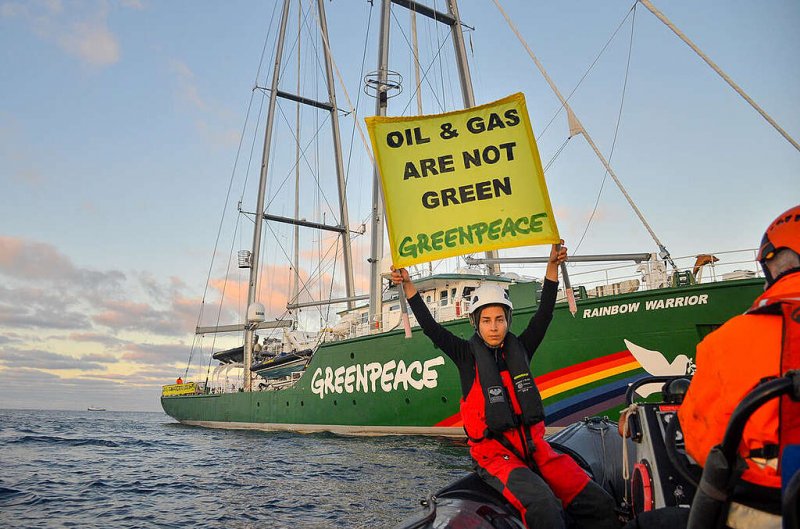
A North Dakota jury has found Greenpeace liable for defamation, ordering the organization to pay hundreds of millions of dollars in damages to a Texas-based oil company.
Energy Transfer accused the environmental group of defamation, trespass, nuisance and civil conspiracy over its role in protests nearly a decade ago against the Dakota Access Pipeline, News.Az reports citing BBC.
The lawsuit, filed in state court, accused Greenpeace of an "unlawful and violent scheme to cause financial harm to Energy Transfer".
Greenpeace said last month it could be forced into bankruptcy if it was ordered to pay around $300m (£237m) in claimed damages, ending over 50 years of environmental activism.
Protests against the pipeline near the Standing Rock Sioux Reservation drew thousands, but Greenpeace argued it did not lead the demonstration and that the lawsuit threatened free speech.
The nine-person jury reached a verdict after roughly two days of deliberating. The verdict was delivered in the Morton County courthouse in Mandan, North Dakota, about 100 miles (160km) north of where the protests took place.
Construction of the Dakota Access Pipeline gained international attention during President Donald Trump's first term, as Native American groups set up an encampment trying to block it from passing near Standing Rock.
The protests, which saw acts of violence and vandalism, started in April 2016 and ended in February 2017, when the National Guard and police cleared the demonstrators' site.
At the peak, over 10,000 protesters were on site. The group included more than 200 separate Native American tribes, hundreds of US military veterans, actors and political leaders - including the current health secretary, Robert F Kennedy, Jr.
During the five-week trial, jurors heard from Energy Transfer's co-founder and board chairman Kelcy Warren, who said in a video deposition that protesters had created "a total false narrative" about his company.
"It was time to fight back," he said.
Energy Transfer's lawyer Trey Cox argued in court that Greenpeace had exploited the Dakota Access Pipeline to "promote its own selfish agenda".
Lawyers for Greenpeace argued that the group was not the leader of the protests, but merely helped support "nonviolent, direct-action training" to protesters.
The lawsuit named Greenpeace USA, as well as its Washington DC-based funding arm Greenpeace Fund Inc and its Amsterdam-based parent group Greenpeace International.


Similar news