History of Armenia–Russia relations: 1991–2025


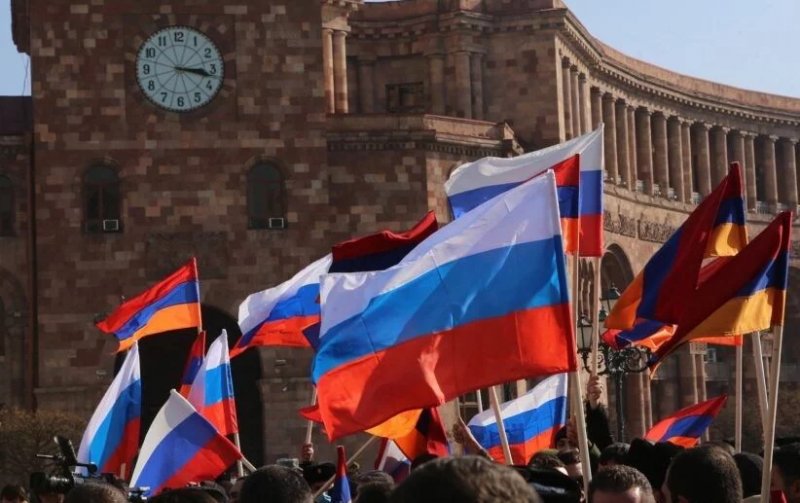
The history of Armenia–Russia relations after the collapse of the Soviet Union is a complex story of reliance, alliance, disappointment, and ultimately a profound geopolitical shift.
Over more than three decades, the relationship evolved from almost unconditional partnership to strategic distancing, culminating in Armenia’s gradual turn toward the West. The trajectory of 1991–2025 reflects not only political calculations but also deep structural changes in regional security and the balance of power in the South Caucasus.
When Armenia gained independence in 1991, it faced a devastating war in Karabakh, economic collapse, blockade by Azerbaijan and Türkiye, and global uncertainty. In this turbulent environment, Russia emerged as the key external actor capable of providing immediate military, political, and economic support. The early configuration of Armenia’s security architecture was defined by this reality: Russian troops were stationed at the 102nd military base in Gyumri, and Russian border guards took control of Armenia’s border with Türkiye. These arrangements cemented a long-term strategic alignment.
Throughout the 1990s and 2000s, Armenia tied its defense and foreign policy closely to Moscow. It joined the Collective Security Treaty Organization (CSTO), later integrated into the Eurasian Economic Union, and structured its military doctrine around the presumption of Russian protection. In return, Yerevan granted Russia preferential access to key infrastructure—energy assets, transport hubs, and industrial facilities. For years, a prevailing belief persisted in Armenian society: without Russia, there could be no security.
This bond, however, came at a cost. Armenia’s dependence limited its geopolitical flexibility and reduced its capacity to diversify partnerships. Still, during this period the relationship appeared mutually beneficial. Moscow viewed Armenia as its most loyal ally in the South Caucasus, and Yerevan saw Russia as the indispensable guarantor of regional stability.
Tension gradually began to build in the 2010s. Armenian society questioned the credibility of Russia’s security guarantees, especially as Moscow expanded arms sales to Azerbaijan. Although Prime Minister Nikol Pashinyan came to power in 2018 after the Velvet Revolution, he initially maintained the strategic alliance with Russia, insisting that Armenia had no intention of abandoning its commitments. Yet mistrust between the governments grew beneath the surface.
The turning point came with the 2020 war in Karabakh. Armenia expected decisive support from Russia and the CSTO, but the response was limited to diplomacy. The defeat was a watershed moment: many Armenians felt Moscow had not fulfilled its role as a protector. The trilateral ceasefire brokered by Russia on November 10, 2020, reshaped the regional order. Russian peacekeepers deployed to Karabakh, but this presence no longer reassured Armenian society; instead, it symbolized the fragility of the security model that had dominated for decades.
The border clashes of 2021–2022, the escalation in Syunik, and the blockade of the Lachin corridor in 2022 all deepened the rift. Armenia repeatedly appealed to the CSTO for help, but tangible support did not materialize. Yerevan openly accused the organization of failing its obligations. Russia, in turn, criticized Armenia for drifting toward the West and undermining allied cooperation.
By 2023 the relationship had reached its most critical point in decades. Armenia refused to host CSTO military exercises, suspended participation in several formats, and Pashinyan declared that the alliance with Russia “does not reflect Armenia’s long-term interests.” The Azerbaijani military operation in September 2023, which resulted in Yerevan’s complete loss of control over Karabakh, shattered any remaining belief in Russia as a security guarantor. In Armenian discourse, Russia’s “inaction” became a defining narrative. Moscow countered by claiming that Pashinyan himself dismantled the post-2020 arrangements.
In 2024–2025 Armenia’s geopolitical reorientation accelerated. Yerevan deepened cooperation with the European Union, expanded military and political ties with France and the United States, and ratified the Rome Statute of the International Criminal Court—a move widely interpreted as a direct challenge to Moscow. Defense reforms were launched with Western support, and discussions intensified regarding a potential exit from the CSTO. Even the future of the Russian military base in Gyumri became a topic of national debate. Economic, transport, and humanitarian links between the two states weakened as Armenia sought greater integration with Western institutions.
Despite mounting contradictions, a complete rupture has not yet occurred. Geography, trade, energy dependence, migration flows, and historical memory continue to bind the two countries. However, the nature of the partnership has changed irreversibly. What was once a hierarchical strategic alliance has become a tense, transactional, and uncertain relationship that neither side fully trusts.
Thus, the history of Armenia–Russia relations from 1991 to 2025 reflects a dramatic shift from reliance to recalibration. Armenia now attempts to construct a new security architecture without depending on Russia, while Moscow reassesses Armenia’s role amid its broader geopolitical challenges. The old model no longer functions, and the new one is still in formation. The coming years will determine whether Armenia succeeds in redefining its strategic identity and whether Russia is prepared to accept a fundamentally transformed regional order in which Armenia is no longer its unquestioned ally.


Similar news