How a Gaza ceasefire might work and why it remains so difficult


The question of whether a ceasefire will emerge in the Israel–Hamas war has become one of the most searched and widely discussed issues worldwide, News.az reports.
Governments, humanitarian organisations, regional powers, analysts and ordinary people continue to ask the same thing: is a lasting halt to the fighting possible, and what conditions would make such an agreement realistic? As the conflict continues to reshape the Middle East and intensify international diplomatic activity, the search for a ceasefire remains at the centre of global attention.
At its core, the debate over a ceasefire is driven by three interconnected factors: the humanitarian situation in Gaza, the military objectives of the parties involved and the complex diplomatic calculations of regional and global actors. While each of these elements evolves, they collectively define the political environment in which ceasefire discussions take place.
Humanitarian urgency drives global pressure
Perhaps the strongest force pushing for a ceasefire is the humanitarian crisis inside Gaza. Millions of people have been affected by displacement, shortages of food, water, shelter, electricity and medical supplies. Aid groups regularly warn that the basic needs of civilians cannot be met under current conditions. Families often share limited resources, medical facilities struggle without fuel and sanitation systems remain under severe strain.
International attention has grown as images of overcrowded shelters, damaged neighbourhoods and overwhelmed hospitals circulate across global media platforms. Humanitarian organisations argue that the only way to prevent a deeper catastrophe is through a sustained ceasefire that allows for large-scale and consistent aid delivery. Short pauses or temporary humanitarian windows, they argue, cannot address the structural damage to infrastructure or the overwhelming scale of need.
This humanitarian dimension has become a powerful driver for global public opinion. Governments facing domestic pressure from citizens, religious groups, human rights activists and diaspora communities increasingly raise the issue in diplomatic engagements. The more the humanitarian situation worsens, the louder the calls for a ceasefire become.
Military realities complicate the path forward
Despite rising international pressure, achieving a ceasefire is far from straightforward because the military goals of Israel and Hamas diverge sharply. Each side frames its position in terms of security, survival and long-term strategy.
For Israel, any ceasefire must guarantee that Hamas is unable to rebuild its military capabilities or use pauses in fighting to reinforce its positions. Israeli officials repeatedly emphasise that security for their citizens requires dismantling Hamas’s operational structure, leadership networks and tunnel systems. Israel also insists on the return of hostages as a central component of any agreement.
This creates a challenge: military pressure is seen by Israel as necessary to reach these objectives, yet military activity itself complicates ceasefire negotiations. Israeli leaders often argue that halting operations prematurely could create a situation in which the same conflict re-emerges months or years later.
Hamas, on the other hand, views ceasefire negotiations as an opportunity to secure political guarantees, relief for the population of Gaza and potential leverage over the future governance of the territory. Hamas ties hostage releases to broader concessions, including reductions in Israeli military presence and assurances on reconstruction. These demands often go beyond the scope of narrow ceasefire arrangements and move into complex territory related to long-term political agreements.
Both sides therefore treat ceasefire talks not as isolated decisions but as elements within a broader strategic contest. This creates a negotiation environment where humanitarian urgency clashes with military objectives, making compromise difficult.
The role of hostage negotiations
One of the most sensitive components of ceasefire talks is the fate of hostages held in Gaza. Families of hostages exert significant pressure on Israeli leaders, demanding prioritisation of negotiations over military escalation. Hostage exchanges carried out during temporary pauses demonstrated that agreements are possible, but they also revealed deep disagreements over sequencing: how many hostages should be released before a pause, how long any pause should last and what each side must deliver in exchange.
For Hamas, hostages are among its most valuable bargaining tools. For Israel, securing the safe return of its citizens is both a humanitarian and political necessity. This makes hostage negotiations central to the entire ceasefire debate. As long as these issues remain unresolved, broader agreements struggle to advance.
Regional powers shape expectations
Ceasefire prospects cannot be understood without examining the role of regional powers, especially Egypt, Qatar, Jordan and other influential Middle Eastern governments. These states serve as mediators, channels of communication and political sponsors of various peace frameworks. Their interests range from preventing regional instability to managing their own domestic pressures.
Egypt, sharing a border with Gaza, is particularly concerned about displacement, border security and the long-term political future of the territory. Qatar often acts as a direct intermediary with Hamas, given its longstanding contacts. Jordan pushes for a political solution that addresses broader Palestinian statehood issues. Gulf states monitor developments to protect their economic and diplomatic relationships.
Regional actors generally support ceasefire arrangements that reduce civilian suffering and prevent the conflict from escalating into a wider war. However, their positions are also shaped by geopolitical rivalries and alliances, which influence what type of ceasefire they view as acceptable.
International diplomacy: balancing principles and pragmatism
Beyond the region, major global powers—most notably the United States and European countries—play critical roles in shaping ceasefire dynamics. Western governments often find themselves balancing support for Israel’s security concerns with growing concern over humanitarian conditions. This creates tensions within their own foreign policy frameworks.
The United States, for example, advocates reducing civilian casualties and increasing aid while still supporting Israel’s right to defend itself. European nations express growing concern about the humanitarian crisis, and some have called for stronger diplomatic pressure to secure a truce. Yet divisions remain within the international community: some governments prioritise immediate humanitarian cessation, while others argue that a ceasefire without broader security guarantees could prove short-lived.
This diversity of positions means that the international system operates without a unified approach, making it harder to build the diplomatic momentum needed for a breakthrough.
Why a long-term ceasefire is challenging
Even if a temporary halt is achieved, the question of whether it can evolve into a durable ceasefire remains uncertain. The conflict is deeply rooted in long-term issues: territorial disputes, questions of governance, the lack of a political framework for Palestinian statehood, regional power dynamics and mutual distrust.
Without addressing these underlying problems, ceasefire agreements risk becoming short interruptions rather than pathways to sustainable peace. Analysts often argue that a durable ceasefire requires progress on issues such as the political future of Gaza, the demilitarisation debate, Palestinian reconciliation and regional guarantees.
Each of these areas involves complex negotiations that stretch beyond the scope of immediate humanitarian concerns. This is why ceasefire discussions frequently stall: they intersect with decades-old disputes that cannot be easily resolved under wartime pressure.
Global public opinion: shifting expectations
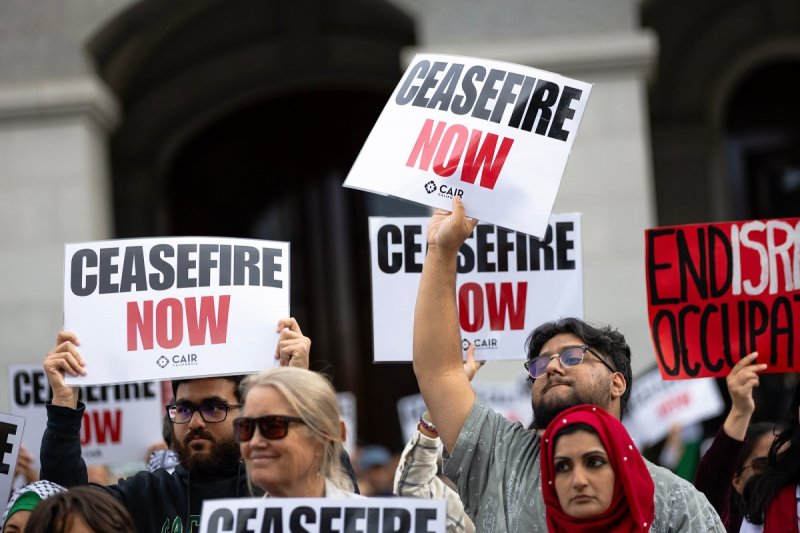
Public sentiment around the world plays a growing role in shaping political discourse. Protests, opinion polls, social media campaigns and statements from civic organisations influence how leaders frame the conflict. Many societies express strong sympathy for civilians caught in the conflict, increasing pressure on governments to push for a ceasefire.
At the same time, communities with strong ties to Israel or Palestine often hold conflicting views about responsibility, proportionality and justice. This results in deeply polarised public debates. Yet despite differing perspectives, one common theme emerges globally: the desire to see an end to the humanitarian suffering.
What would a realistic ceasefire look like?
Experts generally outline key components of a viable ceasefire:
– A sustained halt to military operations
– A structured hostage-release framework
– Large-scale humanitarian access and protected corridors
– International monitoring to prevent violations
– A political roadmap addressing governance and reconstruction
– Security guarantees for both Israelis and Palestinians
– Commitments from regional and international actors
Such a framework would require coordinated efforts from all sides and significant international involvement. The challenge lies in aligning political incentives with humanitarian necessity.
Conclusion: a question that will continue to dominate global conversation
The question “Will there be a ceasefire in the Israel–Hamas war?” continues to dominate global discourse because it touches on fundamental issues: humanitarian protection, regional stability, global diplomacy and the search for long-term peace. While growing international pressure pushes toward a ceasefire, deep strategic differences make rapid agreement difficult.
For now, the path to a sustained ceasefire remains complex, but the world’s attention ensures that every development will be closely watched. The question will continue to shape political discussions, media coverage and public expectations until a clearer direction emerges.


Similar news