How AI is transforming everyday business processes: a practical guide for beginners


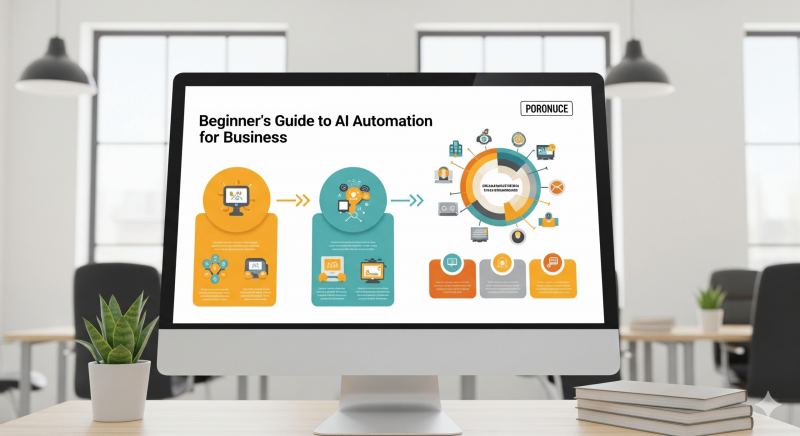
Artificial intelligence continues to reshape business operations across all sectors, becoming one of the most influential technologies of the modern era, News.az reports.
While advanced AI tools often appear complex, their impact on everyday business processes is remarkably practical and accessible. Companies around the world increasingly rely on AI to automate routine tasks, analyze data, save time and reduce operational costs. This long-term trend shows no sign of slowing because the underlying principles of AI adoption remain clear: identify repetitive work, integrate automation gradually and ensure that human oversight is maintained at every stage.
Business analysts note that AI’s most direct influence is visible in administrative processes. For example, customer service departments now use chatbots to respond to simple inquiries instantly, freeing support teams to handle more complex problems. These virtual assistants can address frequently asked questions, schedule appointments, assist with basic troubleshooting and even gather customer information before transferring the case to a human agent. Such automation not only improves response times but also reduces employee workload, creating a more efficient internal workflow.
Data processing is another area where AI consistently delivers strong results. Organizations once spent countless hours manually reviewing documents, entering information or validating records. Today, AI-powered systems scan invoices, contracts, forms and emails with high accuracy. They can identify key information, classify documents and detect inconsistencies significantly faster than traditional manual review. Beginners often start with small-scale automation—such as categorizing emails or generating simple reports—which provides immediate value and allows teams to gain confidence in AI technologies before expanding into more advanced tasks.
In marketing, AI has transformed how companies understand their customers. By examining purchasing habits, browsing behavior and interaction history, AI models can predict what customers are likely to want next. This helps businesses tailor their content, personalize offers and increase engagement. Even beginners in marketing can benefit from AI-driven tools that recommend posting schedules, generate social media captions, or analyze campaign performance. These systems do not replace human creativity; instead, they enhance it by providing insights that would be impossible to gather manually at large scale.
One of AI’s most widely used features is predictive analytics. Retailers forecast demand, financial institutions assess risk, logistics companies estimate delivery times and healthcare providers identify patterns in patient data. Although these applications vary, the common advantage is clear: AI analyzes historical and real-time data to provide reliable predictions. For beginners, understanding predictive analytics starts with a simple concept—AI learns from past data to make informed decisions about the future. Businesses that adopt these tools early gain a competitive advantage by anticipating market changes rather than reacting to them.
Despite AI’s benefits, experts highlight the importance of responsible implementation. Companies must ensure data quality, respect privacy regulations and avoid over-reliance on automated systems. Human oversight remains critical because AI models can make mistakes if the underlying data is biased, incomplete or outdated. Beginners are advised to start with supervised AI tools—those that require human input and validation—before moving toward more autonomous systems.
Another common challenge for new adopters is integration. Introducing AI too quickly can disrupt existing processes, confuse employees or create resistance. Specialists recommend beginning with one or two well-defined use cases that address clear pain points. For example, a business may automate invoice processing, implement a chatbot or use AI to generate weekly reports. Once staff become familiar with these systems, organizations can expand into more complex areas such as workflow optimization or predictive maintenance.
Training plays a crucial role in successful AI adoption. Employees must understand how the technology works, what its limitations are and how they should interact with it. Without proper training, workers may mistrust AI or use it incorrectly. Businesses that invest in continuous learning programs achieve smoother transitions and stronger long-term results.
In the long run, AI’s transformative power lies in its ability to augment human capacity, not replace it. While technology evolves rapidly, the core principles of AI implementation remain stable: choose tools that match business needs, integrate them gradually, train staff thoroughly and maintain consistent oversight. These steps ensure sustainable success, allowing organizations to benefit from AI without losing control over critical processes.
For beginners and small businesses, AI no longer represents complex future technology. It has become a practical, essential tool that simplifies operations, improves decision-making and opens new opportunities for growth. The companies that embrace AI responsibly today will be better prepared for the competitive realities of tomorrow.


Similar news