How could the European Union’s new rail travel proposal change cross border journeys?


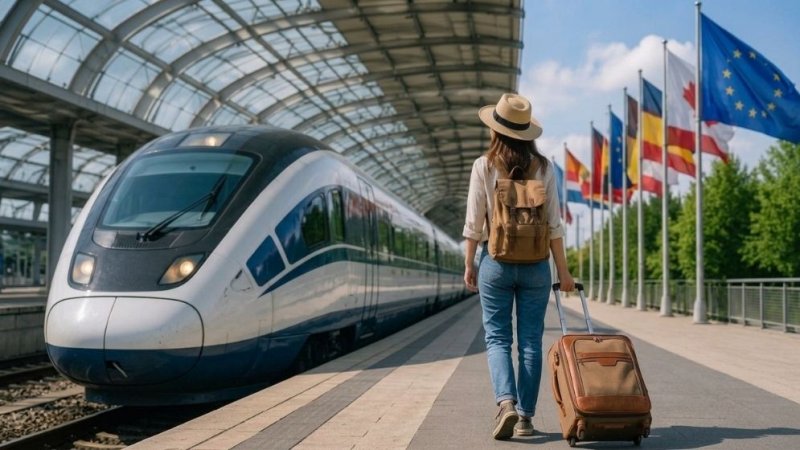
The European Commission has proposed a major new package of rules aimed at making travel across Europe easier to plan, compare and book, particularly for rail journeys involving multiple operators and international routes.
The proposals are designed to reduce fragmentation in Europe’s rail system and improve passenger rights for travelers using services operated by different companies across multiple countries.
RECOMMENDED STORIES
If approved, the measures could significantly change how people book train travel throughout the European Union.
Why is the EU proposing new rail travel rules?
The European Commission says current travel booking systems across Europe are often fragmented and difficult to use, especially for international rail journeys.
Passengers frequently encounter problems such as:
-
Difficulty comparing routes and prices
-
Separate booking systems for different operators
-
Limited visibility of cross border connections
-
Complicated multi ticket journeys
-
Unclear passenger rights when delays occur
These problems are especially common when a journey involves several rail operators or crosses national borders.
The EU argues that improving connectivity and simplifying ticketing would make rail travel more attractive and help support greener transport choices.
What are the main changes being proposed?
The package includes three major proposals focused on:
-
Easier booking of rail journeys across multiple operators
-
Better passenger rights protections
-
Fairer access to ticket sales and travel information
Under the proposals, passengers would be able to:
-
Search for journeys involving different rail companies
-
Compare prices and travel options more easily
-
Purchase one combined ticket in a single transaction
-
Use either independent ticketing platforms or rail operator services
The aim is to create a more integrated European rail booking experience similar to airline reservation systems.
What is a single ticket system?
One of the most important elements of the proposal is the concept of a single ticket for multi operator rail journeys.
Currently, many international rail trips require travelers to buy separate tickets from different companies. This can create problems if one delay causes a missed connection.
Under the new rules:
-
Multiple rail services could be bundled into one booking
-
Passengers would complete one transaction
-
The journey would be treated as one protected trip
This would simplify travel planning and reduce uncertainty for passengers.
How would passenger rights improve?
Passengers traveling with a single ticket on multi operator journeys would receive stronger legal protections if disruptions occur.
The proposed rights include:
-
Assistance during delays
-
Alternative routing
-
Ticket reimbursement
-
Compensation in certain situations
This is particularly important for international rail travel where passengers currently may lose protection if separate tickets are used.
For example, if a delayed train causes a missed connection under separate bookings, travelers often bear the cost themselves. The new rules aim to reduce this risk.
Why is rail booking currently fragmented in Europe?
Europe’s rail system consists of numerous national operators and private companies operating under different systems.
Challenges include:
-
Separate national ticketing platforms
-
Limited data sharing
-
Different pricing systems
-
Competition between operators
-
Technical compatibility issues
Some major rail companies also control large parts of ticket distribution, making it harder for independent platforms to offer complete booking options.
As a result, passengers often need to navigate multiple websites and ticket systems for one journey.
How could the proposals affect cross border travel?
Cross border rail travel is one of the EU’s major long term transport priorities.
The Commission wants international train travel to become:
-
Easier to access
-
More reliable
-
More competitive with air travel
-
Better connected between countries
If implemented successfully, travelers could potentially book complex international routes across several countries through one platform and one payment process.
This could especially benefit:
-
Tourists
-
Business travelers
-
Students
-
Daily cross border commuters
-
Residents of border regions
What did EU officials say about the proposal?
Raffaele Fitto described the package as a shift “from building networks to serving passengers.”
He emphasized that rail connectivity is not only a transport issue but also related to European cohesion and the EU single market.
According to Fitto, reducing fragmentation and making borders less visible could strengthen economic integration and improve mobility for people living in rural and border regions.
Apostolos Tzitzikostas said the proposals would make travel across all 27 EU member states “simpler, smarter and more passenger friendly.”
He also highlighted the importance of digital tools and integrated mobility services.
How does this fit into Europe’s climate goals?
The EU considers rail transport a key part of its environmental and climate strategy.
Compared with aviation and road transport, rail is generally viewed as:
-
More energy efficient
-
Lower emission
-
More sustainable for medium distance travel
However, complicated booking systems and fragmented networks have often discouraged passengers from choosing trains for international travel.
By simplifying rail access, the EU hopes to encourage more travelers to shift from planes and cars to trains.
What role will digital platforms play?
Digital ticketing platforms are expected to become central under the proposals.
The rules would require:
-
Fair access to ticket sales
-
Neutral presentation of travel options
-
Better transparency for consumers
Passengers would be able to use:
-
Independent travel booking services
-
Rail operator platforms
-
Integrated mobility applications
This could increase competition in the ticketing market and improve customer experience.
Could airlines be affected?
Improved rail connectivity may increase competition with airlines, especially on short and medium haul European routes.
High speed rail already competes strongly with air travel in several corridors such as:
-
Paris to Brussels
-
Madrid to Barcelona
-
Milan to Rome
If cross border rail booking becomes easier and more reliable, more passengers may choose trains over short flights.
However, aviation is still expected to remain important for longer routes and regions with limited rail infrastructure.
What happens next?
The proposed regulations will now be reviewed by:
-
The Council of the European Union
-
The European Parliament
The proposals must pass through the EU’s ordinary legislative procedure before becoming law.
This means negotiations, amendments and political discussions could continue for months or even years before final approval.
Why does public demand matter here?
The Commission cited a recent Eurobarometer survey showing strong public demand for:
-
Seamless travel solutions
-
Better online booking systems
-
Easier cross border mobility
The findings suggest many Europeans are frustrated with current travel complexity and support more integrated transport systems.
The proposals are therefore being presented not only as a transport reform, but also as a broader effort to improve everyday mobility across the European Union.
By Faig Mahmudov


Similar news