How Kyrgyzstan balances civic activism with state stability


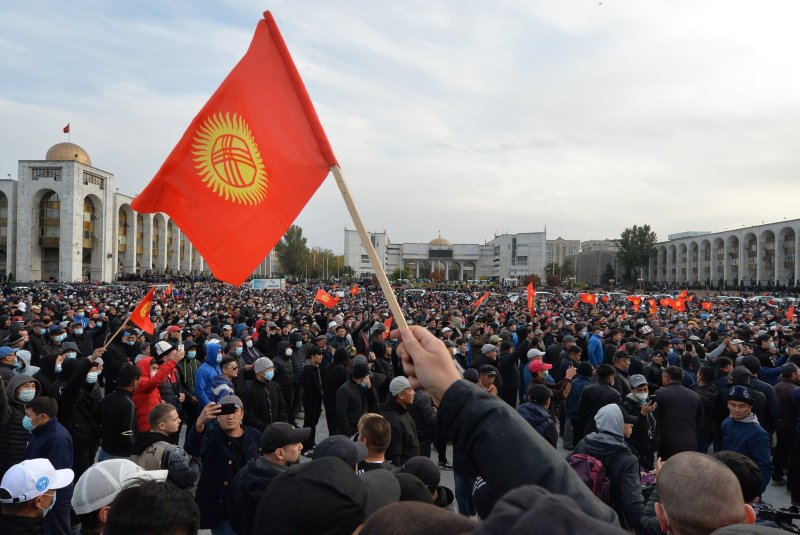
Kyrgyzstan is one of Central Asia’s most politically dynamic and socially diverse countries, News.Az reports.
Located in a mountainous region linking China Central Asia and South Asia it has long played a unique role in the region’s political culture and economic networks. Since independence Kyrgyzstan has experienced repeated cycles of reform protest and adaptation which have shaped a political system markedly different from its neighbors. Today the country continues to navigate a complex path defined by governance challenges economic vulnerability social activism and regional geopolitics.
Historical background and political culture
Kyrgyzstan’s modern political identity is closely linked to its history of nomadic traditions Soviet administration and post independence experimentation. Unlike other Central Asian states Kyrgyzstan developed a reputation early on for relatively open political competition and civic engagement. This openness however has also contributed to periods of instability including multiple changes of government driven by public protest.
The legacy of these events has produced a political culture where public mobilization plays a significant role. Citizens often view protest not as an exception but as a legitimate means of political expression. This has shaped expectations of accountability while also complicating long term policy continuity and institutional consolidation.
Governance and constitutional evolution
Governance reform has been a recurring theme in Kyrgyzstan’s development. Over the years the country has experimented with different constitutional models including parliamentary and presidential systems. Each transition reflected attempts to balance power prevent authoritarian concentration and respond to public demands for change.
Recent years have seen renewed emphasis on central authority justified by the need for stability efficiency and decisive leadership. Constitutional amendments and administrative reforms aim to streamline decision making and strengthen state capacity. Critics warn of risks to democratic pluralism while supporters argue that effective governance is essential for economic and social progress. This debate continues to define Kyrgyzstan’s political landscape.
Economic structure and vulnerability
Kyrgyzstan’s economy is characterized by limited industrial capacity dependence on external factors and strong links to labor migration. Agriculture mining and services form the backbone of domestic production while remittances from citizens working abroad account for a significant share of household income and national GDP.
Gold mining remains a critical sector providing export revenue and fiscal support. At the same time it exposes the economy to price fluctuations environmental concerns and governance challenges. Diversification efforts focus on agriculture processing hydropower tourism and small scale manufacturing but progress has been uneven.
Structural constraints such as mountainous geography landlocked location and limited infrastructure increase costs and complicate integration into global markets. These factors make economic resilience a central policy concern especially during periods of global uncertainty.
Social dynamics and migration
Social dynamics in Kyrgyzstan are deeply influenced by migration patterns. Large numbers of citizens work abroad primarily in neighboring countries and send remittances that support families and local economies. Migration provides income opportunities but also creates social challenges including labor shortages family separation and dependence on external labor markets.
Urbanization is gradually reshaping society as internal migration increases pressure on cities particularly the capital. Housing employment and public services struggle to keep pace with population movement. Addressing these challenges requires coordinated social policy investment and long term planning.
Youth play a prominent role in social and political life. A relatively young population with access to digital tools and social networks contributes to active public debate and mobilization. Managing youth expectations around employment participation and opportunity is a key factor in maintaining social stability.
Civil society and media environment
Kyrgyzstan has one of the most active civil society sectors in Central Asia. Non governmental organizations independent media and grassroots movements contribute to public discourse policy advocacy and oversight. This environment has fostered transparency and accountability but also periodic tension with authorities.
Media freedom has historically been broader than in much of the region though it faces increasing regulatory and political pressure. The balance between combating disinformation ensuring national security and preserving freedom of expression remains a contested issue. How this balance is managed will significantly influence Kyrgyzstan’s democratic trajectory.
Foreign policy and regional relations
Kyrgyzstan’s foreign policy reflects its strategic location and economic needs. Relations with neighboring Central Asian states focus on border management water resources trade and security. Border issues particularly in complex frontier areas have at times led to tensions underscoring the importance of dialogue and conflict prevention mechanisms.
The country maintains partnerships with major global and regional powers seeking economic assistance investment and security cooperation. Membership in regional organizations provides frameworks for trade labor mobility and political coordination. Balancing these relationships while safeguarding national sovereignty is a constant diplomatic task.
Kyrgyzstan also plays a role in regional connectivity discussions. Transport corridors energy projects and trade facilitation initiatives could enhance its integration into broader Eurasian networks if infrastructure and investment challenges are addressed.
Energy resources and environmental considerations
Hydropower represents one of Kyrgyzstan’s most significant strategic assets. The country’s mountainous terrain and water resources offer potential for renewable energy development and regional electricity exports. However infrastructure limitations financing constraints and regional coordination issues have slowed progress.
Energy security is closely linked to environmental sustainability. Climate change impacts including glacier retreat water variability and natural disasters pose risks to agriculture energy production and livelihoods. Integrating environmental resilience into economic planning is increasingly recognized as a national priority.
Digitalization and state capacity
Digitalization offers opportunities to improve governance service delivery and economic participation. Kyrgyzstan has introduced e government platforms aimed at reducing bureaucracy increasing transparency and improving access to services. Digital tools also support education entrepreneurship and civic engagement.
However digital divides remain between urban and rural areas. Infrastructure investment skills training and cybersecurity frameworks are necessary to ensure that digital transformation contributes to inclusive development rather than deepening inequality.
Culture identity and tourism
Cultural heritage plays an important role in national identity and economic diversification. Nomadic traditions music crafts and festivals are increasingly promoted as part of cultural tourism strategies. Natural landscapes including mountains lakes and valleys provide strong potential for eco tourism and adventure travel.
Tourism development offers income and employment opportunities but requires careful management to protect fragile environments and ensure benefits reach local communities. Sustainable tourism policies could help balance economic growth with cultural and environmental preservation.
Challenges and future prospects
Kyrgyzstan’s challenges are interconnected. Political volatility economic vulnerability social inequality and regional pressures require comprehensive and coordinated responses. Strengthening institutions improving policy consistency and investing in human capital are essential for long term stability.
At the same time Kyrgyzstan possesses important strengths. An engaged society adaptive political culture and strategic location provide foundations for progress. The country’s experience demonstrates both the possibilities and complexities of political openness in a transitional context.
Why Kyrgyzstan matters
Kyrgyzstan matters because it represents a distinct model in Central Asia where civic participation and political change have played an outsized role. Its trajectory influences regional norms around governance stability and reform. How Kyrgyzstan balances openness with effective statehood will shape its future and offer lessons beyond its borders.
The story of Kyrgyzstan is one of resilience negotiation and ongoing transformation. It is neither linear nor predictable but it reflects a society continually redefining its relationship with power economy and identity. As regional and global conditions evolve Kyrgyzstan’s ability to adapt will determine its place in Central Asia’s future.


Similar news