How the Russia–Ukraine war might end and reshape global debate


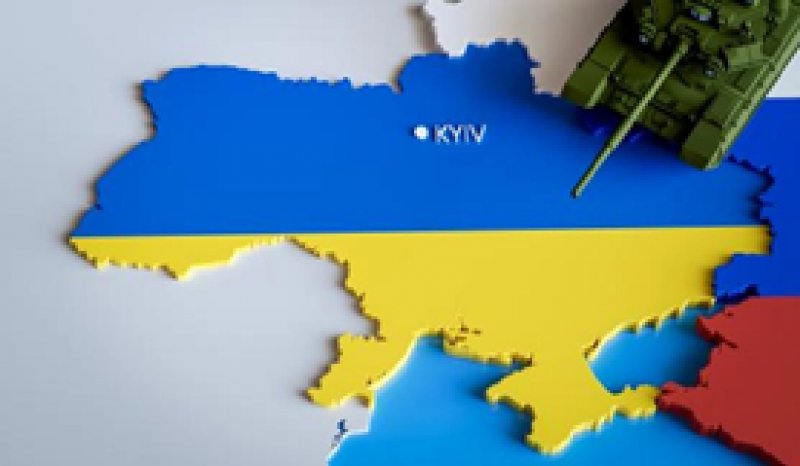
The question of how the Russia–Ukraine war will end has become one of the most globally searched and widely discussed topics of the present era, News.Az reports.
As the conflict moves through a prolonged and destructive phase marked by drone warfare, entrenched front lines and intense diplomatic manoeuvring, analysts, governments and ordinary people continue to ask what the final outcome could look like. While immediate developments fluctuate from week to week, the broader forces shaping the conflict’s trajectory remain consistent, allowing for a clearer understanding of the potential paths ahead.
The war’s end will depend on military realities, political calculations, economic pressure and diplomatic engagement. Yet none of these elements, on their own, guarantee a settlement. The conflict has grown beyond a regional dispute; it has become a geopolitical confrontation with global implications, influencing energy markets, defence strategies, international law debates and the balance of power between major states. This makes the endgame both complex and deeply consequential.
A war defined by evolving military strategies
From its early stages to its current phase, the war has continually evolved. The frontline remains largely static, but the methods and tools of warfare continue to shift. Long-range drones, artillery duels, electronic warfare and precision strikes dominate the battlefield. Both sides have adapted rapidly, making quick breakthroughs unlikely.
Ukraine focuses on weakening Russia’s logistics, supply hubs and air defence systems through deep strikes. Russia continues to pressure Ukraine’s energy grid, transport infrastructure and military positions. These competing strategies indicate that both sides still believe military pressure can improve their negotiating positions.
In past conflicts, wars often ended when one side gained decisive advantage. But in this case, the balance has settled into a form of attrition, where neither side sees surrender as an option. As a result, any end to the war will likely involve diplomacy shaped heavily by battlefield realities rather than total victory by either party.
Diplomacy intensifies but remains constrained
Diplomatic activity surrounding the war has increased significantly, reflecting recognition that a military breakthrough alone may not bring an end. High-level meetings in European capitals, regional summits and quiet negotiations have become more frequent. International actors explore ceasefire models, security guarantees, demilitarised zones and phased political agreements.
However, the diplomacy remains constrained by fundamental differences:
– Ukraine insists that its territorial integrity must be fully restored.
– Russia seeks to retain strategic control over occupied territories and influence Ukraine’s future orientation.
– Western allies want a solution that does not reward aggression.
– Non-aligned countries push for an end to sanctions and global economic disruptions.
These competing interests create a diplomatic landscape where the path to agreement is possible but narrow. Any progress will likely require a shift in expectations, internal political changes or a major change in battlefield conditions.
The role of global powers
Major global powers play a central role in shaping possible outcomes. The United States and European countries continue to support Ukraine militarily, financially and diplomatically. Their involvement provides Ukraine with the means to resist Russian advances and negotiate from a position of strength.
China presents itself as a mediator, though its proposals remain vague and widely seen as more favourable to Russia. Still, Beijing’s economic importance gives it influence, especially regarding sanctions, trade and energy.
Other regional actors, including Türkiye, the Gulf states and countries in the Asia-Pacific region, monitor the conflict closely due to its global repercussions. Many of them participate indirectly through diplomacy, humanitarian aid, energy deals or trade adjustments.
The international system’s fragmented response reflects differing priorities, but most major actors share an interest in eventually stabilising the region and preventing escalation.
Possible endgame scenarios
Analysts generally outline several potential pathways through which the war could end. Each scenario carries challenges and uncertainties, and none can be fully predicted. However, these models help frame the current debate.
-
A negotiated ceasefire without political settlement
In this scenario, both sides agree to halt active hostilities while maintaining their positions. This would mirror other frozen conflicts, where fighting stops but political issues remain unresolved. It could stabilise the frontline but leave tensions simmering. The challenge: a ceasefire without guarantees may allow either side to regroup for a future escalation. -
A phased peace agreement
A multi-stage process involving a ceasefire, security guarantees, demilitarised zones, prisoner exchanges and long-term political negotiations. This approach is common in protracted conflicts but requires sustained international pressure and monitoring. The advantage: it reduces violence while giving space for diplomacy. The risk: implementation can be slow and fragile. -
A breakthrough on the battlefield
Although unlikely in the short term, a major military shift could change bargaining power. If one side gains significant territorial advantage, negotiations could accelerate. The challenge: achieving such breakthroughs has proven difficult due to entrenched positions and improved defences. -
Internal political change
Leadership changes or shifts in public opinion in either Russia or Ukraine could alter strategic goals. Political dynamics inside major supporting countries could also reshape aid flows or diplomatic posture. Such changes could either accelerate peace or prolong the conflict depending on the direction of political movements. -
A long-term war of attrition
The conflict could continue for years without significant changes, similar to other drawn-out wars in modern history. Both sides may sustain the fight despite heavy costs, hoping to secure better conditions over time. This scenario prolongs human suffering and keeps global tension high.
The reconstruction question
One of the major challenges in any end-of-war scenario is Ukraine’s reconstruction. The economic and infrastructural damage is enormous. Rebuilding energy systems, transport networks, housing, industrial capacity and agricultural regions will require one of the largest reconstruction efforts in post-war Europe. The cost—running into hundreds of billions—will influence political decisions.
Investors and donors require stability before committing large-scale funds. This means that any endgame must include durable security arrangements. Without them, reconstruction may be slow or incomplete, and the risk of renewed conflict could remain high.
Energy security and global markets
The war transformed global energy markets, forcing countries to diversify supplies, adjust consumption patterns and rethink strategic reserves. Europe drastically reduced its dependence on Russian gas, reshaped its energy infrastructure and accelerated renewable investments. These changes are largely irreversible, regardless of how the war ends.
Oil and gas markets continue to react to shifts in the conflict. A ceasefire could stabilise prices, while escalation would likely bring renewed volatility. Developing economies, in particular, feel the effects of these fluctuations. This global economic dimension adds urgency to diplomatic efforts.
Humanitarian pressures and public opinion
The humanitarian impact remains immense. Civilian casualties, displacement, damaged cities and disrupted livelihoods create long-term social challenges. Humanitarian organisations warn that even a ceasefire would not immediately solve shortages or rebuild essential services.
Public opinion also shapes political decisions. Citizens in many countries increasingly ask when the conflict will end and how their governments’ policies affect the war’s duration. Such pressures influence aid decisions, diplomatic stances and strategic planning.
Why predicting the end remains difficult
The Russia–Ukraine war is not a typical bilateral conflict. It intersects with global security, ideology, energy and economics. Predicting how it will end is difficult because the incentives for compromise remain limited. Each side views the stakes as existential: for Ukraine, its sovereignty; for Russia, its geopolitical influence and strategic buffer.
As long as both sides believe they can improve their position—militarily or diplomatically—the conflict may continue. The war is also shaped by external powers whose policies can accelerate or delay progress.
Still, history shows that even the most intractable conflicts eventually move toward resolution through negotiation, exhaustion or strategic recalculation. The challenge lies in identifying when conditions shift enough to create a viable opening.
Conclusion: the world continues to watch the turning points
The question “How will the Russia–Ukraine war end?” will continue to dominate global conversation because the stakes extend far beyond the battlefield. The war influences everything from global food prices to defence strategies, from diplomatic alliances to energy markets.
While the exact endgame remains uncertain, several consistent themes emerge: diplomacy is increasing, military lines are hardening, humanitarian needs are growing and the international system is adjusting to long-term consequences. The war will likely end not through a single event but through a series of shifts—military, political, economic and diplomatic—that gradually create space for a settlement.
Until those shifts align, the world will continue to watch closely, searching for signs of turning points that might bring this major conflict to a close.


Similar news