How to tie a tie in 2026: why this classic question remains evergreen


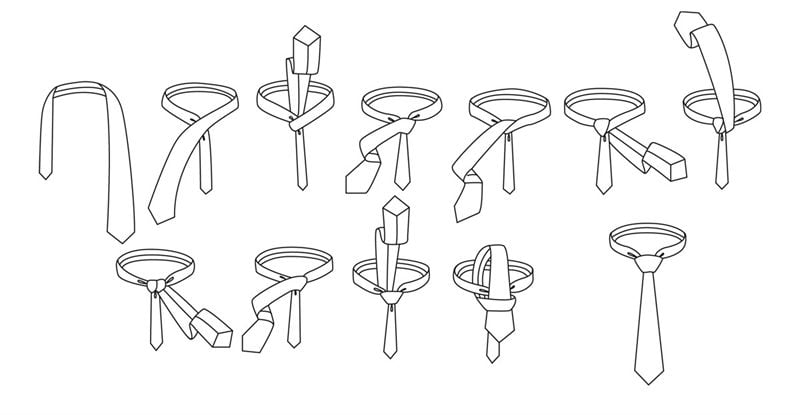
How to tie a tie is one of the most consistently searched questions on the internet. Year after year, it appears near the top of global “how to” lists, sitting alongside queries about screenshots, cooking basics, and password resets, News.Az reports.
It is almost a digital tradition: millions of people, right before an interview, wedding, ceremony, or school event, open their phones and type those four familiar words — how to tie a tie.
The popularity of this search reveals something interesting about modern life. Even in an age of smart devices, artificial intelligence, and automated everything, a simple physical skill involving a piece of fabric remains stubbornly relevant. It is not that people cannot learn it. Rather, they often do not need to practice it every day. Many people wear ties only a few times a year, meaning the technique fades from memory between occasions. When the moment arrives, the internet becomes the instructor.
There are many different ways to tie a tie. The four most common methods searched online are the Four-in-Hand knot, the Half Windsor knot, the Full Windsor knot, and the Pratt knot. Each has its own history, level of difficulty, and visual style. The Four-in-Hand knot is the simplest and most casual, often recommended for beginners or for narrow ties. The Windsor knots create a more triangular and symmetrical shape, favored for formal occasions and spread-collar shirts. The Pratt sits somewhere in between.
But beyond the technical details, the global fascination with “how to tie a tie” is closely tied to social moments. People tend to search for it at life milestones: first jobs, graduation ceremonies, weddings, formal dances, award nights, and sometimes funerals. These are moments filled with emotion, nerves, and significance. Learning or relearning to tie a tie becomes part of the ritual of getting ready for something that matters.
There is also a generational element. Previous generations often learned the skill from a parent, teacher, or senior colleague. Today, families are more dispersed, and schedules are more fragmented. Not everyone has someone nearby who can demonstrate the steps. In that sense, the internet has taken on the role of a universal mentor, providing instant, judgment-free guidance at the exact moment it is needed.
The ongoing relevance of this search term also reflects changes in workplace and fashion culture. Many offices around the world have shifted toward more casual dress codes. Remote work further reduced daily tie use. As a result, fewer people wear ties regularly, and even those who know how to tie one may go years without needing the skill. When a rare formal event appears on the calendar, they rediscover it the same way as everyone else — by asking a search engine.
However, ties still hold powerful symbolic meaning. They are associated with professionalism, ceremony, and respect. In many cultures, wearing a tie marks a transition from informal to formal identity. This symbolic weight is one reason people want to get it right. A poorly tied knot can look messy or uneven. A well-tied one signals care and preparation.
From an editorial standpoint, what makes “how to tie a tie” particularly evergreen is its blend of simplicity and subtlety. The basic act involves just a few steps — looping, crossing, folding, and pulling — yet the exact order determines whether the final result lies flat and symmetrical or ends up twisted and uneven. The learning curve is short, but precision matters.
Another factor in the topic’s durability is that visual and written instructions coexist. Some people prefer diagrams or step-by-step text. Others rely on video tutorials so they can mirror the instructor’s movements. The search engine results for “how to tie a tie” are therefore filled with a mix of articles, animations, charts, and videos ranging from fashion experts to everyday people recording tutorials in their bedrooms.
There is also a social side to the question. For many, the first time tying a tie is a bonding experience. Parents helping children before a ceremony, friends preparing for a school event, or colleagues adjusting each other’s knots in an office — these small acts create memories. Even when people turn to the internet instead, the moment still carries significance. It is rarely just about fabric and knots. It is about belonging, growing up, or stepping into a new role.
Cultural trends continue to influence the way people search for this topic. Slim ties, wide ties, patterned ties, wool ties, and silk ties all behave slightly differently when tied. Shirt collar shapes also matter. A large Windsor knot may look perfect with a spread collar but crowded with a narrow one. As fashion cycles shift, so do the preferred knot styles, which subtly changes how people search and what they click.
Schools and institutions also play a big role in keeping this search term alive. In many countries, uniforms require ties, meaning each new cohort of students must learn the skill. Some schools teach it formally. Others leave students to figure it out themselves — often the night before term begins. Predictably, search trends spike around first days of school, graduation periods, and exam seasons.
There is a psychological angle too. Tying a tie requires calmness and patience at precisely the moments people feel rushed or anxious. Before an interview or major event, hands may shake, and concentration may falter. Online instructions offer clarity and reassurance. They allow people to pause, rewind, repeat, and practice without embarrassment.
The durability of “how to tie a tie” as a search theme also illustrates the long life of traditional fashion in a fast-changing world. While many elements of clothing have evolved, the necktie has remained structurally similar for over a century. It is one of the few accessories that still depends entirely on human technique. There is no automatic button for tying it. Learning remains part of the experience.
Interestingly, interest in alternative fast-tie solutions — such as clip-on ties or pre-tied knots — has not diminished the popularity of the “how to tie” search. That suggests that, for many, mastering the skill carries personal value. It may feel like a rite of passage, a point of pride, or simply something worth knowing.
From a practical perspective, guides on tying a tie often emphasize a few fundamentals. The wide end generally starts longer than the narrow end. The final length should land near the belt line. The knot should sit snugly at the collar, and the tie should not twist. A small dimple under the knot is often considered a sign of refinement. These principles remain constant even as styles change.
Looking forward, it is likely that “how to tie a tie” will remain near the top of search rankings for years to come. As long as formal events exist, as long as ties remain part of school uniforms, business attire, and ceremonial dress, the need for quick guidance will continue. New technologies may change how instructions are delivered — through augmented reality overlays or AI voice-guided steps — but the core problem will stay the same.
In a world where many traditional skills have been replaced by digital shortcuts, tying a tie stands out as something still done by hand, learned when needed, and then forgotten until the next occasion. That cycle of forgetting and relearning is precisely what keeps the search term evergreen.
Ultimately, the popularity of “how to tie a tie” is not only about fashion. It is about preparation, identity, and entering important moments with confidence. Whether for a teenager attending a first formal dance, a graduate walking across a stage, or a professional stepping into a new role, the act of tying a tie remains a small but meaningful symbol of readiness. And whenever the memory slips, the internet stands ready to teach the knot all over again.


Similar news