How will FCAS collapse reshape Europe’s military aviation future?


The collapse of the Future Combat Air System (FCAS), once considered Europe's most ambitious military aviation project, has triggered a major strategic reassessment across the continent.
Among the countries most affected is Spain, which had invested significant political, military, and industrial resources into the program, News.az reports.
With FCAS no longer moving forward, Spain now faces a critical challenge: ensuring that it does not lose its place in the development of the next generation of combat aircraft.
The stakes are exceptionally high. Future fighter jet programs are not merely about purchasing military equipment. They determine which countries will possess advanced aerospace industries, cutting-edge technologies, highly skilled workforces, and strategic influence for decades to come. Spain's efforts to join a successor project reflect concerns about national security, economic competitiveness, technological sovereignty, and its role within European defense.
As Europe enters a new race to develop sixth-generation combat aircraft, Spain is seeking to ensure that it remains a major participant rather than becoming dependent on technology designed and controlled by others.
What Was FCAS and Why Was It So Important?
FCAS was conceived as the future of European air warfare. Originally launched by France and Germany and later joined by Spain, the initiative sought to create a sophisticated network of military systems capable of operating in the highly contested battlefields of the future.
Unlike traditional fighter programs that focus primarily on a single aircraft, FCAS was designed as a complete combat ecosystem. The centerpiece would have been a sixth-generation stealth fighter supported by autonomous drones, advanced sensors, artificial intelligence systems, electronic warfare capabilities, and a secure digital combat cloud linking all assets in real time.
The project represented Europe's attempt to compete with similar programs being developed by the United States, China, and other military powers. European leaders viewed FCAS as a strategic necessity because modern air combat increasingly depends on advanced technology, data processing, connectivity, and autonomous systems.
For Spain, FCAS promised access to technologies that would shape military aviation throughout the twenty-first century. It would have ensured that Spanish companies remained integrated into Europe's most advanced defense projects while supporting thousands of jobs and generating valuable technological expertise.
The program also carried significant political symbolism. It was intended to demonstrate that European countries could cooperate effectively on large-scale defense projects and reduce dependence on non-European suppliers.
Why Did FCAS Collapse?
The failure of FCAS was not caused by a single event but rather by years of disagreements between governments and defense companies.
At the center of the dispute were questions about leadership, intellectual property rights, technology sharing, industrial responsibilities, and decision-making authority. The project's complexity created numerous opportunities for conflict among participants.
French aerospace company Dassault Aviation insisted on maintaining control over key aspects of aircraft development, arguing that its experience designing advanced combat aircraft justified a leadership role. Airbus, representing German and Spanish interests, sought a more balanced distribution of responsibilities and influence.
The disagreements extended beyond corporate rivalries. France and Germany often had different strategic priorities and military requirements. France wanted an aircraft capable of carrying nuclear weapons and operating from aircraft carriers, while Germany focused more heavily on conventional missions and alliance-based operations.
These differences became increasingly difficult to reconcile. As deadlines slipped and costs rose, confidence in the project declined. Efforts to mediate disputes repeatedly failed, eventually leading governments to conclude that continuing the program was no longer practical.
The collapse serves as a reminder that multinational defense projects often face challenges that go far beyond technology. Political priorities, national interests, industrial competition, and strategic visions can all become obstacles even when countries share common security goals.
Why Is Spain Particularly Concerned About FCAS Failing?
Spain's concerns stem from both military and economic considerations.
From a defense perspective, FCAS was expected to provide the future replacement for Spain's aging fighter fleet. Military planners had anticipated that the new aircraft would enter service around 2040 and form the backbone of Spanish air power for decades.
Without FCAS, Spain must now reconsider its long-term modernization plans. Developing a replacement strategy will require major investments and potentially difficult decisions about international partnerships.
The economic consequences may be even more significant. Spanish defense companies secured important roles within FCAS and expected to participate in research, development, manufacturing, maintenance, and technology transfer activities over many years.
The aerospace sector is one of the most technologically advanced parts of Spain's economy. Participation in major fighter programs helps maintain engineering expertise, supports innovation, and creates highly skilled employment opportunities. Losing access to such programs could weaken Spain's industrial base and reduce its influence within Europe's defense sector.
Spanish officials therefore view participation in a future fighter initiative as essential not only for military readiness but also for protecting national industrial capabilities.
What Is Spain Doing to Stay in the Fighter Jet Race?
Spain has moved quickly to avoid being marginalized following FCAS's collapse.
The country's leading aerospace and defense firms have publicly expressed their willingness to participate in any new European sixth-generation fighter project. Industry leaders argue that Spain possesses the technical expertise, engineering talent, and manufacturing infrastructure needed to contribute meaningfully to future programs.
These companies are actively engaging with potential partners across Europe and advocating for a prominent Spanish role in whatever initiative emerges next. The objective is not merely to secure contracts but to ensure that Spain remains involved in critical areas such as aircraft design, software development, propulsion systems, sensors, and artificial intelligence.
Government officials are also examining various options for international cooperation. They recognize that future combat aircraft will require investments too large for most European countries to undertake independently.
As a result, Spain's strategy focuses on finding partnerships that allow it to retain technological influence while sharing development costs and risks with other nations.
What Is Team Gen 6 and Why Is It Important?
Following the collapse of FCAS, Germany and several major defense companies began exploring an alternative path forward.
This effort has become known as Team Gen 6, an emerging industrial alliance intended to develop a new sixth-generation combat aircraft and associated systems.
The initiative seeks to learn from FCAS's failures by creating a more flexible structure and avoiding some of the governance problems that plagued the previous project. Supporters argue that a fresh start could allow Europe to pursue advanced fighter development without the disputes that ultimately undermined FCAS.
For Spain, Team Gen 6 represents perhaps the most immediate opportunity to remain involved in cutting-edge military aviation. Participation would enable Spanish companies to continue developing expertise in critical technologies while maintaining their position within the European aerospace ecosystem.
Although the initiative remains in its early stages, many analysts believe it could become the primary successor to FCAS.
Could Spain Join Britain's GCAP Program Instead?
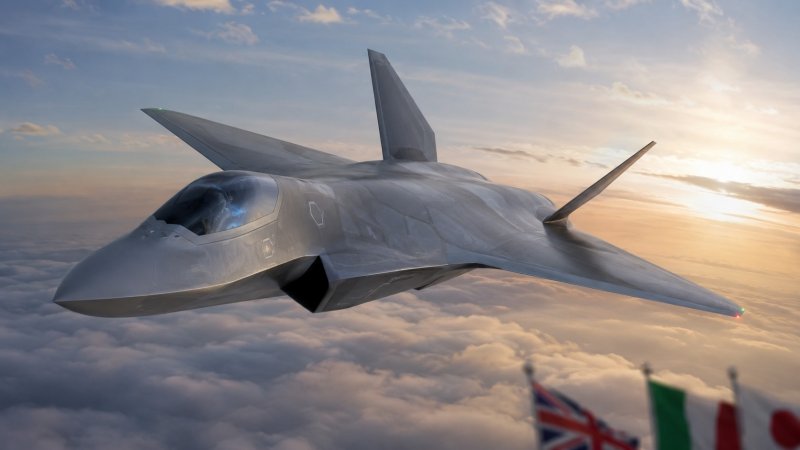
Another option involves participation in the Global Combat Air Programme (GCAP), which is currently being developed by the United Kingdom, Italy, and Japan.
GCAP is widely regarded as one of the world's most advanced sixth-generation fighter projects. Unlike FCAS, it has progressed relatively smoothly and has established clear timelines for development.
Joining GCAP could offer several advantages for Spain. The program already possesses momentum, funding commitments, and a defined industrial structure. Participation would provide access to advanced technologies while reducing uncertainty compared with launching an entirely new initiative.
However, joining an existing consortium may also present challenges. Spain would likely have less influence over key decisions than it would as a founding member of a new project. Negotiating industrial work shares and technology access could also prove complex.
Nevertheless, defense experts increasingly view GCAP as a realistic alternative if efforts to establish a new continental European fighter program encounter difficulties.
Why Are Sixth-Generation Fighters So Different?
The term "sixth-generation fighter" refers to a new class of combat aircraft designed for future warfare environments.
Unlike previous generations, these aircraft will operate as part of interconnected networks rather than as standalone platforms. Advanced sensors, artificial intelligence, cyber capabilities, and autonomous systems will be integrated into every aspect of operations.
Future fighters are expected to control groups of unmanned aircraft, coordinate attacks across multiple domains, and process enormous amounts of information in real time. Pilots will increasingly function as mission commanders directing complex networks of manned and unmanned assets.
Stealth technology will remain important, but it will be only one component of a much broader system designed to dominate highly contested airspaces.
For countries such as Spain, participation in these programs offers access to technologies that extend far beyond military aviation. Advances in software, artificial intelligence, communications, and materials science often generate benefits across civilian industries as well.
Why Are Drones Central to Future Air Combat?
One of the defining features of sixth-generation systems is the integration of unmanned platforms.
Future fighter aircraft are expected to operate alongside autonomous drones capable of conducting reconnaissance, surveillance, electronic warfare, and strike missions. These drones may act as force multipliers, allowing pilots to project power while reducing risks to human crews.
Military planners increasingly believe that future conflicts will involve large numbers of autonomous or semi-autonomous systems working together. Drones can be produced more cheaply than fighter aircraft and may be deployed in situations considered too dangerous for human pilots.
As a result, countries participating in next-generation fighter programs gain access not only to aircraft technologies but also to emerging expertise in robotics, artificial intelligence, and autonomous systems.
These technologies are expected to play a major role in military operations throughout the coming decades.
How Much Is at Stake Economically?
The financial implications are enormous.
Next-generation fighter programs typically involve investments worth tens or even hundreds of billions of euros over their lifetimes. Such projects support vast networks of suppliers, research institutions, technology firms, and manufacturing facilities.
Participation creates highly skilled jobs and encourages innovation in sectors ranging from aerospace engineering to cybersecurity. Many technological breakthroughs developed for military purposes eventually find applications in civilian industries.
For Spain, remaining involved in future fighter development could help sustain a significant portion of its advanced industrial base. Losing access to these opportunities could place domestic companies at a disadvantage compared with competitors in other countries.
This economic dimension helps explain why Spain has reacted so quickly following FCAS's collapse.
What Does This Mean for European Defense Cooperation?
The failure of FCAS highlights both the strengths and weaknesses of European defense cooperation.
On one hand, European countries increasingly recognize the need to work together as security challenges grow more complex. No single European nation can easily afford to develop all necessary defense technologies independently.
On the other hand, multinational projects often become vulnerable to political disagreements, industrial rivalries, and conflicting strategic priorities.
The next phase of fighter development will test whether Europe can overcome these challenges. Success could strengthen the continent's defense capabilities and technological independence. Failure could increase reliance on external suppliers and weaken Europe's position in global defense markets.
Spain's role in this process may prove particularly important because it occupies a position between the major European defense powers and can help build broader coalitions for future cooperation.
What Happens Next?
The coming years will determine whether Europe can successfully launch a new sixth-generation fighter initiative.
Negotiations among governments, defense companies, and military planners are expected to intensify as countries seek alternatives to FCAS. Spain will likely continue pursuing partnerships that guarantee meaningful industrial participation and access to advanced technologies.
At the same time, military modernization pressures are increasing. Existing fighter fleets will eventually require replacement, making delays increasingly costly.
Whether through Team Gen 6, GCAP, or another initiative, Europe is expected to move forward with a new generation of combat aircraft. The key question is not whether a new project will emerge, but who will lead it and how responsibilities will be shared.
The Bottom Line
Spain's search for a place in Europe's new fighter jet race reflects a much broader struggle over technology, industrial power, and strategic influence. The collapse of FCAS created uncertainty, but it also opened opportunities for new partnerships and fresh approaches to defense cooperation.
For Spain, the objective is clear: remain at the forefront of military aviation innovation rather than becoming dependent on technologies developed elsewhere. The decisions made in the next few years will shape not only Spain's air force but also its aerospace industry, economic competitiveness, and role within European security for decades to come.
By Faig Mahmudov


Similar news