India–Europe strategic corridor gains momentum as Modi visits Italy


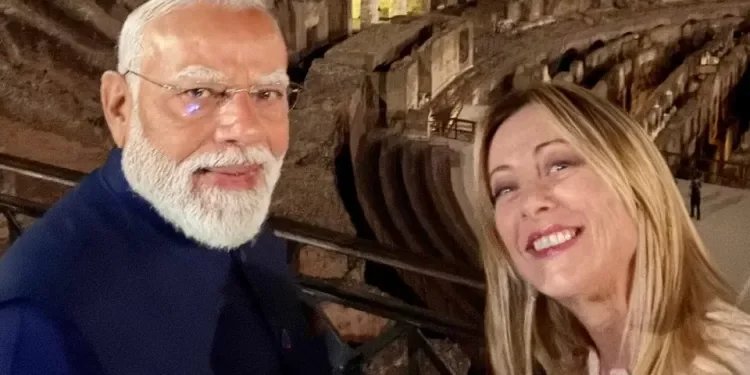
Indian Prime Minister Narendra Modi’s visit to Italy is drawing renewed attention to one of the most ambitious geopolitical and economic projects connecting Europe, the Middle East, and Asia.
As India and European countries deepen cooperation in trade, infrastructure, energy, and technology, analysts say the visit reflects the growing importance of the proposed India–Middle East–Europe Economic Corridor and the broader transformation of global supply chains.
The trip comes at a time when Europe is seeking alternatives to excessive dependence on China, while India is positioning itself as a rising economic and strategic power capable of playing a central role in global manufacturing, logistics, and digital infrastructure.
Italy, meanwhile, is increasingly emerging as a key gateway between India and Europe due to its geographic position, industrial capacity, and growing political alignment with New Delhi.
The visit therefore carries significance not only for bilateral ties, but also for the future of Eurasian trade and global geopolitical competition.
Why is Modi’s visit to Italy important?
The visit is important because it highlights the rapidly expanding strategic relationship between India and European nations.
Over the past several years, India has become an increasingly attractive partner for Europe in areas such as manufacturing, semiconductors, clean energy, digital infrastructure, and supply chain diversification.
Italy, as one of Europe’s largest industrial economies and a Mediterranean logistics hub, plays a particularly important role in these discussions.
The trip also reflects growing cooperation between India and Western partners amid shifting global power dynamics. As tensions between the West and China continue, many governments are accelerating efforts to reduce strategic vulnerabilities and build alternative trade and investment networks.
Modi’s visit is therefore part of a broader effort to strengthen economic corridors that connect Europe and Asia without relying exclusively on Chinese-controlled infrastructure systems.
What is the India–Middle East–Europe Economic Corridor?
The India–Middle East–Europe Economic Corridor, often referred to as IMEC, is a proposed trade and infrastructure network designed to connect India with Europe through the Middle East.
The initiative includes railways, ports, energy pipelines, shipping routes, and digital infrastructure. It aims to improve trade connectivity between India, Gulf countries, and European markets while reducing transportation times and logistical bottlenecks.
The project gained international attention after being announced during the G20 summit in New Delhi. Participants include India, the United States, Saudi Arabia, the United Arab Emirates, the European Union, France, Germany, Italy, and other partners.
Supporters describe it as a transformative economic corridor that could reshape trade across Eurasia.
Why is Europe interested in closer ties with India?
Europe sees India as both an economic opportunity and a strategic necessity.
India is one of the world’s fastest-growing major economies and is projected to become one of the largest consumer and manufacturing markets globally over the coming decades.
European countries are also increasingly seeking to diversify supply chains away from excessive concentration in China. The COVID-19 pandemic, geopolitical tensions, and concerns over economic security accelerated this trend.
India offers several advantages in this context, including a large workforce, expanding industrial capacity, growing digital infrastructure, and political alignment with democratic economies.
European companies are particularly interested in sectors such as pharmaceuticals, renewable energy, electric vehicles, semiconductors, artificial intelligence, and advanced manufacturing.
Why is Italy becoming strategically important for India?
Italy occupies a critical geographic position in the Mediterranean and serves as an important logistical bridge between Europe, North Africa, and the Middle East.
Italian ports and transport infrastructure could play a central role in future Eurasian trade corridors connected to IMEC.
In addition, Italy possesses strong industrial expertise in machinery, automotive manufacturing, engineering, luxury goods, and green technologies. These sectors align closely with India’s development priorities and industrial expansion plans.
Rome is also attempting to strengthen its international economic partnerships after reassessing aspects of its previous engagement with China’s Belt and Road Initiative.
As a result, cooperation with India is increasingly viewed as part of Italy’s broader strategy to diversify partnerships and expand its role in global trade networks.
How does this relate to China?
The growing India–Europe partnership is closely linked to global concerns about China’s economic influence and geopolitical ambitions.
China’s Belt and Road Initiative significantly expanded Beijing’s influence across Asia, Africa, Europe, and the Middle East through infrastructure investment and trade connectivity projects.
However, many Western countries have become increasingly cautious about dependence on Chinese supply chains and strategic infrastructure.
The India–Middle East–Europe corridor is widely viewed as an alternative connectivity model supported by democratic and Western-aligned economies.
While officials publicly emphasize economic cooperation rather than geopolitical rivalry, the project clearly reflects broader strategic competition over trade routes, technology standards, and global influence.
What sectors are likely to benefit most from India–Italy cooperation?
Several sectors are expected to benefit significantly.
Manufacturing is one of the most important areas. India is actively seeking foreign investment to expand domestic industrial production under initiatives such as “Make in India.”
Green energy cooperation is another major focus. Europe and India are both investing heavily in renewable energy, hydrogen technologies, sustainable infrastructure, and electric mobility.
Defense and aerospace cooperation are also growing areas of interest. India continues modernizing its military and expanding defense partnerships with Western countries.
Technology and digital infrastructure represent additional opportunities. European firms are increasingly exploring partnerships in semiconductors, cybersecurity, artificial intelligence, fintech, and telecommunications.
Infrastructure and logistics development linked to IMEC could also generate major investment opportunities across ports, rail systems, and transportation networks.
Could IMEC compete directly with China’s Belt and Road Initiative?
Many analysts believe IMEC is partly intended to provide an alternative to the Belt and Road Initiative, though the two projects differ in important ways.
China’s Belt and Road Initiative has already financed and constructed infrastructure projects across dozens of countries over more than a decade.
IMEC remains at a much earlier stage and faces significant political, financial, and logistical challenges before large-scale implementation becomes reality.
However, supporters argue that IMEC could offer a more transparent and collaborative framework focused on economic sustainability, digital integration, and strategic diversification.
Rather than replacing China’s infrastructure networks entirely, IMEC may become part of a broader trend toward competing global connectivity systems.
What role does the Middle East play in this strategy?
The Middle East is central to the proposed corridor.
Countries such as Saudi Arabia and the United Arab Emirates are attempting to transform themselves into global logistics, investment, and technology hubs beyond traditional oil dependence.
The corridor would connect Indian ports to Gulf infrastructure networks and then onward to Europe through rail and maritime systems.
This strengthens the strategic importance of Gulf states in global trade while creating new opportunities for investment and industrial cooperation.
The project also aligns with broader efforts by Gulf economies to diversify into renewable energy, finance, transportation, and digital technologies.
How could global trade change if the corridor succeeds?
If fully implemented, the corridor could significantly alter trade patterns between Asia and Europe.
Transportation times for goods could potentially decrease, supply chains could become more diversified, and dependence on certain maritime chokepoints could be reduced.
The corridor could also stimulate industrial growth along participating routes, encouraging investment in ports, railways, warehouses, logistics centers, and manufacturing hubs.
Digital infrastructure and energy connectivity projects could further deepen economic integration between participating regions.
At the same time, competition between major connectivity initiatives may accelerate geopolitical rivalry over trade standards, technology systems, and strategic infrastructure control.
What challenges could threaten the project?
Despite its ambitious vision, the corridor faces numerous challenges.
Regional instability in the Middle East remains one of the biggest risks. Political tensions and security concerns could complicate long-term infrastructure development.
Financing is another challenge. Large-scale infrastructure projects require enormous investment and long-term political commitment.
Coordination between multiple countries with different economic systems and political priorities may also prove difficult.
Competition from existing trade routes and Chinese-backed infrastructure projects could further complicate implementation.
In addition, global economic uncertainty, inflation, and shifting political leadership in participating countries could slow progress.
How does this affect global geopolitics?
The growing India–Europe partnership reflects broader geopolitical realignment taking place across the international system.
India is increasingly seen by Western countries as a strategic counterbalance to China while maintaining its own independent foreign policy approach.
Europe, meanwhile, is attempting to strengthen economic resilience and diversify partnerships amid growing geopolitical fragmentation.
The corridor also demonstrates how infrastructure and trade routes are becoming central instruments of geopolitical influence.
In the modern global economy, control over supply chains, digital systems, energy networks, and transportation corridors increasingly shapes international power relationships.
Could India become a global manufacturing superpower?
Many analysts believe India has significant potential to become a major global manufacturing center, though important challenges remain.
The country possesses a large labor force, expanding infrastructure, and a rapidly growing domestic market. Global companies are increasingly considering India as part of “China plus one” diversification strategies.
However, India still faces obstacles including infrastructure gaps, bureaucratic complexity, labor market challenges, and uneven industrial productivity.
Closer cooperation with Europe could help accelerate technology transfer, investment flows, and industrial modernization.
If successful, India’s rise as a manufacturing and logistics hub could become one of the defining economic transformations of the coming decades.
What does Modi’s Italy visit ultimately symbolize?
The visit symbolizes a broader shift in the global balance of economic and geopolitical relationships.
The world economy is increasingly reorganizing around strategic supply chains, regional partnerships, and infrastructure corridors shaped by geopolitical competition.
India’s growing importance reflects both its economic potential and its strategic value in an era defined by rivalry between major powers.
Italy’s role highlights how European countries are repositioning themselves within this changing landscape.
The discussions in Rome therefore represent more than a bilateral diplomatic engagement. They reflect the emergence of new alliances, new trade routes, and a new phase in the competition to shape the future global order.
By Faig Mahmudov


Similar news