India and Italy bet on new corridor linking Asia, Gulf and Europe


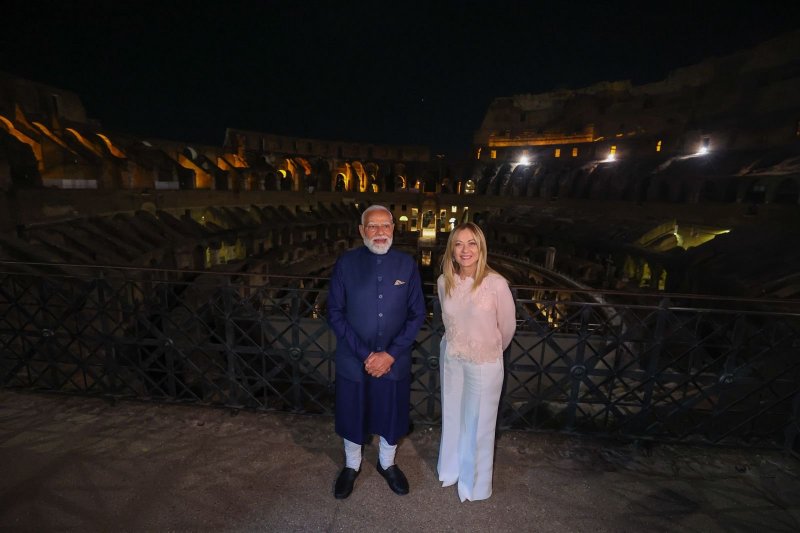
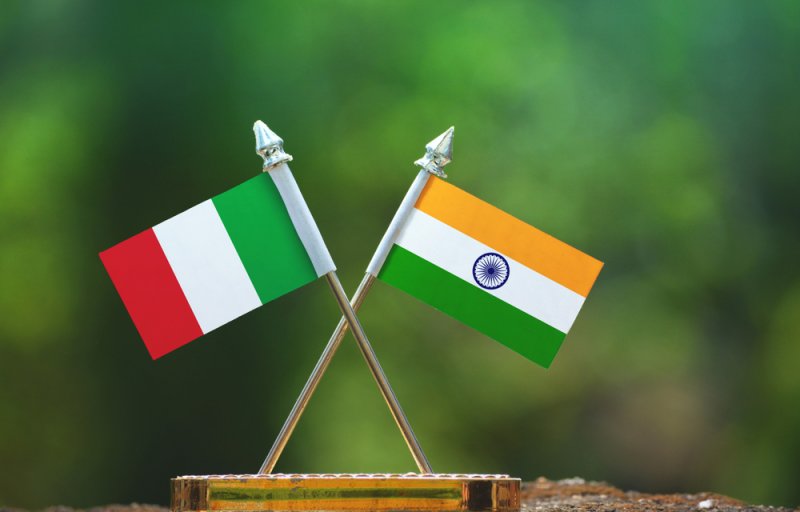
Indian Prime Minister Narendra Modi’s visit to Rome is not merely the final stop of his international tour. It is a major signal of how New Delhi sees its place in the emerging global order. India and Italy are preparing to elevate their bilateral relations to the level of a special strategic partnership. In diplomatic language, this is not just a symbolic phrase. It means the two countries are seeking to move beyond ordinary trade and political dialogue and turn their relationship into a long-term framework covering the economy, technology, logistics, maritime security, energy and global supply chains.
At the center of Modi’s visit to Rome are talks with Italian Prime Minister Giorgia Meloni, as well as a broader package of agreements expected to cover maritime transport, agriculture, higher education, critical minerals and the fight against financial crimes. The visit shows that both sides are looking at the relationship not as a narrow bilateral track, but as part of a much wider geopolitical project.
At first glance, this may look like another diplomatic visit. In reality, Rome and New Delhi are discussing a much bigger question: who will shape and control the new trade routes connecting India, the Middle East and Europe. That is why one of the key elements of the talks is the India-Middle East-Europe Economic Corridor, known as IMEC. The project was announced in 2023 as a new transport and logistics artery designed to connect India with Europe through the Arabian Gulf.
RECOMMENDED STORIES
At a time when traditional maritime routes are becoming increasingly vulnerable because of wars, sanctions, energy instability and great power competition, IMEC is no longer just an infrastructure project. It is becoming a geopolitical bet. For India, it offers a faster and more reliable way to reach European markets. For Italy, it creates an opportunity to become one of Europe’s main gateways for Indian trade.
Italy has a special place in this equation. Geography is once again becoming politics. Rome increasingly views the Mediterranean not only as a region of migration challenges and energy routes, but also as a space where Italy can restore its role as a major European transit, industrial and diplomatic hub. If IMEC begins to function at full capacity, Italy could claim the status of one of the key points linking Europe with India, the Gulf states and, more broadly, the Indo-Pacific region.
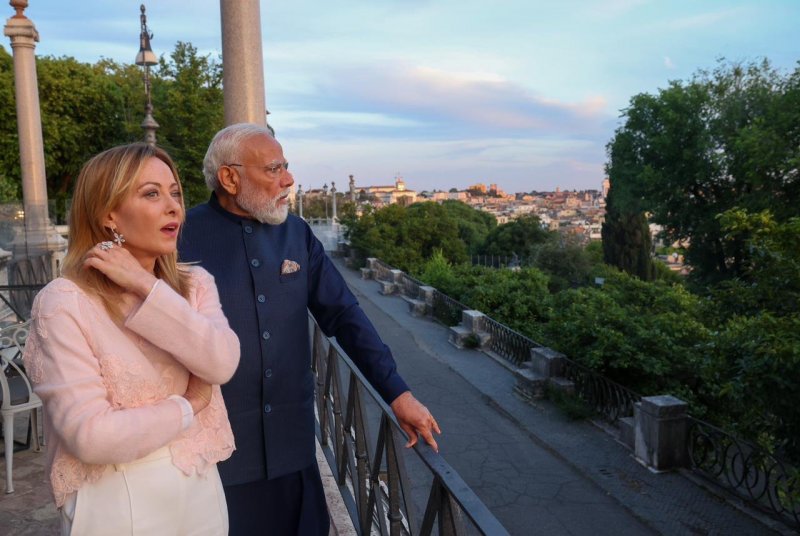
This is why the term Indo-Mediterranean vision is appearing more often in the Italian-Indian agenda. It reflects an attempt to connect India’s interests in the Indo-Pacific with Italy’s and Europe’s interests in the Mediterranean. This approach could become a new conceptual framework for the partnership between Modi and Meloni.
For India, the visit is particularly important as New Delhi seeks to diversify its foreign economic ties. India no longer wants to depend on one direction — whether on Russia in defense and energy, on China in production chains, or on the United States in technology and markets. New Delhi is building a multi-vector policy: preserving relations with Moscow, deepening cooperation with Washington, actively working with the Arab monarchies, strengthening dialogue with the European Union and promoting its own role as an independent center of power.
Italy fits well into this strategy. It is a member of the G7, an important EU economy, a major industrial player and a country interested in a more active foreign policy beyond the traditional European space. For New Delhi, Rome is not just another European capital. It is a potential entry point into the Mediterranean, the EU market and the future logistics architecture between Asia and Europe.
The economic dimension of the visit is no less important than the political one. According to Reuters, bilateral trade between India and Italy stood at around 14 billion euros in 2023, and both countries now aim to increase it to 20 billion euros by 2029. This target reflects not only the growth of commercial ties, but also the changing structure of the partnership. Italy is one of India’s key economic partners in Europe, while India is becoming an increasingly important market for Italian industrial goods, machinery, technology, luxury products, food-processing equipment and high-value manufacturing.
At the same time, Indian exports, including pharmaceuticals, engineering goods, chemicals, textiles, agricultural products and technology services, are gaining more space in the Italian market. If the two sides manage to expand cooperation in logistics, critical minerals, maritime transport and the IMEC corridor, the trade volume could grow not only quantitatively, but also strategically, turning India-Italy economic ties into one of the most promising bridges between Asia and Europe.
This is an ambitious but realistic goal, given that cooperation already covers several promising sectors: mechanical engineering, agriculture, artificial intelligence, scientific research, critical minerals, education, logistics and maritime transport.
The focus on critical minerals is especially important because the world is entering a fierce competition for the resources of the future. Lithium, cobalt, nickel, rare earth elements and other strategic materials are becoming essential for electric vehicles, batteries, defense industries, semiconductors and green energy. Europe is trying to reduce its dependence on China in this area, while India wants to become part of new industrial chains not as a raw-material appendage, but as a production and technology hub.
For Italy, cooperation with India could help strengthen the resilience of European industry. For India, it offers access to European technologies, capital and markets. This is exactly the kind of partnership that both sides need in a period when supply chains are being rebuilt and countries are looking for more reliable economic partners.
The technology agenda also shows that Rome and New Delhi are thinking far ahead. Since the establishment of a strategic partnership in 2023, the two countries have already expanded cooperation in scientific research, artificial intelligence and trade. Now, with the expected elevation of relations to the level of a special strategic partnership, this track may receive a stronger institutional foundation: regular summits, working groups, joint projects between universities, technology companies and research centers.
Agriculture and food security are another area that may seem secondary at first, but in fact carries serious importance. Modi is expected to visit the headquarters of the Food and Agriculture Organization of the United Nations in Rome, underlining India’s growing role in the global food agenda. India is one of the world’s largest food producers, while Italy has strong agricultural technologies, food-processing expertise, global brands and deep experience in quality standards.
Cooperation between the two countries could cover not only trade, but also sustainable farming, irrigation, storage technologies, food processing and responses to the impact of climate change. In a world where food security is becoming an increasingly political issue, this part of the agenda is also strategically important.
Politically, the meeting between Modi and Meloni matters because the two leaders have developed a visible diplomatic chemistry. In international politics, personal rapport does not replace national interests, but it can help accelerate decisions. Meloni wants to present Italy as a country capable of playing an independent role in Europe and beyond. Modi, in turn, is showing that India is no longer limiting itself to traditional formats such as BRICS, the SCO or dialogue with the United States. Instead, New Delhi is building its own network of partnerships across the world.
Their interaction is part of a broader Indian strategy: India does not want to be a junior partner in anyone’s bloc. It wants to be an independent center around which new routes, markets and technological alliances are built.
The visit to Italy is also important for India’s relations with the European Union. Rome could become one of the main advocates of a deeper dialogue between New Delhi and Brussels, including possible progress on trade arrangements between India and the EU. For Europe, this is especially relevant amid competition with China, dependence on external markets and the search for new reliable partners in Asia. For India, the European direction opens access to capital, technologies, high production standards and political recognition of its role as a global power.
At the same time, Modi’s Rome visit cannot be viewed separately from his broader tour. Before arriving in Italy, he visited other European and Middle Eastern partners. This route shows that India is trying to connect the Gulf, Europe and its own domestic market into one strategic line. In this logic, Italy is not just another European stop. It is a potential bridge between the Indian economy and Europe’s industrial system.
That is why elevating the relationship to the level of aspecial strategic partnership could have consequences far beyond bilateral diplomacy. If both sides fill this status with real projects, India and Italy may create one of the most dynamic formats of cooperation between Asia and Europe. IMEC, trade, critical minerals, maritime transport, agriculture and technology are all parts of the same larger picture: the world is searching for new routes, new alliances and new centers of resilience.
For Modi, the visit to Rome is an opportunity to show that India is no longer just a growing market. It is a country offering its own architecture of global connectivity. For Meloni, it is a chance to position Italy as India’s key European partner and a major player in the Mediterranean. For Europe as a whole, it is a reminder that in the new global economy, those who move faster to build bridges between regions, resources, technologies and political interests will have the advantage.
In this sense, the Modi-Meloni meeting in Rome may turn out to be more than a routine diplomatic episode. It could become one of the steps toward shaping a new trade and strategic corridor for the 21st century.
By Samir Muradov


Similar news