The global water crisis: Could water become the world’s most strategic resource in the 21st century?


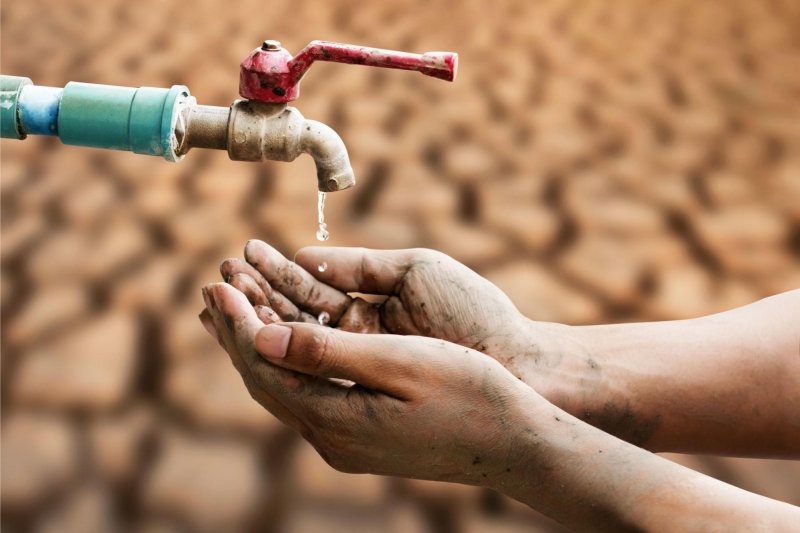
For much of modern history, oil shaped global geopolitics, economic growth, wars, alliances, and industrial development. Today, however, another resource is increasingly emerging as one of the world’s most critical strategic concerns: water.
Climate change, population growth, urbanization, industrial expansion, agricultural demand, and environmental degradation are placing unprecedented pressure on freshwater systems worldwide. Rivers are shrinking, groundwater reserves are being depleted, glaciers are melting, and droughts are becoming more severe across multiple continents.
RECOMMENDED STORIES
At the same time, demand for clean water continues rising rapidly.
Governments, economists, military planners, and environmental experts increasingly warn that water scarcity could become one of the defining geopolitical and economic challenges of the 21st century.
Water is essential not only for human survival, but also for agriculture, electricity generation, industry, energy production, transportation, and technological infrastructure. Without reliable water access, economic systems and social stability become increasingly vulnerable.
Some analysts now describe water as “the next oil,” arguing that control over freshwater resources may eventually become one of the world’s most important sources of geopolitical leverage.
Below is a detailed FAQ explainer examining why the global water crisis is intensifying and how it could reshape economies, politics, migration, and international security in the coming decades.
Why is the world facing a water crisis?
Several powerful trends are converging simultaneously.
Climate change is disrupting rainfall patterns, increasing drought frequency, and accelerating glacier loss.
Global population growth continues increasing demand for drinking water, agriculture, and industrial production.
Urbanization is placing enormous pressure on infrastructure and freshwater systems.
Agriculture consumes massive quantities of water, especially in regions using inefficient irrigation systems.
Industrial development, pollution, and groundwater overuse are also damaging freshwater resources.
Together, these factors are creating growing imbalances between water supply and demand across many regions of the world.
Why is water strategically important?
Water is fundamental to nearly every aspect of modern civilization.
It supports:
– Agriculture and food production
– Electricity generation
– Industrial manufacturing
– Mining operations
– Public health
– Transportation systems
– Urban infrastructure
– Energy production
Countries lacking reliable water supplies may face economic instability, food shortages, energy problems, migration pressures, and political unrest.
As water scarcity worsens, governments increasingly treat water management as a national security issue rather than only an environmental concern.
How does climate change worsen water shortages?
Climate change affects water systems in multiple ways.
Rising temperatures increase evaporation and intensify drought conditions.
Glaciers, which serve as natural freshwater reservoirs, are melting rapidly in many mountain regions.
Rainfall patterns are becoming more unpredictable.
Some regions experience severe droughts while others face destructive flooding.
Extreme weather events also damage infrastructure and agricultural systems.
The result is growing instability in freshwater availability worldwide.
Many scientists warn that water systems built for past climate conditions may become increasingly unreliable in the future.
Which regions face the greatest water stress?
Several regions are considered especially vulnerable.
The Middle East and North Africa already experience severe water scarcity due to arid climates and population growth.
Parts of Central Asia face growing pressure from glacier loss and inefficient water management.
South Asia experiences major stress due to population density and agricultural demand.
Sub Saharan Africa faces drought risks, infrastructure shortages, and rapid urbanization.
Even wealthier regions such as parts of the western United States and southern Europe increasingly experience water shortages linked to climate change.
Water stress is becoming a global challenge rather than a localized issue.
Why is agriculture central to the water crisis?
Agriculture is by far the world’s largest water consumer.
Irrigation systems use enormous quantities of freshwater to support food production.
In many countries, outdated or inefficient irrigation methods waste substantial amounts of water.
As populations grow, food demand increases further.
Climate change also reduces agricultural productivity in many regions, requiring additional irrigation support.
The challenge is therefore deeply interconnected: water shortages threaten food production while agriculture itself heavily contributes to water depletion.
Improving agricultural efficiency is increasingly viewed as essential for long term water security.
Could water shortages trigger conflicts?
Many experts believe water tensions could increasingly contribute to geopolitical instability.
Rivers and freshwater systems often cross national borders.
When upstream countries build dams or increase water consumption, downstream countries may face shortages.
Several regions already experience political tensions related to shared water systems.
Examples include disputes involving:
– The Nile River
– The Tigris and Euphrates rivers
– South Asian river systems
– Central Asian water networks
While outright “water wars” remain relatively rare, water scarcity can intensify broader political and economic tensions.
Why are rivers becoming geopolitical issues?
Major rivers support millions or even hundreds of millions of people.
Countries controlling upstream water flows often possess strategic leverage over downstream neighbors.
Dams, irrigation projects, and hydropower systems can significantly affect water availability across borders.
As climate change reduces water predictability, competition over river systems may increase.
Governments increasingly treat water infrastructure projects as strategic national assets linked to energy, agriculture, and security.
How does groundwater depletion affect the crisis?
Groundwater provides critical freshwater supplies for agriculture, cities, and industry.
However, many countries are extracting groundwater far faster than natural replenishment rates.
This creates long term sustainability problems.
Once underground aquifers become depleted or contaminated, recovery may take decades or centuries.
Groundwater depletion is especially severe in heavily populated agricultural regions.
Because groundwater systems are often invisible compared with rivers or lakes, the problem sometimes receives less public attention despite enormous long term risks.
Why are megacities especially vulnerable?
Rapidly growing cities place enormous pressure on water infrastructure.
Megacities require vast amounts of water for households, transportation, sanitation, industry, and energy systems.
Many urban areas already struggle with aging infrastructure, pollution, and water leakage.
Climate change intensifies these pressures through droughts, heatwaves, and extreme weather events.
Cities unable to secure stable water supplies may face serious economic and social instability.
Urban water management is therefore becoming one of the biggest infrastructure challenges globally.
Can desalination solve water shortages?
Desalination technology converts seawater into freshwater and already plays a major role in some regions, especially the Gulf states.
However, desalination remains expensive and energy intensive.
It also creates environmental concerns related to energy consumption and salt waste disposal.
Wealthier countries can invest heavily in desalination infrastructure, but poorer regions often struggle with costs.
Desalination may become increasingly important globally, but it is unlikely to fully solve the broader water crisis alone.
How does water affect energy systems?
Water and energy are deeply interconnected.
Power plants require water for cooling.
Hydropower depends directly on river flows and reservoirs.
Energy systems also power water treatment, pumping, and distribution infrastructure.
As a result, water shortages can threaten electricity generation while energy shortages can affect water access.
This creates complex interdependence between water security and energy security.
Why are glaciers important for global water supplies?
Glaciers act as natural freshwater storage systems.
Many major rivers depend heavily on glacier meltwater, especially during dry seasons.
However, rising global temperatures are accelerating glacier retreat worldwide.
Initially, glacier melting may temporarily increase river flows.
Over time, however, shrinking glaciers could reduce long term water availability for hundreds of millions of people.
This is becoming especially concerning in parts of Asia and Central Asia.
How does water scarcity affect economies?
Water shortages can reduce agricultural production, industrial output, electricity generation, and economic productivity.
Droughts often increase food prices and inflation.
Industries requiring large water supplies may face operational disruptions.
Governments may also need enormous investment in infrastructure adaptation and emergency response.
The World Bank and other institutions increasingly warn that water stress could significantly reduce economic growth in vulnerable regions.
Water security is therefore increasingly viewed as an economic competitiveness issue.
Can technology help solve the water crisis?
Technology may significantly improve efficiency and management.
Potential solutions include:
– Smart irrigation systems
– Artificial intelligence for water monitoring
– Wastewater recycling
– Advanced desalination
– Leak detection systems
– Precision agriculture
– Digital water management infrastructure
However, technological solutions require investment, governance, and long term planning.
Technology alone cannot fully solve structural political and environmental challenges.
Why is water inequality becoming a major issue?
Access to clean water is often highly unequal.
Poorer communities frequently lack reliable infrastructure and sanitation systems.
Climate change may deepen these inequalities because vulnerable populations often have fewer resources for adaptation.
Water shortages can therefore worsen social instability, migration pressures, and public health risks.
Many experts increasingly view water access as both a human rights issue and a development challenge.
Could climate migration increase because of water scarcity?
Very likely.
Water shortages can destroy agricultural livelihoods, reduce economic opportunity, and increase food insecurity.
As conditions worsen, people may migrate toward cities or regions with better infrastructure and economic prospects.
Water related migration may therefore become one of the biggest drivers of future urbanization and demographic change.
This could place enormous pressure on governments and urban systems.
Why are investors paying more attention to water?
Investors increasingly recognize water as a strategic economic issue.
Water infrastructure, treatment systems, desalination technology, irrigation efficiency, and climate adaptation industries are attracting growing investment.
Some analysts believe water management may become one of the world’s largest future infrastructure sectors.
At the same time, water scarcity creates financial risks for agriculture, manufacturing, mining, and energy industries.
Financial markets increasingly treat water security as both a risk factor and investment opportunity.
Could water become more important than oil geopolitically?
Water and oil serve different functions, but water may become equally or even more essential in certain contexts.
Unlike oil, there is no substitute for freshwater in human survival and food production.
As climate pressures intensify, reliable water access could become one of the most critical determinants of economic stability and national resilience.
Countries capable of managing water effectively may gain significant strategic advantages.
How are governments responding?
Responses vary widely.
Some governments invest heavily in reservoirs, desalination, smart infrastructure, and water recycling.
Others focus on agricultural reform and conservation.
International cooperation is also increasing around shared water systems and climate adaptation.
However, many experts warn that current responses remain insufficient relative to future risks.
Long term planning is often difficult politically because water crises develop gradually over years or decades.
What role do international organizations play?
Organizations such as the United Nations, World Bank, and regional development banks support water infrastructure, climate adaptation, and international cooperation programs.
Global climate negotiations increasingly include water security discussions.
However, financing needs remain enormous.
Many developing countries lack sufficient resources to modernize infrastructure and adapt effectively.
What does the future of the global water crisis look like?
The crisis is likely to intensify significantly over coming decades.
Population growth, climate change, industrialization, and urbanization will continue increasing pressure on freshwater systems.
At the same time, technological innovation and improved management could help reduce some risks.
The future outcome will depend heavily on:
– Climate adaptation
– Infrastructure investment
– International cooperation
– Agricultural reform
– Technological innovation
– Environmental protection
Water is no longer simply an environmental issue.
It is becoming a central question of economic survival, geopolitical stability, food security, urban development, and national security in the 21st century.
The countries that manage water successfully may become more resilient and competitive.
Those that fail may face increasing economic disruption, migration pressures, and political instability in an increasingly water stressed world.
By Faig Mahmudov


Similar news