US primaries reshape the political battlefield ahead of the 2026 midterm elections


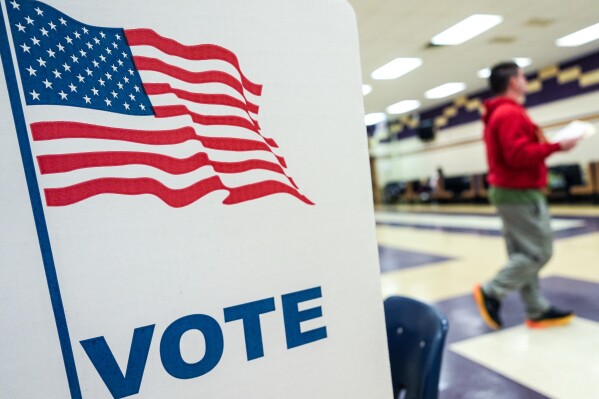
The latest round of US primary elections is beginning to redefine the political landscape ahead of the crucial 2026 midterm elections, with the state of Georgia emerging as one of the most closely watched battlegrounds in the country.
Results from May 19 primaries in several states are already fueling intense discussion in Washington as both Republicans and Democrats evaluate what the outcomes could mean for control of Congress, the future of party leadership, and the direction of American politics.
The biggest intrigue centers on Georgia, where Republican gubernatorial and Senate primaries appear headed toward runoff elections. Analysts say the results reveal deep divisions inside the Republican Party while also underscoring Georgia’s growing importance as a decisive swing state in national politics.
The primaries are not only about individual candidates. They are increasingly seen as an early test of political momentum before the 2026 midterms, which could determine control of the Senate and significantly shape the final years of the next presidential administration.
Why are the May 19 primaries important?
The primaries are important because they provide one of the first major indicators of voter sentiment ahead of the 2026 midterm cycle.
Primary elections help determine which candidates will represent their parties in general elections. They also reveal internal party dynamics, ideological divisions, fundraising strength, and voter turnout patterns.
This year’s contests are especially significant because both major parties are attempting to redefine their strategies after years of political polarization, demographic shifts, and changing voter coalitions.
For Republicans, the primaries are exposing ongoing tensions between establishment conservatives and candidates aligned with former President Donald Trump’s political movement.
For Democrats, the elections offer insight into whether the party can maintain support among suburban voters, young voters, and minority communities in key battleground states.
Why is Georgia at the center of attention?
Georgia has become one of the most strategically important states in American politics.
For decades, the state was considered reliably Republican. However, demographic change, urban growth around Atlanta, and shifting voting patterns transformed Georgia into a highly competitive battleground.
The state gained national attention during the 2020 presidential election when Democrats narrowly won Georgia for the first time in decades. Democrats also captured both Senate seats shortly afterward in runoff elections.
Since then, Georgia has remained politically divided, making it one of the most closely watched states in every national election cycle.
The current Republican primaries are particularly important because the eventual nominees could play a decisive role in determining Senate control after the 2026 elections.
Why are the Republican primaries so competitive?
The Republican Party is experiencing a period of internal realignment.
One faction remains closely aligned with Trump’s populist and nationalist political approach, emphasizing issues such as immigration, cultural conservatism, trade protectionism, and skepticism toward traditional political institutions.
Another faction represents more traditional conservative priorities focused on business interests, fiscal policy, national security, and institutional stability.
In many states, including Georgia, these factions are competing directly against each other in primary contests.
Runoff elections are especially significant because they often become high-intensity battles between different ideological wings of the party. They can also reveal which candidates are better at mobilizing highly motivated voters.
What makes Senate races so important in 2026?
Control of the Senate is one of the central political battles in every midterm election.
The Senate plays a crucial role in confirming judges, approving cabinet appointments, shaping foreign policy, and passing legislation. Even a small shift in seats can dramatically alter the balance of power in Washington.
If Republicans gain control of the Senate, they could block or reshape major parts of the administration’s agenda. If Democrats retain control, they would maintain greater ability to influence judicial appointments and legislative priorities.
Georgia is especially important because competitive Senate races there are often decided by extremely narrow margins.
How do runoff elections work in Georgia?
Georgia requires candidates to receive more than 50 percent of the vote in primaries and general elections to avoid a runoff.
If no candidate reaches that threshold, the top two candidates advance to a second round of voting.
Runoffs often produce lower turnout than initial elections, which means highly motivated voter groups can have an outsized impact on the outcome.
The system has made Georgia nationally famous for extended election battles that can continue weeks after Election Day.
What broader political trends are emerging from the primaries?
Several major trends are becoming increasingly visible.
One is continued political polarization. Republican and Democratic voters are becoming more ideologically distinct, leaving fewer moderate voters in the middle.
Another trend is the growing importance of suburban areas. Suburban voters, especially around major metropolitan regions, are playing a decisive role in competitive states like Georgia, Arizona, Pennsylvania, and Michigan.
Demographic change is also reshaping electoral maps. Younger voters, minority communities, and migration patterns from other states are altering political dynamics in traditionally conservative regions.
In addition, candidate quality and local issues are increasingly important in closely divided states where national political branding alone may not guarantee victory.
How influential is Donald Trump in these elections?
Trump remains one of the most influential figures in Republican politics.
His endorsements continue to carry significant weight in many Republican primaries, particularly among conservative grassroots voters.
However, the primaries are also testing the limits of Trump’s influence. In some races, establishment-backed candidates are performing strongly despite Trump-aligned opposition.
The results may help determine whether the Republican Party continues moving deeper into Trump-style populism or begins shifting toward a broader coalition strategy ahead of future national elections.
Even candidates not directly endorsed by Trump are often forced to position themselves relative to his political movement.
Could the primaries affect the 2028 presidential race?
Yes, indirectly.
Midterm election cycles often shape the national political environment ahead of the next presidential race.
Strong performances by particular governors, senators, or political factions can elevate future presidential contenders.
The primaries also influence fundraising networks, party organization, media attention, and voter enthusiasm.
Emerging political figures in competitive states may become national personalities if they succeed in high-profile races.
The ideological direction chosen by each party during the midterms can also shape future presidential platforms and campaign strategies.
How are Democrats responding to Republican divisions?
Democrats are closely watching Republican infighting while attempting to strengthen their own coalition.
Party strategists believe that divisions inside the Republican Party could create opportunities in swing states.
At the same time, Democrats face their own challenges, including concerns about inflation, economic inequality, immigration, crime, and voter dissatisfaction with national politics.
Democratic candidates are increasingly focusing on issues such as reproductive rights, healthcare, democracy, and economic fairness to mobilize key voting groups.
The party is also attempting to maintain support in suburban areas that shifted away from Republicans during the Trump era.
Why are suburban voters so important now?
Suburban voters have become one of the most decisive groups in modern American politics.
Historically, suburbs leaned Republican. However, many suburban areas have become more politically competitive due to demographic diversification, educational shifts, and changing social attitudes.
Highly educated suburban voters, particularly women, increasingly influence election outcomes in battleground states.
Georgia’s suburban counties around Atlanta illustrate this transformation clearly. Rapid population growth and changing demographics have turned previously conservative districts into highly competitive political territory.
Both parties are therefore investing heavily in suburban campaigning and messaging.
How are media and social platforms affecting the primaries?
Digital media plays a massive role in modern primary campaigns.
Candidates now rely heavily on social media, online fundraising, digital advertising, and alternative media ecosystems to mobilize supporters.
Political messaging spreads much faster and often becomes more polarized in online environments.
Primary voters are also more likely to consume ideologically aligned media, which reinforces partisan narratives and intensifies internal party battles.
This media environment favors highly visible and emotionally charged campaigns, especially in competitive primaries.
Could these primaries influence financial markets or business sentiment?
Indirectly, yes.
Political uncertainty can influence investor expectations regarding taxation, regulation, trade policy, government spending, and economic stability.
Business leaders closely monitor Senate control because it affects legislative priorities and regulatory frameworks.
Industries such as energy, technology, healthcare, defense, and finance are particularly sensitive to political outcomes.
However, markets generally focus more heavily on presidential elections unless midterm results significantly alter expectations about future economic policy.
What role do younger voters play in the new political landscape?
Younger voters are becoming increasingly influential, particularly in urban and suburban regions.
Issues such as climate change, housing affordability, student debt, healthcare, and social justice resonate strongly among younger demographics.
At the same time, younger voters often participate at lower rates than older voters, making turnout operations extremely important.
Both parties are investing more heavily in digital outreach and grassroots organizing aimed at younger voters.
The long-term political impact of generational change could significantly reshape future elections.
Why are analysts calling this the start of a “new political landscape”?
Many analysts believe American politics is entering a new phase defined by geographic, demographic, and ideological realignment.
Traditional political assumptions about “red states” and “blue states” are becoming less stable.
States like Georgia, Arizona, and Nevada have become highly competitive, while some previously competitive regions are shifting more firmly toward one party.
Political coalitions are also evolving. Class, education, race, religion, geography, and cultural identity increasingly shape voting behavior in new ways.
At the same time, the electorate remains deeply polarized, making elections more competitive and unpredictable.
The May 19 primaries therefore represent more than isolated state contests. They are part of a broader struggle over the future direction of both major political parties and the balance of power in the United States.
As the 2026 midterms approach, the outcomes in Georgia and other battleground states may ultimately determine not only Senate control, but also the trajectory of American politics for the rest of the decade.
By Faig Mahmudov


Similar news