India to host Venezuela’s Rodriguez for trade and energy talks


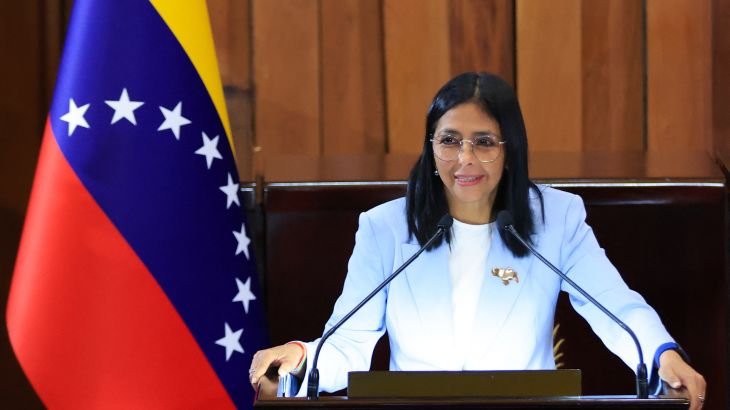
Venezuela’s interim President Delcy Rodriguez will pay a visit India from June 3 to June 7, according to India’s foreign ministry, News.Az reports, citing Reuters.
India was the second-largest importer of Venezuelan oil in May, purchasing 427,000 barrels per day, behind only the United States.
Indian energy company Reliance Industries has also become one of the three largest buyers of Venezuelan crude in recent months.
RECOMMENDED STORIES
During her visit, Rodriguez is scheduled to meet Indian Prime Minister Narendra Modi, Indian foreign ministry spokesperson Randhir Jaiswal said during a media briefing.
“The discussions will involve the full spectrum of India-Venezuela relations and involve and explore avenues for further cooperation in the areas of energy, trade, investment, pharmaceuticals, healthcare, transportation, and renewable energy,” Jaiswal stated.
She is also expected to meet leading Indian energy sector representatives in Mumbai, according to an Indian source.
Rodriguez previously visited India in February 2025, when she was serving as Venezuela’s oil minister, and led a delegation that participated in the India Energy Week conference.
Her visit comes as India, the world’s third-largest oil importer and consumer, faces supply disruptions linked to the U.S.-Israeli conflict with Iran, which has severely disrupted flows through the Strait of Hormuz, a key route responsible for more than 40% of India’s crude oil imports.
India had halted purchases of Venezuelan oil last year after U.S. President Donald Trump imposed a 25% discretionary tariff on countries importing crude from Venezuela. Imports resumed after sanctions were eased in February following a major oil supply agreement between Washington and Caracas.
Under that agreement, reached after the U.S. capture of President Nicolas Maduro in January, Washington oversees proceeds from Venezuelan oil sales through Treasury-administered bank accounts, with commercial terms also guided by U.S. authorities.
By Nijat Babayev


Similar news