Innovation in archaeology: robotics to replace manual digging techniques


AI-powered robotics: a new era for archaeological digs
ArchaeoBot, developed in collaboration with the Ateneo Laboratory for Intelligent Visual Environments, uses machine learning to detect artifacts, recognize archaeological features (such as burials or hearths), and retrieve objects without damaging them News.Az reports citing gmanetwork.com
“What makes ArchaeoBot especially innovative is that it combines robotics, sensing, and machine learning into a single archaeological platform. The robot is equipped with different sensors that allow it to identify possible artifacts, burials, hearths, and other subtle traces that people might miss or only notice too late,” the Ateneo de Manila University (ADMU) said in a statement.
“It is also meant to learn from experience, adapt to different excavation conditions, and eventually go beyond digging itself by helping with cleaning, recording, bagging, and storage of delicate finds. In that sense, it is envisioned as a kind of one-stop archaeological assistant: not replacing archaeologists entirely, but extending what they can do and making the whole process more systematic,” it added.
RECOMMENDED STORIES
- Amazon voiced concerns about Anthropic AI models before US government's crackdown
- Syrian authorities detain 235 ISIS operatives, stop seven attacks
- Ukraine's Zaporizhzhya nuclear plant reconnected to grid after IAEA-brokered ceasefire
- What is behind Russia restriction aircraft refuelling for foreign airlines amid fuel supply concerns
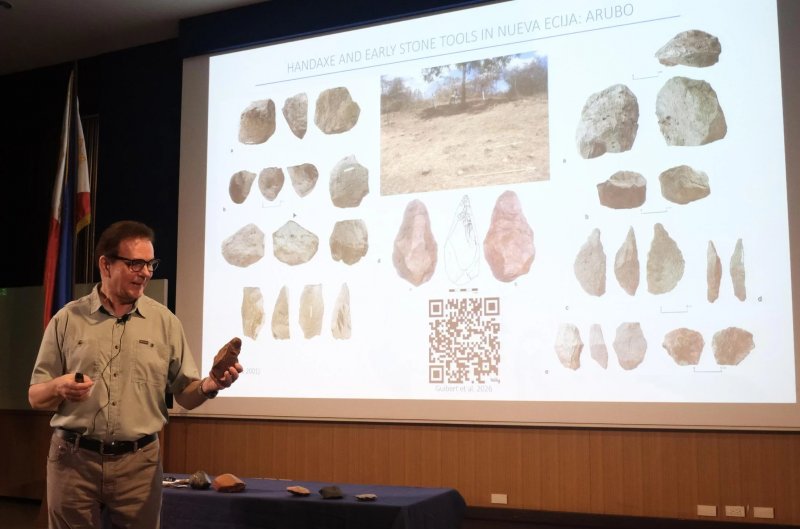
But Alfred Pawlik, a professor at the Department of Sociology and Anthropology of ADMU, said the ArchaeoBot is still far from perfect.
“This is a pioneering project, and it has a lot of challenges. So we are moving step by step to achieve some, at least, of the tasks that we expect such a robotic excavator to do,” he said in his lecture on March 27.
Pawlik said that ArchaeoBot is being tested at a cave in Anda, Bohol.
“We are still at the very beginning, but we want to improve object recognition and recording accuracy. Because these are the main problems for human error,” he added.


Similar news