Iran, US presidents sign MoU digitally as war-ending deal finalised: FM spokesman


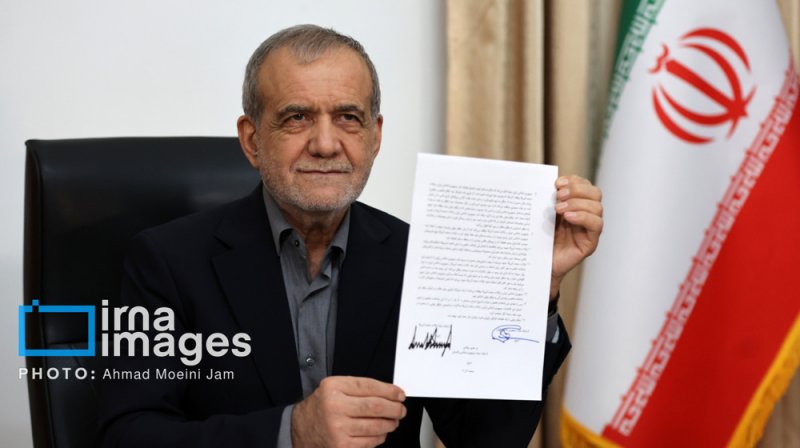
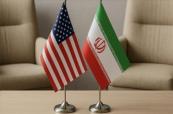
The memorandum of understanding between Iran and the United States has now been formally signed by the presidents of both countries, with the text finalised and the agreement officially entering into force, Iranian Foreign Ministry spokesman Esmaeil Baghaei announced on Wednesday.
"The memorandum of understanding between Iran and the United States was agreed to be signed digitally," Baghaei said.
"No signing ceremony will be held in Switzerland," he told IRIB's News Network, News.Az reports, citing Iran's English-language Press TV.
The spokesman explained that the decision to have the agreement signed by the highest-ranking officials of both countries was intentional, given past experience.
"When the text is signed by the highest authorities of both countries, violating it will naturally carry greater costs. Given our past experiences, we preferred that this happen," Baghaei said.
He added that the Iranian negotiating team's presence in Geneva was still under discussion, but that the signing itself had been conducted digitally.
"The text of the Iran-US memorandum of understanding is now officially finalised because both parties have signed it," he said.
RECOMMENDED STORIES
Baghaei explained that the delay between the finalisation of the MoU on Sunday and its publication on Wednesday was due to standard diplomatic procedures and the importance of coordinating with mediators.
"In every diplomatic process, there are procedures that the relevant parties try to adhere to. The mediators' views are also important so that they can bring this process to the desired conclusion," he said.
He noted that the parties had agreed not to publish the text until it was finalised. However, he stressed that Iranian officials had already disclosed the broad outlines of the agreement.
"If we review the text now, we will see that there was nothing left unsaid during this period. We had expressed all the issues more or less. We may not have gone into detail on some points, but regarding the overall issues, we had mentioned all of them," he said.
Deal implementation harder than signing
The spokesman warned that implementing the ceasefire agreement with the United States would be more difficult than signing it, stressing that Tehran has not forgotten the lessons of the war and will carefully monitor US compliance.
Baghaei said that Iran's diplomatic apparatus, backed by the full support of the people, had secured a text that serves the country's interests.
"The fact that we have signed an agreement to end the war at this stage does not mean we have forgotten the past or abandoned the costly lessons we have learned," he said.
"Our work is now harder than before because implementing international agreements is always much more difficult than drafting them, especially with parties that are not committed to their obligations."
He stressed that Iran must now ensure that the other side adheres to its commitments.
Baghaei made clear that Iran would not hesitate to respond if Washington failed to implement its obligations.
"If the Americans falter in implementing their commitments, we will falter too. It is not the case that we will fulfil our commitments while the other side evades its obligations," he said.
He added that Iran would monitor US implementation "without any leniency" and would only carry out its own commitments once the other side fulfils its promises.
Baghaei said Iran had deliberately postponed nuclear negotiations until a later stage, focusing first on ending the war.
"It was decided that we would not negotiate on the nuclear issue at this stage. The focus was on ending the war, and we did that," he said.
"From the moment the MoU comes into effect, which is now, we will have 60 days to negotiate on the nuclear issue and sanctions. If talks reach a conclusion earlier, that is better. But given the complexity of the issue, the 60-day timeframe is reasonable, and if necessary, it can be extended."
He added that the MoU specifies that negotiations will cover only the nuclear issue and sanctions relief.
Baghaei stressed that Iran's missile capabilities are not a subject for discussion.
"Our missiles do not like anyone talking about them. Iran's missiles are only for firing, not for negotiation. Iran's defence capabilities will not be discussed in any process with any party," he said.
Baghaei emphasised that Iran has never abandoned its allies and that a ceasefire in Lebanon was as important to Tehran as the end of the war involving Iran.
"The Islamic Republic has shown that it does not abandon its friends under any circumstances. For us, the ceasefire and end of war in Lebanon were as important as in Iran. In the first article of the MoU, Lebanon is mentioned three times. Respect for Lebanon's territorial integrity and national sovereignty is included," he said.
He warned that if Israeli attacks on Lebanon continue, this would constitute a violation of US commitments under the MoU.
"We do not separate the US and the Zionist regime, but their differences in methods and approaches are evident. The Zionist regime does not want to give any opportunity to any diplomatic process. But it is the US's responsibility to compel the Zionist regime to respect US commitments to Iran," Baghaei said.
Baghaei said the original agreement provided for the blockade to be lifted within 30 days, but that this was accelerated following Israel's Sunday attack on Beirut's southern suburbs and Iran's subsequent threats.
"Following developments related to the Zionist regime's attack on Dahiyeh and the serious threats made by Iran, urgent talks were held and it was agreed that the US would implement its commitments immediately," he said.
"Our monitoring shows that our ships have entered and exited ports without any problems, and this commitment [to lift the blockade] has begun. Our commitments will begin after the signing of this document."
Baghaei reiterated Iran's red line regarding its enriched uranium stockpile.
"We have said from the beginning that enriched nuclear material will not be transferred out of Iran. Dilution of enriched material is not a new option. It has now been introduced as an option to close the door on other possibilities," he said.
"The unacceptable option for us is the transfer of enriched nuclear material abroad."
Baghaei confirmed that the lifting of oil sanctions has already begun.
"Iran's oil sanctions must be lifted, not on paper, but with all the necessary conditions. Iran must be able to sell its oil, with transport and insurance facing no problems, and it must receive the proceeds from oil sales. The lifting of Iran's oil sanctions starts today and will continue during the negotiations," he said.
He added that, in parallel with the MoU, Tehran had also negotiated separately on the release of frozen assets, reconstruction funding and the lifting of oil sanctions.
The spokesman confirmed that Iran is finalising a new management mechanism for the Strait of Hormuz, with coordination with Oman already well advanced.
"Iran will charge fees for services in the Strait of Hormuz. This mechanism and arrangements for managing the strait are being drafted. We began consultations with Oman long ago and have spoken with some other countries," Baghaei said.
"The management mechanisms for the Strait of Hormuz have largely been finalised with Oman. Safe transit will be ensured while preserving the sovereignty and authority of the Islamic Republic of Iran over the strait."
He added that Iran and Oman are the only two coastal states bordering the strait.
Baghaei said Iran would continue to document and pursue what it describes as crimes committed against its people during the war.
"We will not miss any opportunity to document, pursue and explain the crimes committed against the Iranian nation. We will use every mechanism, institution and international opportunity to secure our rights. These are outside the MoU," he said.
In a closing statement, Baghaei declared that the war had only strengthened Iran.
"The enemies have hurt us; they took noble lives from us and wounded Iran. But a wounded lion is still a lion," he said.
"The war they imposed did not bring us to our knees; it made us more powerful, both in the military arena and in diplomacy."
The spokesman stressed that Iran's status as a superpower was not an illusion.
"We defeated two nuclear powers, along with other countries that supported them. We do not just give slogans; we truly are a superpower."
The memorandum of understanding between Iran and the United States was finalised on Sunday following months of intensive negotiations mediated by Pakistan, with support from other regional countries.
Under the agreement, the war and all military operations, including those in Lebanon, ended immediately, and the US naval blockade against Iran was lifted.
The MoU also provides for the reopening of the Strait of Hormuz to commercial shipping.
A 60-day verification and negotiation period will follow, during which the parties will address outstanding issues, including the lifting of all sanctions, the nuclear file, reconstruction and economic development, as well as a monitoring mechanism for implementation.
Iran has emphasised that the agreement was built on "active distrust" of the United States and that Tehran will monitor US compliance closely.
Iranian officials have described the MoU as a product of military achievements and the sacrifices of the Iranian people, rather than diplomacy alone.


Similar news