Is Serbia on the verge of a color revolution?


By News.Az
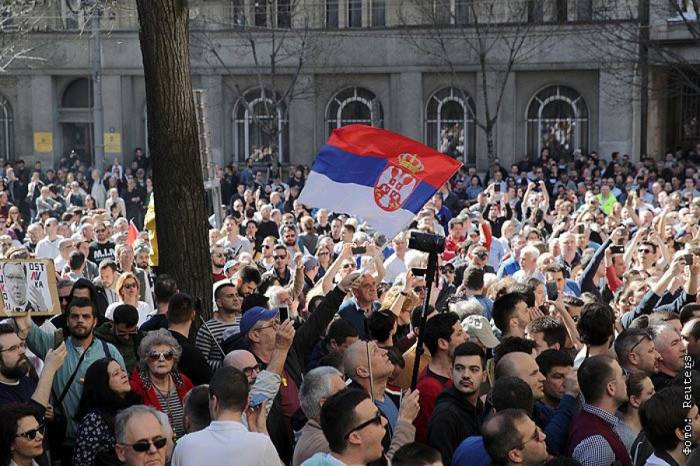
On August 10, a large-scale protest took place in Belgrade, drawing between 24,000 and 27,000 people, according to the Serbian Ministry of Internal Affairs. The demonstration was sparked by plans to open a mine for the extraction of the mineral jadarite, which contains lithium—a prospect that has provoked strong reactions from the public and environmental organizations. Citizens are concerned that the development of the mine could cause irreparable damage to the environment, especially given the region's fragile ecosystem.Initially, the protest was organized as a peaceful action aimed at drawing attention to the environmental issues associated with lithium mining. Protesters gathered in the center of Belgrade before marching through the city’s streets. Demonstrators blocked traffic on one of the capital’s main highways—the Gazela Bridge, which connects the old and new parts of the city—as well as on the E75 international route. These actions led to significant traffic disruptions, forcing many motorists to come to an abrupt stop. The protesters did not stop there; they also blocked railway traffic, which marked an unexpected and alarming turn of events during the protest.
Despite the peaceful nature of the main rally, Serbian Deputy Prime Minister and Minister of Internal Affairs Ivica Dačić stated that the protest was organized according to a “color revolution” scenario. According to him, after the official part of the rally ended, the organizers violated public order by ignoring the conditions outlined in their application for holding a mass gathering. Specifically, they blocked international transportation routes, creating a threat to public safety. Dačić also noted that the police had warned the organizers and participants both before and during the protest about the inadmissibility of illegal actions, but these warnings were ignored.
Dačić’s statements have sparked widespread public concern, especially given past political events in the region. Accusations of attempting to organize a color revolution under the guise of an environmental protest could further escalate tensions in Serbian society, where there is a deep divide between supporters and opponents of the current government. Critics of the authorities argue that such accusations are intended to discredit the protest movement and divert attention from real environmental issues.
Serbian President Aleksandar Vučić, on the eve of the protests, stated that Russian intelligence services had warned him of planned mass unrest, which, according to him, was being organized with the support of Western countries. Vučić emphasized that the authorities are taking all necessary measures to prevent violent actions and attempts to destabilize the situation in the country. These statements have further fueled polarization in Serbian society and raised questions about external interference in the republic’s political processes.
It is worth noting that the protest against lithium mining in Serbia is not an isolated event. In recent years, there has been a growing wave of environmental movements worldwide aimed at opposing large industrial projects that activists believe threaten the environment. In Serbia, this protest has become a catalyst for broader public discussions about the country’s future, its natural resources, and the influence of international corporations such as Rio Tinto, which is involved in the mine’s development.
The Serbian Ministry of Internal Affairs has stated its readiness to hold accountable anyone who violated the law during the protests. Meanwhile, public opinion is divided: some support the decisive actions of the authorities, while others believe that the government should listen to the protesters’ demands and halt the lithium mining project.
Regardless of how events unfold, one thing is clear: the protests in Belgrade have gone beyond a simple environmental action and have become an important political event reflecting deep social and political divisions in the country. Whether these actions will mark the beginning of a new phase of protest movements in Serbia remains to be seen, but one thing is certain—the country’s future and its political course will depend on how the authorities respond to these challenges.


Similar news