Israel–Gaza war in 2025: conflict, crisis and unresolved questions


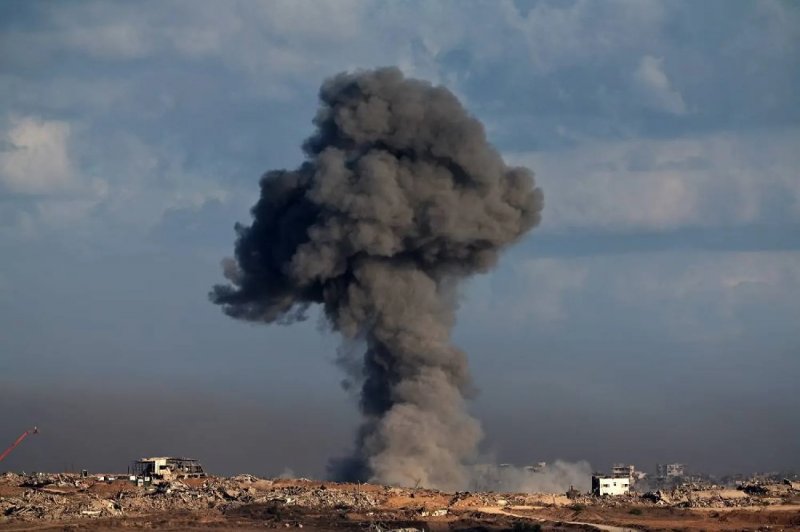
The Israel–Gaza war that began in October 2023 continued to reshape regional politics, security dynamics, humanitarian conditions, and international diplomacy through 2024 and 2025, News.az reports.
What started as a sudden and devastating escalation evolved into a prolonged and destructive conflict that deeply affected Israeli and Palestinian societies and had wide-ranging global consequences. As the war extended into its second year and beyond, the human, political, and strategic costs continued to rise, while a durable political resolution remained elusive.
The conflict began on 7 October 2023, when Hamas and other Palestinian armed groups launched a large-scale surprise attack on Israel from the Gaza Strip. Thousands of rockets were fired, and militants crossed into Israeli territory, attacking communities and military posts, killing and injuring many civilians and soldiers, and taking a significant number of hostages back into Gaza. Israel responded by declaring a state of war and launching an intensive and sustained military campaign against Hamas and other armed groups inside Gaza. The stated goal of the Israeli government was to dismantle Hamas’s military and governing capacity and to ensure that Gaza would no longer serve as a base for attacks against Israel.
The Israeli campaign included widespread airstrikes, ground incursions, and military operations across much of Gaza. Over time, these operations reached most urban areas, including Gaza City in the north and Khan Younis and Rafah in the south. Israel argued that Hamas operated from within civilian areas, including residential zones, schools, mosques, and hospitals, using civilians as cover. Hamas denied some of these claims, but independent analysts acknowledged that Hamas fighters and command structures were embedded inside populated infrastructure. This reality significantly increased the risk to civilians during Israeli military actions.
The humanitarian situation in Gaza deteriorated sharply and rapidly. Large parts of the territory’s infrastructure, housing, medical services, and essential utilities were heavily damaged or destroyed. Millions of people were internally displaced within Gaza, often moving multiple times as fighting shifted from one area to another. Shortages of food, water, fuel, medicine, and electricity persisted, creating severe humanitarian stress. Aid deliveries became a central point of international concern, as the flow of relief supplies was repeatedly disrupted or limited by security conditions, logistical barriers, and political disputes over border control and inspection mechanisms.
Civilian casualties mounted steadily throughout 2024 and 2025. The United Nations and humanitarian organisations repeatedly warned that the scale of destruction and death in Gaza was unprecedented in recent decades. Israel maintained that its military took measures to limit civilian harm, including issuing evacuation warnings, target intelligence reviews, and rules of engagement aimed at distinguishing combatants from civilians. However, human rights organisations and many governments criticised Israel for what they viewed as disproportionate use of force in densely populated civilian areas. The debate over legality, proportionality, and morality became one of the defining issues of the war.
Hostages remained a central element of the conflict. Following the October 2023 attacks, more than 200 people were taken hostage by Hamas and other groups. A temporary ceasefire in late 2023 resulted in the release of dozens of hostages in exchange for Palestinian prisoners held by Israel. But many remained in captivity through 2024 and 2025, creating deep emotional and political tension inside Israel. Hostage families became vocal actors in Israeli public life, organising demonstrations, meeting international leaders, and pressing their government to prioritise negotiations for the hostages' release. The issue became intertwined with internal Israeli political disputes over the conduct and goals of the war.
Inside Israel, the war had a profound social and political impact. Israeli communities near Gaza were devastated by the initial attacks, and many residents were evacuated for extended periods. Thousands of Israelis served in the military reserves, disrupted normal life, and affected the broader economy. Public opinion initially strongly supported the war effort and the goal of eliminating Hamas. However, as the conflict dragged on, divisions emerged over strategy, war aims, and political accountability. Protests and debates increased, particularly over the questions of how the war should end, what would follow military operations in Gaza, and how responsibility should be assigned for the failures of 7 October.
Another major dimension of the conflict involved the West Bank. Israeli military operations, settler–Palestinian tensions, and periodic clashes intensified there during the war period. Palestinian Authority institutions, already weakened before 2023, struggled to maintain legitimacy or political influence. The future governance of Palestinian territories — whether unified or fragmented — became one of the most uncertain strategic questions of the post-war scenario.
The war also had significant regional implications. Skirmishes and exchanges of fire occurred across the Israel–Lebanon border between Israeli forces and Hezbollah, the Iran-backed Lebanese militant group. While both sides appeared at various times to avoid full-scale war, the border region remained volatile and dangerous. Other Iran-aligned groups across the region, including in Syria, Iraq, and Yemen, also became more active, launching drone or missile attacks against Israeli or Western targets. The risk of a broader regional conflict remained persistent, even if not fully realised.
Countries across the Middle East positioned themselves carefully in relation to the conflict. Some supported Palestinian claims politically and rhetorically while also attempting to avoid uncontrolled escalation in the region. Others worked diplomatically to mediate humanitarian pauses, hostage deals, and ceasefire frameworks. Egypt and Qatar in particular played key roles in facilitating indirect negotiations between Israel and Hamas via international intermediaries. However, these negotiations repeatedly stalled or broke down due to disagreements over sequencing, conditions, and guarantees.
Internationally, the war reshaped alliances and global debates. Western governments, especially the United States and European states, reaffirmed Israel’s right to self-defence. At the same time, they expressed growing concern about civilian harm and humanitarian conditions in Gaza. The United States remained Israel’s principal military and diplomatic backer but increasingly pressed Israel behind the scenes — and at times publicly — to limit civilian casualties, increase humanitarian access, and outline a political vision for the future of Gaza once major combat operations ended.
The United Nations issued repeated warnings and humanitarian appeals. UN agencies highlighted the impact of the war on health, education, sanitation, nutrition, and mental well-being in Gaza. They also documented the obstacles faced by aid agencies attempting to deliver relief supplies, including restrictions, insecurity, infrastructure damage, and the collapse of governance structures. The International Court of Justice and other international legal bodies became involved as cases related to the conflict were filed, adding a judicial dimension to the already complex diplomatic environment.
Economically, the war affected not only Gaza and Israel but also regional and global markets. Reconstruction needs in Gaza were projected to reach enormous levels, far beyond the current financial capacity of Palestinian institutions. Israel’s economy remained resilient but faced increased military spending, disruptions in tourism, labour shortages due to reserve mobilization, and investor uncertainty. Energy markets periodically reacted to conflict-related risk, particularly when maritime routes or regional infrastructure were affected.
The war also highlighted — and in some ways deepened — the longstanding political divisions within Palestinian society. Hamas remained the dominant military force in Gaza, but its popularity among Palestinians was complex and contested. Some Palestinians saw Hamas as resisting occupation, while others criticised it for bringing catastrophic consequences upon Gaza. The Palestinian Authority, based in the West Bank and led by Mahmoud Abbas, had limited influence over events in Gaza and faced its own legitimacy crisis. Discussions about post-war governance of Gaza frequently referenced the Palestinian Authority, but there was no consensus among international actors or Palestinians themselves on how governance structures should be re-established.
The question of a broader political solution also returned to prominence. The two-state solution — long discussed but rarely advanced — again became the focus of international statements, proposals, and diplomatic visits. Many governments argued that the war proved the urgency of resolving the Israeli–Palestinian conflict through negotiations that would establish an independent Palestinian state alongside Israel. Others remained sceptical, pointing to deep mistrust, political fragmentation, security concerns, and the absence of credible mediation channels.
Inside Gaza, daily life became intertwined with survival, displacement, and uncertainty. Homes and neighbourhoods were destroyed or abandoned. Families were split across different areas of the Strip. Children experienced prolonged disruption of schooling, lack of safe recreation, and exposure to traumatic events. Doctors and humanitarian workers described overwhelming pressure on Gaza’s health system, with hospitals operating under severe resource constraints, staff shortages, and intermittent power supplies.
In Israel, the social fabric was also tested. Debates intensified about military readiness, intelligence failures, and civil defence systems. Israelis argued about the proper balance between military objectives and humanitarian considerations. The role of international opinion, strategic alliances, and U.S. influence became central topics in political discourse. Meanwhile, the threat from rocket fire, infiltration attempts, and northern-front tensions created an atmosphere of insecurity and anxiety.
Diplomatic proposals to end the fighting varied widely. Some focused on humanitarian pauses and hostage-prisoner exchanges. Others proposed multi-phase frameworks that would involve an immediate ceasefire, hostage releases, international guarantees, reconstruction funding, and eventual political negotiations. But many obstacles stood in the way: distrust between Israel and Hamas, disagreement on sequencing, internal political constraints, and the question of who would ultimately control Gaza.
By 2025, analysts increasingly described the conflict as one with no simple military or political solution. Israel achieved significant degradation of Hamas military infrastructure and leadership, but eliminating the organisation entirely proved far more complex than military planners initially hoped. At the same time, the humanitarian devastation in Gaza produced long-term social and political consequences that could persist for generations. International actors continued to warn that without a credible political pathway for Palestinians, instability and cycles of violence were likely to continue.
The legal and ethical dimensions of the conflict also drew sustained attention. Debates about military necessity, proportionality, civilian protection, hostages, collective punishment, and accountability for violations of international humanitarian law became central to global conversations. Universities, parliaments, advocacy groups, and media outlets across the world engaged in heated debates over the war, sometimes leading to social division and political tension far from the Middle East itself.
As 2025 progressed, the war’s cumulative toll on human life, infrastructure, livelihoods, and regional security became starkly visible. Reconstruction of Gaza, once the conflict ends, is expected to be a generational project requiring massive investment, political coordination, and security guarantees. The psychological recovery of affected populations — both Palestinian and Israeli — will likely take even longer.
Yet despite the scale of destruction, diplomacy still struggled to deliver a permanent ceasefire. The core issues underlying the conflict remained unresolved: the status of Gaza, the future of the West Bank and East Jerusalem, the legitimacy and role of Palestinian political actors, Israeli security concerns, settlements, borders, and the recognition of Israel’s right to exist as a secure state alongside a Palestinian state. Without progress on these central questions, humanitarian measures and military actions alone appeared unlikely to deliver a sustainable peace.
In summary, the Israel–Gaza war through 2025 was defined by persistent military confrontation, severe humanitarian crisis in Gaza, deep political fractures among Israelis and Palestinians, and intense global debate. Israel sought to neutralise Hamas militarily and guarantee its long-term security. Hamas and other armed groups sought to resist Israeli military pressure and maintain influence within Palestinian politics. Civilians paid the heaviest price, with Gaza experiencing widespread displacement, infrastructure collapse, economic paralysis, and profound psychological trauma.
The conflict reshaped Middle Eastern geopolitics, tested alliances, and raised fundamental questions about the future of the Israeli–Palestinian issue. As the war continued without a lasting resolution, fears grew that the present reality might harden into a long-term pattern of instability, suffering, and unresolved grievances. The world continued to watch closely, hoping that diplomacy, pressure, and recognition of mutual human dignity might one day open a path to peace. But as of 2025, that path remained difficult to see.


Similar news