Janobiddinov: Middle Corridor and Zangezur projects make Azerbaijan–Uzbekistan cooperation central to Eurasia - INTERVIEW


.png)

Relations between Azerbaijan and Uzbekistan have entered a qualitatively new phase in recent years, marked by deepening political dialogue, expanding economic cooperation, and intensified cultural exchange. Bound by centuries of shared history, language, and values, the two nations have steadily strengthened their partnership since establishing diplomatic ties in 1995. Today, this relationship has evolved into a strategic alliance, formalized under the Treaty on Allied Relations, signed in August 2024 and ratified in May 2025, which codifies their mutual commitments to sovereignty, territorial integrity, and cooperation across multiple sectors.
The News.Az analytical portal spoke with Adkhamjon Janobiddinov, an independent journalist and researcher from Uzbekistan, to discuss the evolving partnership between Azerbaijan and Uzbekistan. From transport and logistics projects along the Middle Corridor to ambitious trade objectives, energy collaboration, and expanding people-to-people ties, Baku and Tashkent are working closely to build a more connected and resilient Turkic region. In this interview, Janobiddinov examines the political foundations of Azerbaijan–Uzbekistan relations, evaluates the impact of high-level visits, and analyzes the future of bilateral cooperation within regional and international frameworks.
– How would you assess the current level of relations between Azerbaijan and Uzbekistan? What are the main political pillars of these ties?
– As we know, Uzbekistan and Azerbaijan share deep cultural, historical, and linguistic ties. These two nations have been interconnected for many centuries. Since establishing diplomatic relations in 1995, both countries opened embassies, and their bilateral relations have steadily expanded. In recent years, however, it is clear that Uzbekistan and Azerbaijan are closer than ever.

Source: APA
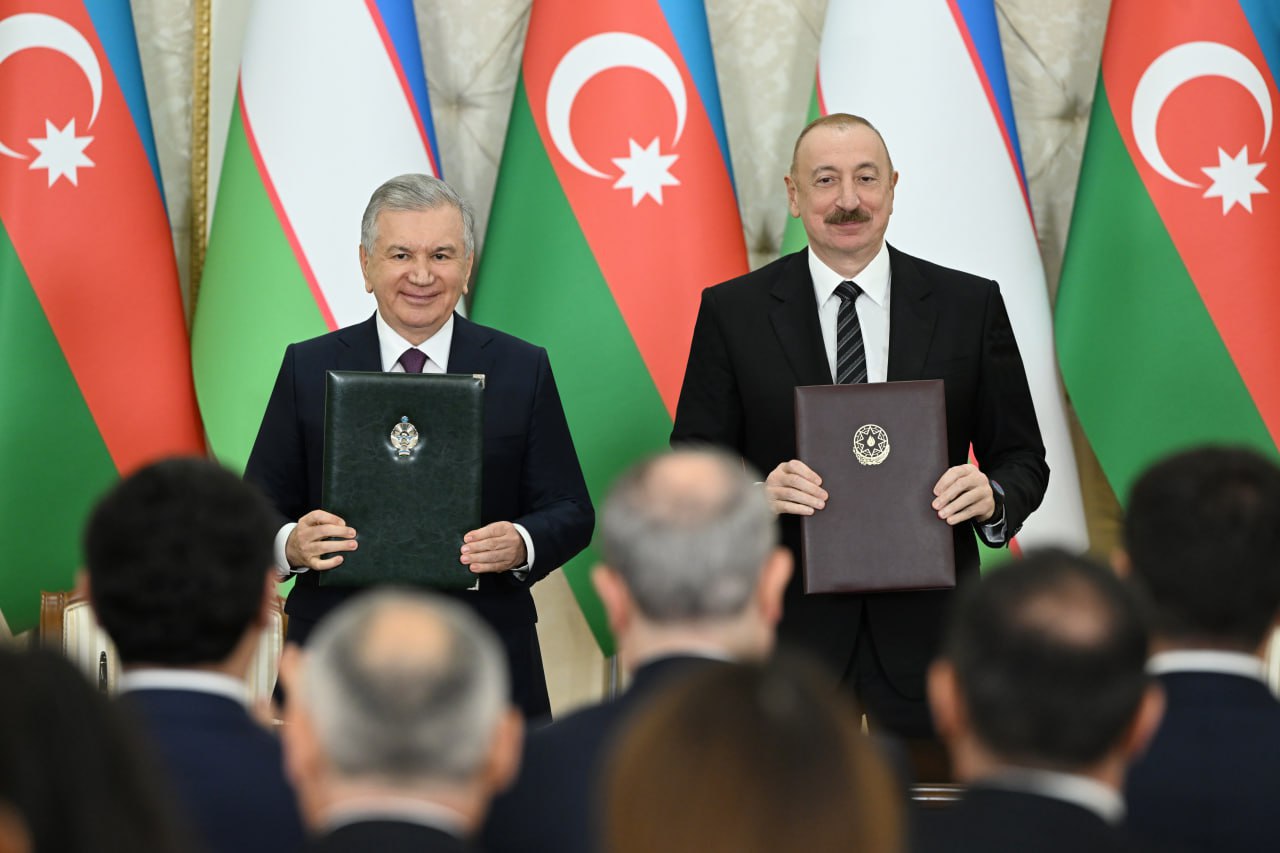
About a year ago, in August 2024, the two countries signed the Treaty on Allied Relations during President Aliyev’s visit to Tashkent. In May 2025, Uzbekistan ratified the treaty into law, formalizing and solidifying the partnership. The treaty outlines shared commitments: both states pledge to protect each other’s sovereignty and territorial integrity and agree not to enter into alliances or blocs that could oppose the other. It also fosters trust, mutual support, and provides a legal foundation for ongoing cooperation.
On the economic front, trade between the two nations is growing rapidly. Over the past few years, mutual trade has tripled, and there are plans to increase it to $1 billion by 2030. Transport and connectivity represent another key pillar, with both countries working to expand cooperation along the Middle Corridor, enhance logistics, improve cargo transit, and implement digital solutions in transportation.
Culturally and socially, people-to-people ties, educational exchanges, tourism, and sister-city partnerships are strengthening the alliance. These initiatives ensure that the relationship goes beyond politics and economics to encompass shared values.
In short, there is a solid political foundation underpinning Azerbaijan–Uzbekistan relations. Shared historical and cultural heritage, a strategic partnership built on mutual respect and trust, and joint commitment to regional transport and energy corridors and trade form the main pillars of this cooperation.
– In recent years, how have the reciprocal visits and high-level meetings between the presidents of the two countries shaped a new stage in bilateral relations?
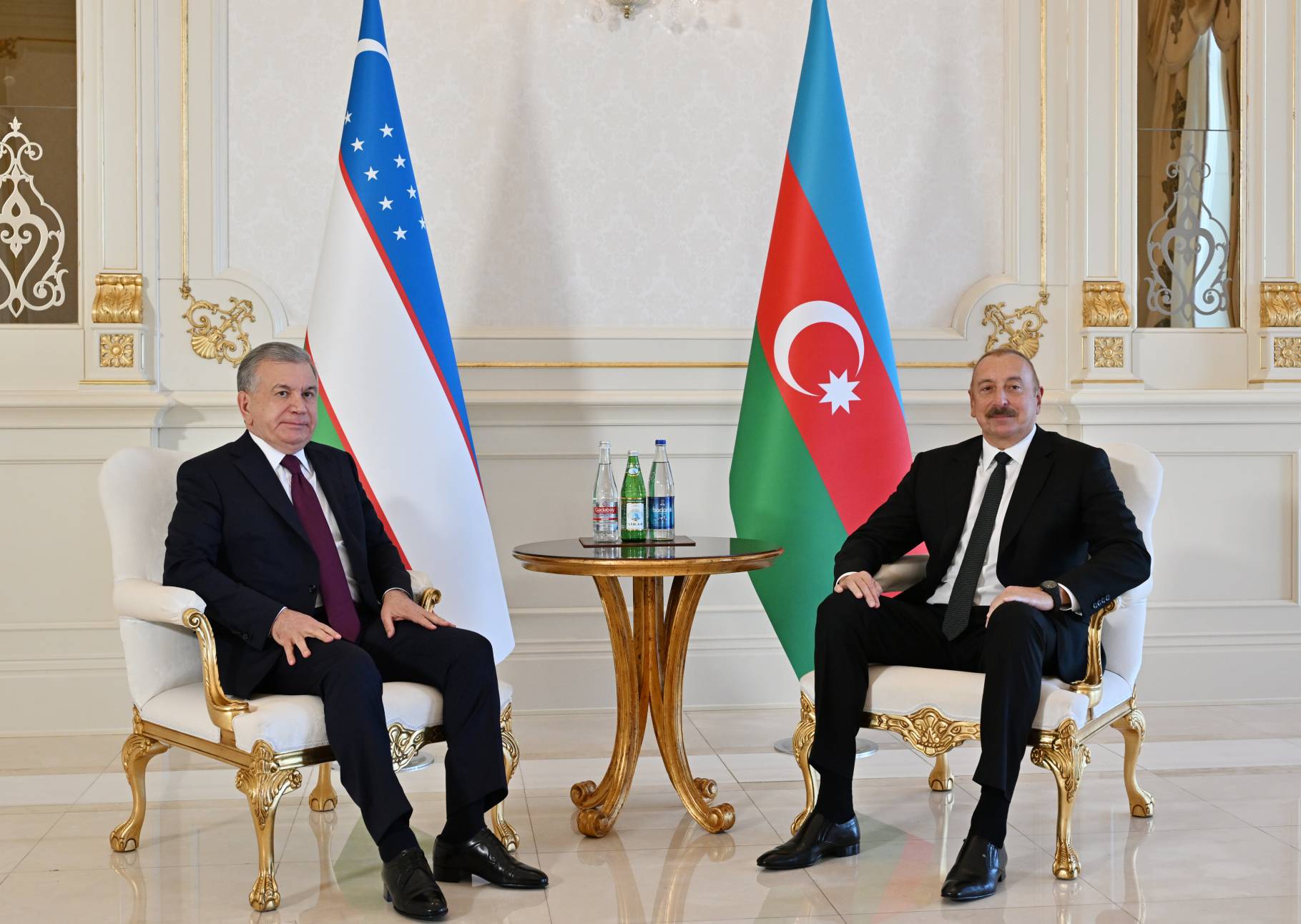
I believe every visit by the presidents has played a crucial role in strengthening ties between Azerbaijan and Uzbekistan. As I mentioned earlier, President Aliyev’s visit to Tashkent in August 2024, during which the Treaty on Allied Relations was signed, provides a strong example of how such reciprocal visits contribute to deeper and more sustained cooperation.
Source: President.Az
Furthermore, during President Mirziyoyev’s state visit to Azerbaijan in July 2025, a new Uzbek embassy was opened in Baku, and the presidents jointly laid the foundation stone for the New Uzbekistan Park. These events clearly illustrate the significance of high-level meetings and visits in advancing bilateral relations. They also show that the agreements between the two countries are not merely symbolic but are being implemented through concrete, practical actions.
– Within the framework of the Organization of Turkic States, what changes could Azerbaijan–Uzbekistan cooperation bring to the region’s political landscape?
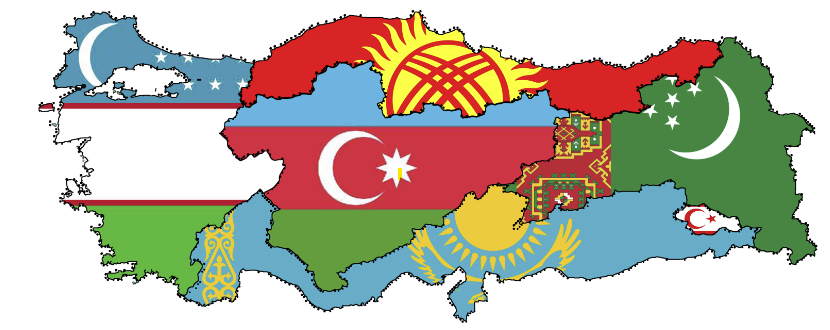
– Azerbaijan and Uzbekistan hold pivotal roles within the Organization of Turkic States (OTS), not only because of their strategic geographic positions but also due to their shared vision of making the Turkic world more self-reliant and interconnected. Their growing cooperation could significantly reduce the OTS region’s dependence on external powers by advancing logistics and connectivity projects that strengthen intra-Turkic ties.
Through closer collaboration between Baku and Tashkent, particularly under active OTS leadership, the Turkic states could develop the capacity to act as a unified regional pole, balancing the influence of Russia, China, and the West. Joint initiatives in both traditional and green energy, for example, could diversify energy routes and suppliers while providing the Turkic bloc with new leverage in energy diplomacy.
Source: Trend
Equally important are institutional initiatives, such as Uzbekistan’s proposal for a Permanent Council on Economic Partnership and the implementation of the Turkic Investment Fund (TIF). These projects have the potential to transform economic cooperation into a platform for deeper political solidarity, supporting trade, industry, and long-term investment across member states.
Moreover, projects like the Middle Corridor and the Zangazur Corridor connect Central Asia with the South Caucasus and beyond, positioning the OTS at the center of Eurasian transport networks. Cooperation between Azerbaijan and Uzbekistan is crucial in shaping a more interconnected and influential Turkic region.
– There have been media reports suggesting that Uzbekistan is establishing a presence or securing a logistical foothold in the Alat International Sea Trade Port zone. What is the real nature of this process, and how could such a move affect military-strategic cooperation between the two countries?
– Uzbekistan is one of only two double-landlocked countries in the world. The country has enormous economic potential and much to offer global markets. Its growing presence in the Alat International Sea Trade Port and the adjacent Free Economic Zone in Azerbaijan is a significant initiative, providing Uzbekistan with direct access to international markets via the Caspian Sea.

Moreover, the establishment of Uzbekistan’s warehouse in Alat could help streamline Uzbek exports through the Trans-Caspian International Trade Route or the Middle Corridor. However, I am not aware of any military-strategic cooperation linked to the Alat Port zone.
– The energy sector is strategic for both countries. How do you see the prospects for developing cooperation between the two states in oil, gas, and renewable energy?
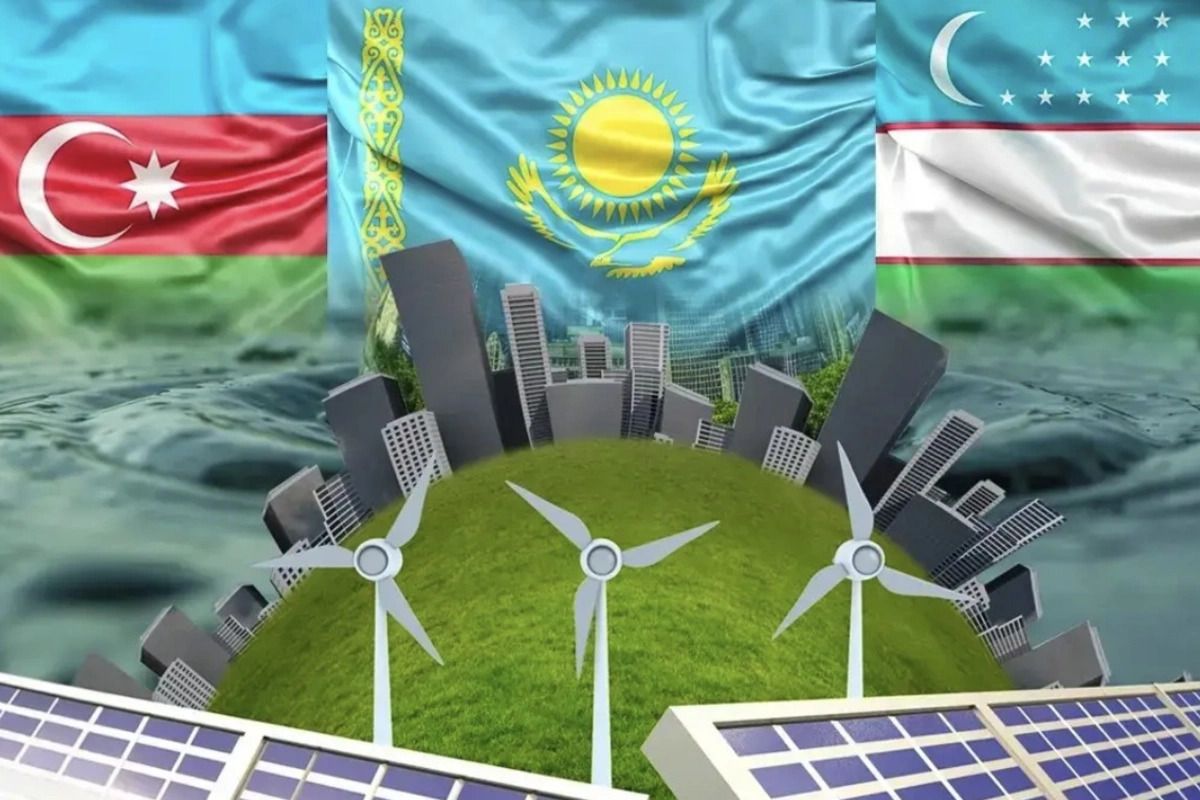
– As observed in recent meetings, the energy sector is one of the most promising areas of cooperation between Azerbaijan and Uzbekistan. Prospects for collaboration in oil, gas, and renewable energy are being shaped by two parallel forces: the ongoing demand for reliable fossil fuel supplies and the global shift toward decarbonization.
Source: TREND
In the short and medium term, both countries are likely to deepen ties through the diversification of oil and gas supply routes and sources, including potential investments in new pipelines and LNG infrastructure that enhance mutual energy security. At the same time, attention is turning toward integrating renewable energy into national grids through large-scale initiatives such as Green Energy Corridors, connecting solar and wind generation sites with export destinations. It is therefore difficult to provide definitive projections at this stage. Additionally, Uzbekistan is collaborating with Russia to build nuclear power plants in the country as part of its efforts to achieve energy independence.
– In the field of transport and logistics, particularly in the context of the Middle Corridor and Zangezur Corridor projects, what role can Uzbekistan–Azerbaijan cooperation play in the regional economic system?
– Cooperation between Uzbekistan and Azerbaijan plays a central role in shaping the future of Eurasian connectivity, through both the Middle Corridor and the proposed Zangezur Corridor. Together, these routes form the backbone of a new, diversified transport system linking Central Asia to Europe via the South Caucasus.
Uzbekistan, the most populous and industrially developed country in Central Asia, provides the cargo base and economic weight that give the Middle Corridor its real substance. Azerbaijan, in turn, offers the logistical gateway, with its modern Port of Baku and advanced rail links, connecting Central Asian goods to the Caspian, the South Caucasus, and beyond. Joint efforts to digitalize transit procedures, harmonize tariffs, and synchronize rail and ferry operations have already made the route faster and more commercially competitive.

Sourse: News.Az
The success of Azerbaijan’s Zangezur Corridor project could further strengthen this partnership by opening the shortest land route from Central Asia to Türkiye and Europe. This would also enhance connectivity among Turkic countries. Beyond trade efficiency, such cooperation supports the economic integration of the Turkic world, transforming Uzbekistan from a landlocked state into a land-connected hub and positioning both nations as key players in the emerging transcontinental logistics network.
– What is the potential for cooperation between Azerbaijan and Uzbekistan in ensuring regional security, peace, and stability, and what joint initiatives could be pursued in this regard?
– Since my research primarily focuses on economic and cultural aspects, I do not have extensive knowledge of security or military cooperation. However, as Azerbaijan and Uzbekistan continue to develop their connectivity, ensuring the safe transportation of goods remains crucial, as security is a key factor in attracting investment. Uzbekistan has made remarkable progress in this area. For example, in 2024, the country was recognized as the most peaceful nation in the region by the Safety Perceptions Index. Moreover, foreign investment has been increasing annually, largely due to Uzbekistan’s stability and investor-friendly environment.
Source: Kun.uz
Uzbekistan has also launched major initiatives to prevent Afghanistan’s isolation, acting as a mediator between the current Afghan administration and several European countries. These efforts have contributed to regional stability and peace. Similarly, Azerbaijan is working to strengthen ties with its neighbors. As President Mirziyoyev noted during the most recent Turkic States Summit, the peace agreement with Armenia is a milestone not only for Azerbaijan but for the entire Turkic world. Both countries can share expertise and develop joint initiatives to further enhance regional security, peace, and stability, creating a safer environment for trade, investment, and broader economic development.


Similar news