Japan, which sees the alliance as the linchpin of its defense and diplomacy, will also "proactively" consider ways to strengthen the deterrence and response capabilities of the alliance and maintain close communication with the United States, Chief Cabinet Secretary Yoshimasa Hayashi said, News.Az reports citing Kyodo news.
Japan expresses "full" trust in U.S. after Trump questions security pact
Creator: Kevin Lamarque | Credit: REUTERS
On Friday, Japan expressed its "full confidence" that the United States would honor its commitments under a bilateral security treaty to defend Japan, following President Donald Trump's questioning of the long-standing pact, describing it as nonreciprocal.
The comments came after Trump, in his first remarks on the pact since returning to the White House in January, told reporters, "I love Japan. We have a great relationship with Japan, but we have an interesting deal with Japan that we have to protect them, but they don't have to protect us."

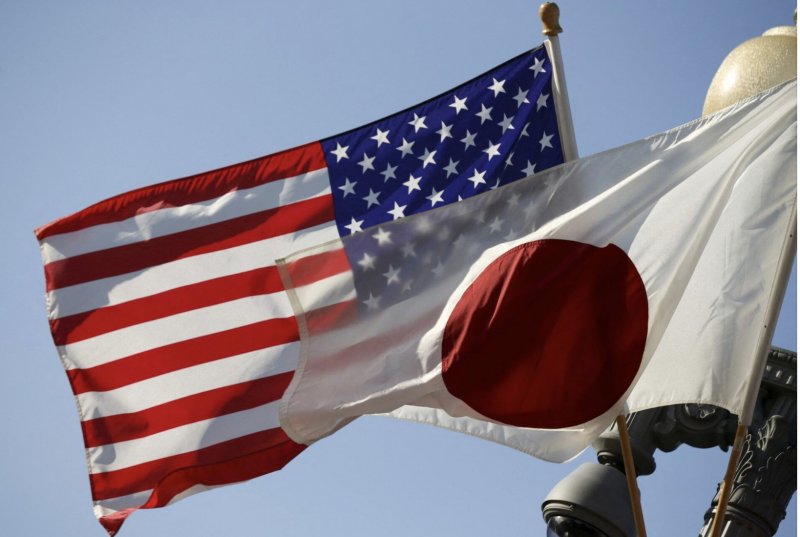
File photo taken in July 2024 shows the national flags of Japan and the United States flying at the U.S. Air Force's Kadena Air Base in Kadena, Okinawa Prefecture. (Kyodo)
In recent years, Japan and the United States have been beefing up the interoperability of the Self-Defense Forces and the U.S. military in the face of growing security threats from North Korea and China.
Prime Minister Shigeru Ishiba, well-versed in defense issues, rejected Trump's assertion, saying at a parliamentary session on Friday that the bilateral security pact is reciprocal, noting Japan is obliged to host U.S. bases.
The relationship between the two countries is not one in which the United States "unilaterally protects Japan," Ishiba added.

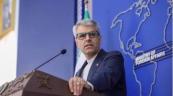
Japan's Chief Cabinet Secretary Yoshimasa Hayashi holds a press conference in Tokyo on March 7, 2025. (Kyodo)
Hayashi said the two nations can now "help each other seamlessly" in responding to various situations following a legal change enabling Japan, whose Constitution renounces war, to exercise the right of collective self-defense when certain conditions are met.
"We have full confidence that the United States will fulfill its obligations under the Japan-U.S. security treaty by using all available capabilities, including nuclear ones," Hayashi told a regular press briefing.
Defense Minister Gen Nakatani also echoed that view in his comments to reporters. Although he refrained from directly addressing Trump's remarks, he emphasized that Tokyo is "working to fundamentally strengthen" its defense capabilities toward the goal of increasing its defense spending to 2 percent of its gross domestic product in fiscal 2027.

File photo taken in October 2024 shows a Japan-U.S. joint drill on Tokunoshima, Kagoshima Prefecture. (Kyodo)
Trump's return has raised concerns that Washington will put more pressure on its allies to spend and do more to defend themselves. He has cast doubt on NATO while Elbridge Colby, tapped to be undersecretary of defense for policy in the Trump administration, urged Jaapn to increase its budget to 3 percent of GDP earlier this week.
Under the Japan-U.S. security pact, U.S. military forces are stationed in Japan, mostly in Okinawa, which is close to both Taiwan and the Senkaku Islands in the East China Sea. The Senkakus, administered by Japan but claimed by China, have been at the heart of tensions between Tokyo and Beijing.
In their first face-to-face summit in February, Ishiba confirmed with Trump that the uninhabited islands are covered by the security treaty.


Similar news