Kengerli reborn: Symbol of revival in Azerbaijan’s liberated lands


By Rovshan Sayyaroglu
May 10, 2025, has entered modern Azerbaijani history as a significant milestone in the implementation of the country’s large-scale strategy to restore the liberated territories. On this day, with the participation of the President of the Republic of Azerbaijan, Ilham Aliyev, the first stage of the reconstructed village of Kengerli in the Aghdam district was officially inaugurated. This event holds not only local but national importance, serving as a vivid demonstration of Azerbaijan’s determination to breathe new life into regions once devastated by occupation and war.
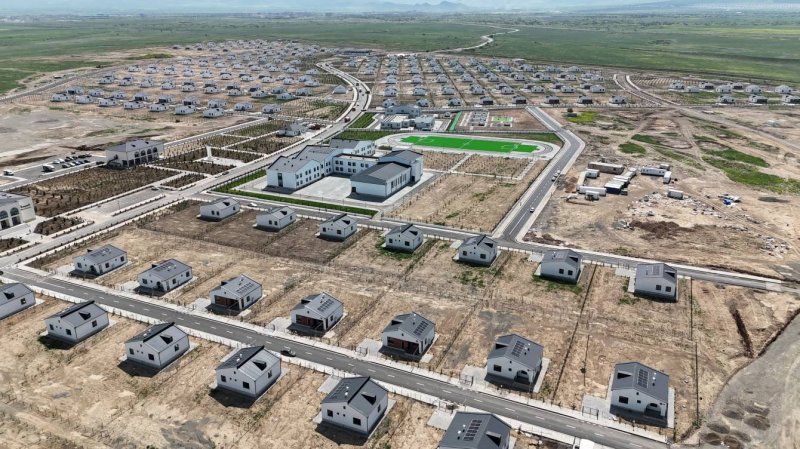
Located just six kilometers from the city of Aghdam—formerly one of the most developed and culturally vibrant centers of Karabakh—Kengerli has undergone a complete transformation. The foundation for the new village was laid by President Ilham Aliyev himself in October 2022. Today, over 177 hectares have been allocated for a comprehensive redevelopment project that includes the construction of 632 individual homes in two phases. Once completed, Kengerli will house more than 2,500 residents.
Special attention has been given not only to housing but also to the creation of a full-fledged, modern infrastructure. Social, educational, cultural institutions, healthcare facilities, service centers, and economic infrastructure have either been completed or are nearing completion. Water supply, electricity, gas, communications, and road systems are fully operational, transforming Kengerli into a sustainable and comfortable living environment built to modern standards.
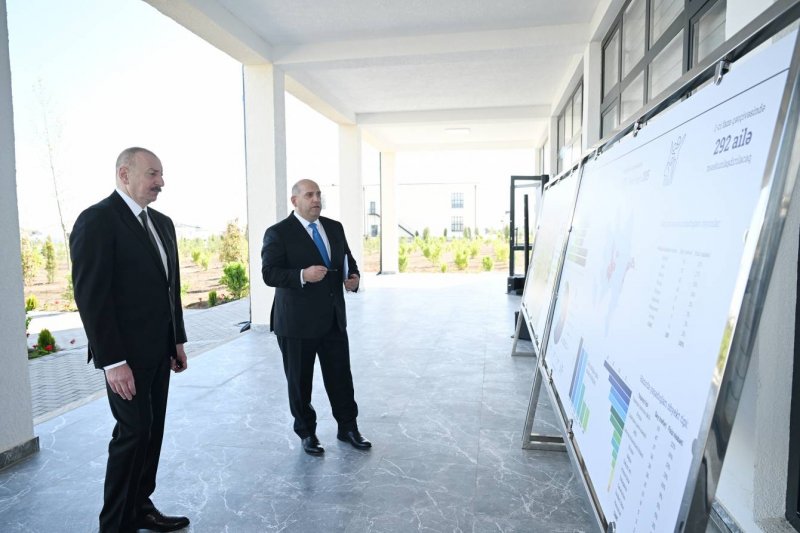
As part of the opening ceremony, President Aliyev also took part in inaugurating the Kengerli Secondary School, designed for 484 students, and a kindergarten for 120 children. These facilities are of strategic importance: they ensure access to quality education and early childhood development, support young families, and lay the foundation for long-term demographic growth.
The revival of Kengerli is taking place alongside a remarkable transformation across the entire Aghdam region. Once completely destroyed during Armenian occupation—and famously described by Western media as the “Hiroshima of the Caucasus”—the city of Aghdam is now experiencing a renaissance. On the same day, the Aghdam Mugham Center and the city’s railway station complex were officially opened, symbolizing the return of normal life and the region’s reintegration into the national transportation and cultural network.
The reconstruction of Kengerli is part of a much broader strategy. It is the 14th residential settlement to be restored on the liberated territories. Before it, the village of Sarijali was also rebuilt and resettled. These projects are clear proof that the "Great Return" program is not only being implemented effectively but is already producing visible and lasting results.
The liberated territories have also become a focus of international attention. Conferences, cultural forums, and academic events are now being held across the region. The newly established Karabakh University has begun operations in Khankendi, further cementing the region's role as an emerging intellectual and cultural hub. Meanwhile, construction is underway on a cable car that will connect Shusha and Khankendi, with similar projects planned for Lachin and Kalbajar. These initiatives are expected to provide a powerful boost to the region’s tourism, economic, and transport sectors.
Source: www.president.az
The restoration process is being carried out in a systematic and sustainable manner. First, territories are being cleared of mines and unexploded ordnance. Then, critical infrastructure such as roads, power lines, and water systems are developed. Azerbaijan is also implementing innovative approaches, including “smart village” and “smart city” concepts that incorporate digital technologies and environmentally friendly solutions—aligning with global sustainable development goals.
The opening of the Baku–Aghdam railway line, the launch of the new train station, and the start of operations at newly established industrial parks all represent a significant push for the region’s economic revival. These developments demonstrate that Azerbaijan is not merely reclaiming its lands but is succeeding in creating a viable and prosperous life upon them.
It is crucial to remember that during decades of occupation, the Armenian side deliberately destroyed these lands, rendering them uninhabitable. The occupiers knew that one day Azerbaijanis would return—and for that very reason, Aghdam and other areas were looted and demolished in a systematic and calculated way. But history has proven that no occupation lasts forever in the face of national will and state strength.
Today, as families return to Kengerli, as children's laughter fills the air in kindergartens, and as classrooms welcome students once again, it becomes clear that the revival of these territories is not a slogan—it is a tangible reality carved into stone, concrete, and human lives. It represents not just the restoration of buildings, but the return of hope, the renewal of faith in the future, and the reestablishment of historical justice.
Every completed home, every streetlight turned on, every tree planted in these lands is a victory of the human spirit over destruction, of creation over oblivion. It is living proof that the Azerbaijani people have not only returned to their ancestral lands, but are now building a future here with renewed determination and vision—one worthy of their children and grandchildren.
In this historic process, President Ilham Aliyev stands not only as the head of state but as a national leader who has united millions of citizens around the idea of restoring their homeland. Through his consistent and resolute leadership, Azerbaijan has turned grief into progress. The country has shown it can not only reclaim its territories but also infuse them with new life—vibrant, sustainable, and flourishing.
Thus, the reconstruction of Kengerli, along with other villages and cities in Karabakh and Eastern Zangazur, is not merely a government initiative. It is a grand historic project laying the foundations for future generations. It is a journey from tragedy to triumph, from ashes to life, from devastation to renewal. And Azerbaijan is confidently walking this path—step by step—toward full return, full restoration, and a complete national victory.
The material was prepared with the financial support of the Media Development Agency of the Republic of Azerbaijan.


Similar news