Armenia and Azerbaijan deepen normalization efforts despite regional tensions


.png)
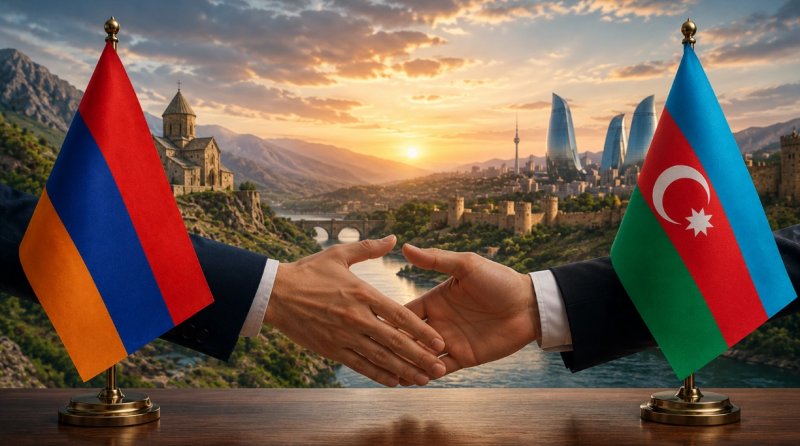
The normalization process between Armenia and Azerbaijan is entering what many observers describe as an unprecedented stage. Armenian Prime Minister Nikol Pashinyan has also acknowledged the positive momentum currently shaping relations between the two countries. One of the clearest signs of this shift was the participation of Azerbaijani President Ilham Aliyev in an event held in Armenia, albeit online — something that would have seemed impossible only a few years ago.
Importantly, the Azerbaijani president’s remarks focused less on bilateral disagreements and more on broader regional issues involving third parties. At the same time, direct dialogue between Baku and Yerevan continues to deepen, reflecting growing mutual understanding and a willingness to cooperate.
Another notable development is Pashinyan’s stated intention to attend a future European Political Community summit in Baku. Such steps demonstrate that sustainable peace depends primarily on Armenia and Azerbaijan themselves. Expanding economic cooperation, trade ties, and confidence-building measures could help ensure that external actors do not derail the normalization process.
Armenia and Azerbaijan are experiencing an unprecedented phase in the normalization of relations, according to Areg Kochinyan, president of the Armenian Council, who spoke to News.Az.
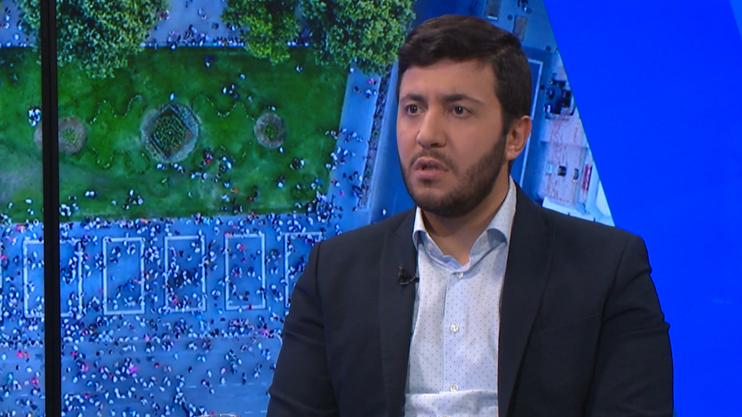
Photo: Areg Kochinyan, president of the Armenian Council
Kochinyan described the current dynamics between the two South Caucasus countries as historically significant, pointing in particular to Azerbaijani President Ilham Aliyev’s participation in an event held in Armenia, despite it taking place online.
“Overall, the current dynamics of normalization between Armenia and Azerbaijan can be described as unprecedented,” Kochinyan said. “The very fact that the President of Azerbaijan addressed an event held in Armenia, even in an online format, is unprecedented in itself.”
He noted that the issues raised by the Azerbaijani president during the event were not primarily related to bilateral disputes between Baku and Yerevan, but rather concerned third countries.
According to Kochinyan, despite ongoing regional sensitivities, Armenia and Azerbaijan have managed to establish a process characterised by a considerable degree of mutual understanding and the ability to engage constructively with one another.
“The main concerns of the Azerbaijani side are directed toward third countries, while at the bilateral level there is an ongoing process in which the parties demonstrate a fairly deep level of mutual understanding and the ability to work with one another,” he said.
Kochinyan also highlighted Armenian Prime Minister Nikol Pashinyan’s stated intention to participate in the European Political Community summit expected to take place in Baku, describing it as another important sign of the ongoing normalization process.
He stressed that external actors, including the European Union and Russia, should not be viewed as the determining factor in Armenian-Azerbaijani relations.
“Whether it is the European Union, the Russian Federation, or any other country, I believe the answer lies not in the actions or inaction of these countries, but in how Armenia and Azerbaijan respond to them,” Kochinyan said.
He argued that the future stability of the region depends on the ability of both countries to build relations based on their own interests rather than external agendas.
“If we manage to build relations in such a way that these relations are influenced primarily by our own countries rather than by third states with their own agendas and objectives, then such factors will not affect issues of war and peace or the development of constructive relations,” he noted.


Similar news