Kiko intensifies into Category 2 hurricane in East Pacific


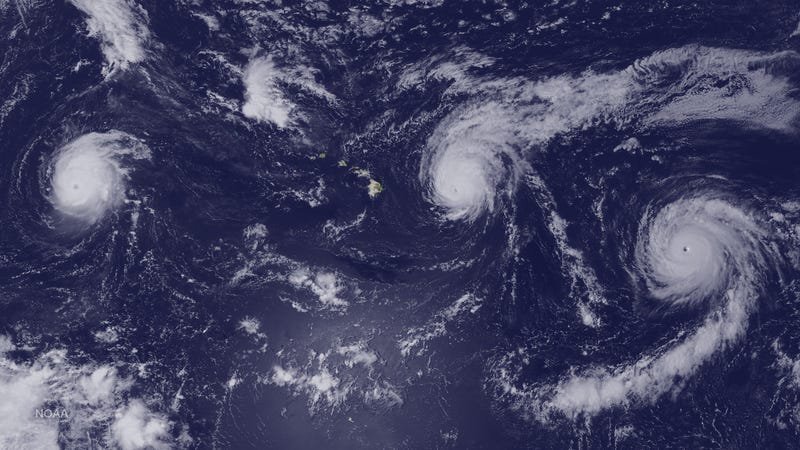
Hurricane Kiko intensified into a Category 2 storm in the East Pacific early this morning and is expected to continue gaining strength as it moves toward the Central Pacific.
According to the National Hurricane Center in Miami, as of 11 a.m., Kiko was packing maximum sustained winds of around 100 mph, with higher gusts, News.Az reports, citing foreign media.
The storm was located approximately 1,775 miles east of Hilo and was moving west at a slow pace of 6 mph.
Forecasters noted that Kiko remains a compact system, with hurricane-force winds extending up to 15 miles from its center and tropical storm-force winds reaching out up to 60 miles.
“Additional steady strengthening is expected during the next day or so, and Kiko is likely to become a major hurricane by Wednesday, ” the NHC’s midday update said.
The five-day forecast has Kiko weakening back to a Category 1 hurricane as it enters the Central Pacific on Saturday. “Between days 3 and 4, water temperatures along Kiko’s path will begin to decrease while it also moves into a progressively drier air mass, ” forecasters said.
They expect Kiko to continue on a general westward track through Wednesday before gradually turning west-northwest later this week.
Previous coverage Hurricane Kiko continued strengthening early today far east of Hawaii and is forecast to become a major hurricane by Wednesday night, but forecasters said it remains too early to determine any potential impacts on the islands.
As of 5 a.m. Kiko was located about 1, 815 miles east of Hilo, moving west at 6 mph with maximum sustained winds near 85 mph and higher gusts, according to the National Hurricane Center. Forecasters expect Kiko to continue on a general westward track through Wednesday before gradually turning west-northwest later this week.
Hurricane-force winds extend outward up to 15 miles from Kiko’s center and tropical-storm-force winds extend outward up to 60 miles.
Kiko is expected to cross into the Central Pacific basin Friday or Saturday, when forecasters will begin monitoring potential changes to the system’s path more closely.
“It remains too early to tell what, if any, impacts this system might have on local weather as it nears the islands early next week, ” the National Weather Service said in its Honolulu area forecast discussion.
Currently, no coastal watches or warnings are in effect.
A light to moderate flow of tradewinds continues to usher in a drier and more stable airmass throughout the Hawaiian islands, lingering through the remainder of the week. Overnight and into the early morning, expect occasional light showers across windward and mauka areas, especially around Kauai and the Big Island’s higher elevations.


Similar news