Korea to expand livestock exports to Vietnam's "incredibly huge" market


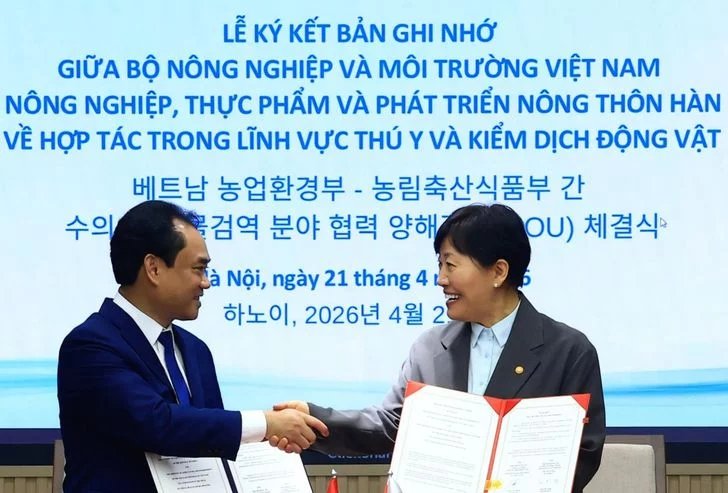
Korea will expand exports to Vietnam to include the country’s entire meat market, a step up from Cheong Wa Dae’s announcement last week that the two nations had reached a quarantine agreement for Korean poultry exports to the Southeast Asian economy.
In addition to meat products, Korean Agriculture, Food and Rural Affairs Minister Song Mi-ryung said Monday that bilateral trade will accelerate further by trading more fruit and exporting Korean food items to companies in Vietnam that operate canteens, News.Az reports, citing Korea Times.
Song said the Korean government is currently negotiating with Vietnam over Korean exports of heat-treated pork, hanwoo (Korean beef), duck and lamb. All of them have reached their third stage of discussion, she added.The minister said 13 Korean firms including Lotte, Maniker and NongHyup Moguchon have shown interest in expanding their global markets to Vietnam, as discussions continue to work toward new memorandums of understanding (MOUs).
RECOMMENDED STORIES
“The Vietnamese meat market is incredibly huge. Some of the Korean firms said mixing poultry and pork together produces better flavors. If the ongoing MOU negotiations reach a quarantine agreement, our livestock exports will definitely accelerate,” Song said during a press conference at the ministry’s offices in Sejong.
Song, who visited Vietnam from Tuesday to Thursday last week alongside President Lee Jae Myung’s state visit to the country, said she and Vietnamese Minister of Agriculture and Environment Trinh Viet Hung agreed to exchange local fruits grown in the two different climate conditions.“The Vietnamese minister suggested, ‘Wouldn’t it be great if we traded fruit since our climates are so different?’ So I proposed that Korea export kiwi and satsuma oranges. My counterpart mentioned lychee and passionfruit. This kind of mutually beneficial agricultural trade, hinging on differences in climate, is underway,” Song said.
“I also saw to it that our Korean melon export to Vietnam extend its trade closing month from May to June to increase its overall volume. We requested that to the Vietnamese government and it took only two days for them to get back to us with an agreement,” she added. Vietnam imported the world’s second-highest volume of the fruit — totaling $295,000 — last year, the first year Korean melons were exported there.Song said she also met representatives of Korean firms active in Vietnam, including Lotteria, Bonchon International and Dookki, and discussed ways to bolster their sales.
“There are nearly 10,000 Korean firms in Vietnam. I visited Hanwha Vision Vietnam in Bac Ninh Province. The company hired Ourhome to provide lunch and dinner to its 1,000 employees each day. That got me to pursue exporting Korean food ingredients to Korean companies in Vietnam with their own canteens,” she said. Ourhome is a Korean food service firm.
“Vietnam is Korea’s No. 4 global market for K-food exports. Although the rank may remain unchanged, I’m sure the MOUs being discussed will further accelerate our export volume.”
Song also said the ministry will launch a new task force this week dedicated to introducing renewable energy businesses in Vietnam’s agricultural regions to reduce Korea’s dependence on imported crude oil. The initiative, she said, derived from the Iran crisis, which has wrought havoc on global oil supplies, including Korea’s imports from the Middle East.
“Korean farmers here are voluntarily staging new self-sustaining movements to recycle and upcycle agricultural materials like livestock excrement or wasted vinyls to improve sustainable farming practices. It is time the government meets their demands by proposing promising agendas like excrement-based fuel pellets, bio gas, or utilizing farm lands and reservoirs to erect more photovoltaic panels,” Song said.
By Leyla Şirinova


Similar news