Xi moves to pull Kim back from Moscow’s orbit


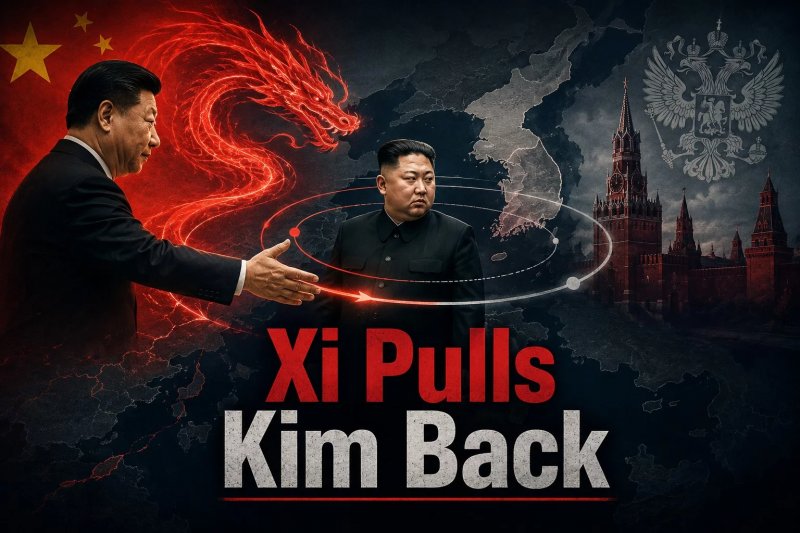
Chinese President Xi Jinping’s visit to North Korea is not merely a diplomatic gesture towards an old ally. It is a trip of major geopolitical significance, signalling that Beijing intends to reclaim its central role in relations with Pyongyang and prevent North Korea from moving too far into Moscow’s orbit.
Xi arrived in Pyongyang on 8 June for a two-day state visit. It is his first trip to North Korea in nearly seven years and his first foreign visit of 2026. The choice of destination is significant. Amid rising tensions in East Asia, growing military coordination between the United States and its allies, and deepening ties between North Korea and Russia, China has moved to underline that it remains North Korea’s most important external partner.
RECOMMENDED STORIES
In Pyongyang, Xi was received with full ceremonial honours. Kim Jong Un personally greeted him at the airport, together with his wife, Ri Sol-ju. The Chinese leader and his wife, Peng Liyuan, were welcomed with a red carpet, an honour guard, national anthems and a formal salute. North Korea clearly sought to demonstrate that relations with China remain strategic, even as its partnership with Russia has expanded rapidly in recent years.
The main purpose of the visit is the contest for influence over North Korea. For China, the DPRK is not only a symbolic ally but also a state of direct strategic importance. It serves as a buffer between China’s border and the US military presence in South Korea. Any instability in North Korea, any military escalation on the Korean Peninsula, or any sharp increase in another power’s influence in Pyongyang would directly affect China’s security interests.
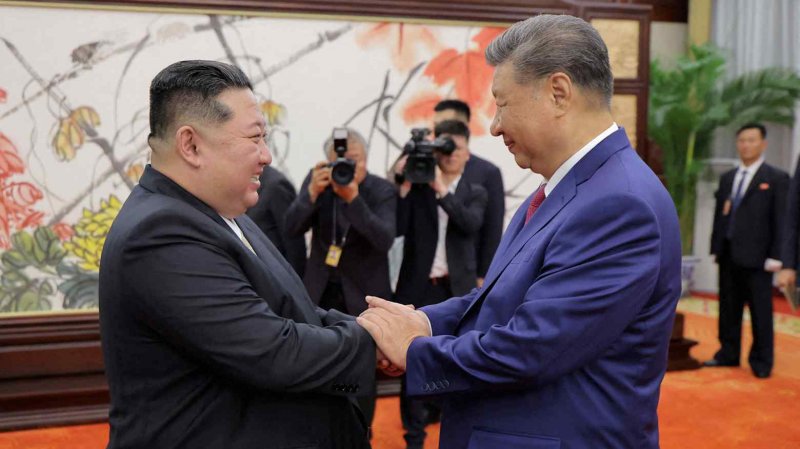 Source: Reuters
However, the balance has shifted in recent years. Since the start of the war in Ukraine, North Korea has moved significantly closer to Russia. Pyongyang has gained an opportunity to break out of diplomatic isolation, expand military and political cooperation with Moscow, and increase its own value in global politics. For Kim Jong Un, this is a favourable situation: he is no longer dependent solely on China and can manoeuvre between two powerful neighbours.
For Beijing, this is an uncomfortable development. China does not seek confrontation with Russia, but it also does not want Moscow to become North Korea’s primary patron. North Korea has historically been within China’s sphere of influence. If Pyongyang moves too far towards Russia, Beijing risks losing an important lever of influence on the Korean Peninsula and in its broader relations with the United States.
That is why Xi’s visit appears to be an attempt to restore balance. China is signalling to Kim Jong Un that Pyongyang can rely not only on Moscow but also on Beijing. At the same time, Xi is sending a message to the outside world: no discussion on the future of the Korean Peninsula, North Korea’s nuclear programme or regional security in Northeast Asia is possible without China.
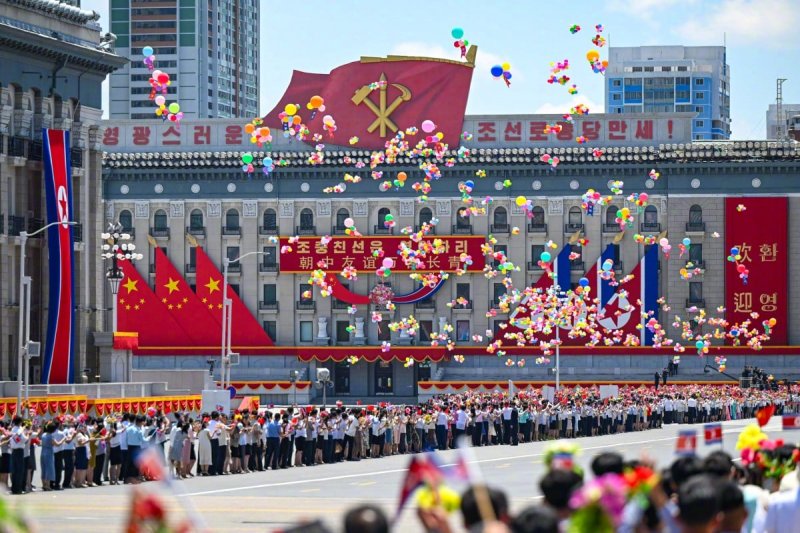 Source: Xinhua
The second major motive behind the visit is China’s response to the United States and its regional allies. Beijing is increasingly concerned about growing military cooperation between the United States, Japan and South Korea. Washington is deepening coordination with Seoul and Tokyo, Japan is expanding its defence capabilities, and the region is becoming one of the main arenas of strategic rivalry between China and the United States.
Against this backdrop, North Korea remains an important tool of pressure and deterrence for China. Beijing does not want war on the Korean Peninsula, but it also does not want the United States and its allies to operate freely near its borders. Xi’s visit to Pyongyang therefore also serves as a signal to Washington that China retains leverage in the region and can coordinate with North Korea on security issues.
It is no coincidence that, ahead of the visit, Xi spoke of the need to oppose hegemony, power politics and militarism. In Chinese diplomatic language, such phrases are typically directed at the United States and its allies. In this case, they take on particular significance: Beijing and Pyongyang are effectively signalling a shared position against US pressure in the region.
The third motive is North Korea’s nuclear programme. The DPRK continues to develop its nuclear arsenal and missile technology. Shortly before Xi’s visit, Kim Jong Un called for further expansion of the country’s nuclear capabilities. This creates a serious dilemma for China. On the one hand, Beijing officially supports a political settlement and denuclearisation of the Korean Peninsula. On the other hand, it does not want to exert excessive pressure on Pyongyang, as this could push North Korea even closer to Russia.
For this reason, Xi is unlikely to have arrived in Pyongyang with an ultimatum on the nuclear issue. His objective is different: to keep Kim Jong Un within China’s sphere of influence and preserve Beijing’s ability to shape his decisions. China understands that if North Korea begins to feel fully protected by Russia and by its own nuclear deterrent, Beijing’s influence will diminish.
The fourth motive is economic. Despite Pyongyang’s political rapprochement with Moscow, China remains North Korea’s key economic lifeline. Trade, food supplies, fuel deliveries, consumer goods and much of cross-border activity still depend on China. After years of pandemic-related restrictions, Beijing and Pyongyang have been gradually restoring transport and trade links. Xi’s visit could further accelerate this process.
For North Korea, this is particularly important. Kim Jong Un aims to demonstrate not only military strength but also signs of economic recovery. Pyongyang has been actively showcasing new construction, infrastructure modernisation and urban development projects. Chinese support could help reinforce this image of domestic stability.
For China, economic support for North Korea is not charity but a political investment. The greater Pyongyang’s dependence on Chinese trade, infrastructure and supplies, the more leverage Beijing has over Kim’s decisions. The economic agenda of the visit may therefore prove no less important than official declarations of friendship and strategic partnership.
The fifth motive is symbolism. The visit comes ahead of the 65th anniversary of the Treaty of Friendship, Cooperation and Mutual Assistance between China and North Korea. This treaty remains unique: North Korea is China’s only formal ally bound by such an agreement. For Beijing, it is a reminder of the special status of relations with Pyongyang, despite periods of tension and cooling.
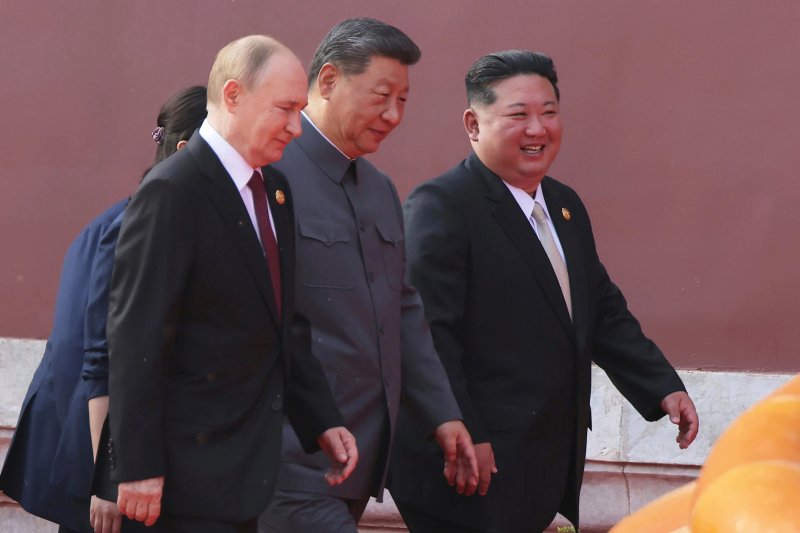 Source: AP
For Kim Jong Un, Xi’s arrival is also politically valuable. It allows him to demonstrate that North Korea is no longer isolated. First Moscow, now Beijing — Pyongyang is showcasing reception at the highest level by two major powers. This strengthens Kim’s position both domestically and internationally.
The visit may also carry a message for Donald Trump. If Washington eventually seeks to resume dialogue with Pyongyang, it will have to take Beijing’s position into account. China, in turn, gains additional leverage in talks with the United States: without China, neither the North Korean nuclear issue nor stability on the Korean Peninsula can be addressed.
Xi Jinping’s visit to North Korea therefore goes beyond diplomatic symbolism. It reflects Beijing’s effort to reassert itself at the centre of the geopolitical equation around Pyongyang. China aims to prevent North Korea from becoming overly dependent on Russia, strengthen its position in competition with the United States, retain influence over the nuclear agenda, and reaffirm that the DPRK remains a key component of its security architecture.
The main outcome of the visit may not lie in official statements, but in the visit itself. Xi Jinping personally signalled to Kim Jong Un, Moscow, Washington, Seoul and Tokyo that China does not intend to remain a passive observer. North Korea is once again becoming a central node in the geopolitical struggle in East Asia, and Beijing intends to remain firmly engaged in shaping that process.
By Samir Muradov


Similar news