Nato in talks to make it easier to shoot down Russian jets


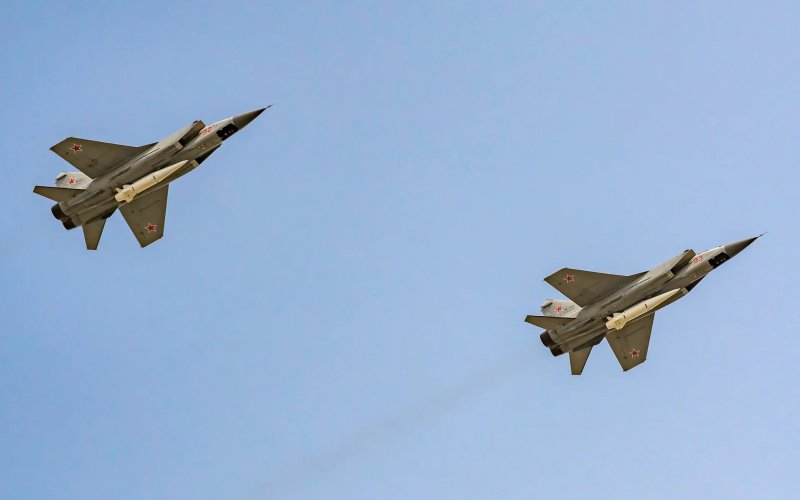
Nato is discussing new rules that could make it easier to shoot down Russian fighter jets, News.az reports citing Telegraph.
The talks are focused on drawing up a single set of guidelines for engaging enemy aircraft. Defence chiefs want Russian jets carrying ground-attack missiles over allied airspace to be possible targets.
The “weaponry and trajectory” of any aircraft would be the key determining factors for perceived threat, a source briefed on the discussions said.
Defence ministers are due to discuss the plans at a Nato meeting on Wednesday, as Europe faces increasing threats from Russian planes and drones.
Nato leaders, including Donald Trump, have advocated shooting down Russian aircraft that breach Nato’s airspace. But some member states fear a more robust stance could trigger conflict with the nuclear-powered rival.
Alexus Grynkewich, a US General and Nato’s Supreme Allied Commander Europe, has privately called for the creation of a “unified, single air and missile defence system” to streamline the response to any future provocations by Moscow.
This would help the alliance’s top general eliminate so-called “national caveats” that could stand in the way of him responding with force, sources said.
Many member states operate with differing rules of engagement while operating under the Nato umbrella. Some require their pilots to make visual confirmation of perceived threats before taking action, while others can act based on radar data.
This has prompted private discussions over what it would take for a Russian jet to be downed over allied territory.
Last month, Nato held two emergency Article 4 meetings after separate Russian provocations in both Estonia and Poland.
When three Russian MiG fighter jets crossed into Estonian airspace, modern Italian F-35s were scrambled to intercept them.
Moscow’s warplanes were ordered to leave before being escorted to the international border in what insiders have described as a “textbook” response to the incident.
Gen Grynkewich deemed the jets did not pose a threat to the alliance worthy of an armed response.
Intelligence assessments later showed that the jets were equipped with air-to-air missiles and did not make any attempt to lock on to the Nato fighters as they arrived on the scene.
A decision to engage the Russian jets could have been taken had they been carrying air-to-surface missiles or been on a more aggressive flight path, according to scenarios discussed inside Nato.
Another challenge faced by Gen Grynkewich is bringing together three separate air-defence missions on the alliance’s eastern flank.
As well as Eastern Sentry, launched after dozens of Russian drones violated Poland’s airspace, Baltic Sentry has been in operation since January.
Nato’s training and assistance mission for Ukraine, also based in Poland, has its own air-defence element.
Dozens of Nato allies are involved separately in each of these missions, leaving Gen Grynkewich with the headache of managing multiple national rules of engagement in what has been described internally as a “patchwork”.
The Germans, Spanish, and Italians are deemed to be on the more cautious side of the argument, despite playing major roles in each of the missions.
“Trying to create a more unified, single, integrated air and missile defence system makes sense, and in order for him to do that, he needs to get rid of as many national caveats as possible,” said a senior Nato diplomat. “We all have to look sharply and critically at whether those caveats still make sense.”
Defence ministers will discuss merging the three missions to give Gen Grynkewich more flexibility at a meeting in Brussels on Wednesday.
Mark Rutte, the Nato secretary general, said the discussions would “further strengthen our deterrence and defence posture, including in light of recent incidents”.
Estonia, supported by other Baltic nations, is calling for the existing air-policing missions to be upgraded to full-fledged air-defence operations.
More cautious countries have warned that this scenario could only be deployed in wartime because it involves shutting the skies to civilian traffic and downing any Russian jet that enters without question.
Raimond Kaljulaid, who chairs Estonia’s delegation to Nato’s parliamentary assembly, said: “When you say that you will only use force if there is a direct military threat you are in effect saying that under certain conditions violations of our airspace will have no consequences. That is weak.
“Instead, our public position should be that we have the right to respond in a manner that we see fit and Russia should know that perhaps next time our reaction will be something else.
“This idea that our reaction is dependent on the way the Russians are acting – threatening or not – could basically imply that you can also drive a tank across the border if it poses no immediate threat. Of course that is ridiculous. We either have borders or we don’t.”
In June, Nato F-35s or F-16 were deployed 29 times in response to Russian activity in the Baltic Sea, Denmark’s military said on Tuesday.
In the latest sign that Vladimir Putin is stepping up his war efforts, a new law likely to be backed by parliament will enable Russia to deploy around two million military reservists to fight in Ukraine if needed.
The amendment would allow reservists to be called up during peacetime, rather than only during martial law or when war has been declared. Russia calls its invasion of Ukraine a “special military operation” rather than a war.
That could allow Putin to avoid another round of unpopular mobilisation, something the authorities are anxious to avoid after a partial mobilisation drive in September 2022 prompted tens of thousands of Russian men to flee the country.
Mr Trump criticised Putin again during comments to reporters at the White House on Tuesday, saying the Russian leader was unwilling to end his war in Ukraine.
“Look, I’m very disappointed because Vladimir and I had a very good relationship, probably still do,” said the US president. “He’s got to really settle this war. And you know they have long lines waiting for gasoline in Russia right now. And, all of a sudden, his economy is going to collapse.”
Britain has delivered 85,000 drones to Ukraine this year, and is expecting to exceed its goal of 100,000, John Healey, the Defence Secretary, will tell Nato allies in Brussels on Wednesday.
For the first time, he will reveal that the country has invested £600m to accelerate deliveries of drones to the war-torn country.
Mr Healey will say that allies also need to “ramp up drone production to outmatch Putin’s escalation”.
The Defence Secretary will also confirm that RAF Typhoons will continue to fly as part of Eastern Sentry for the rest of the year, at least.


Similar news