Nvidia pushes Vera CPU sales to China amid AI shift


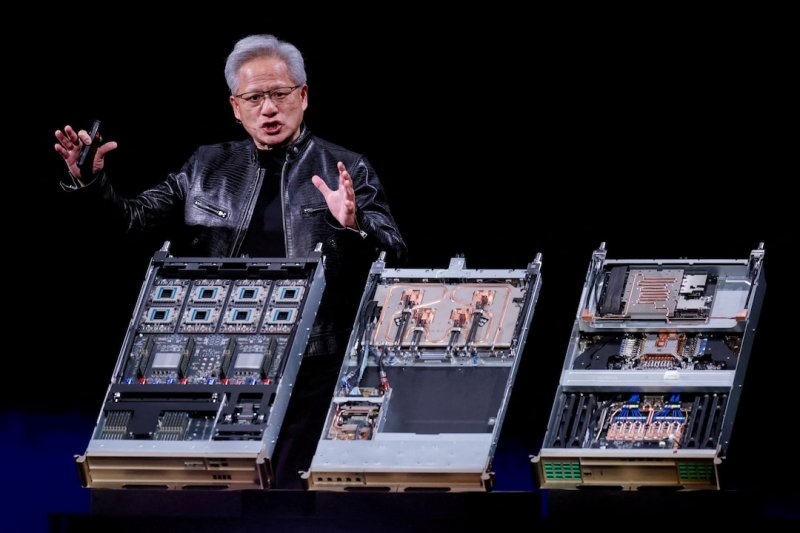
Nvidia has told Chinese customers that its new “Vera” central processing units (CPUs) for artificial intelligence data centres could be available as early as August, and that orders can now begin to be placed, according to three sources familiar with the matter, News.Az reports, citing Reuters.
The outreach highlights how the world’s most valuable company is rapidly shifting toward the new product line in an effort to revive its weakening position in China, where shipments of its second-most powerful AI chip, the H200, have been stalled for months.
Nvidia CEO Jensen Huang said in October that the company’s market share in China had effectively fallen to zero, citing U.S. export controls on advanced chips and Beijing’s push for technological self-reliance.
RECOMMENDED STORIES
The move also intensifies competition with CPU makers Intel and Advanced Micro Devices, which are both racing to expand supplies of server CPUs used in AI data centres.
According to the sources, some Chinese clients have shown interest in the Vera chip, Nvidia’s first standalone CPU designed for “agentic AI” systems that can perform tasks autonomously. The discussions are private, and the sources requested anonymity.
Now in full production, the Vera chip is designed for backend computing used by AI agents, with Nvidia claiming it runs up to 1.8 times faster than comparable rival processors.
When unveiling Vera in March, Huang said it was expected to become a multibillion-dollar business. At the time, Nvidia also said major cloud providers including Alibaba Group and ByteDance were collaborating on deployment, though it did not confirm when ordering would begin.
Nvidia declined to comment, while Alibaba and ByteDance did not respond to requests for comment.
One major Chinese cloud provider is reportedly planning an initial order of more than 300 servers, each containing two Vera CPUs, one source said. The company intends to first deploy the systems for testing before deciding on full-scale purchases based on performance results.
However, the sources added that it remains unclear whether early interest will translate into large-scale adoption, due in part to software ecosystem challenges, compatibility issues, and the difficulty of migrating workloads built on domestic AI chips.
According to SemiAnalysis, a single Vera processor will cost “well north” of $20,000 before bulk discounts, while a fully configured rack of 256 chips could cost around $10 million, depending on memory configuration.
Most initial shipments are expected to go into large, ready-to-install racks favored by hyperscale data centre operators, with simpler dual-CPU servers expected to ramp up later, the research firm said.
Nvidia expects Vera chip sales to generate $20 billion in revenue by the end of its fiscal year ending in January.
Interest in Vera also reflects a broader industry shift from AI model training toward inference computing—processing user queries—where CPUs and custom chips are increasingly competing with graphics processors.
This shift has contributed to a tightening CPU market. Intel has warned Chinese customers of server CPU delivery lead times of up to six months, while Advanced Micro Devices has said demand is exceeding forecasts and supply constraints are expected to continue.
Built on Arm architecture, Vera positions Nvidia in direct competition with Intel and Advanced Micro Devices, both of which have long dominated the CPU market through x86-based designs.
Selling CPUs in China may be less restricted than selling GPUs, which face stricter U.S. export controls. While Washington has licensed about 10 Chinese firms to purchase the H200 GPU, no deliveries have been made, and Chinese authorities have reportedly held back approvals as they encourage domestic alternatives.
According to one source, Chinese clients plan to initially deploy Vera chips in overseas data centres for testing purposes before considering broader adoption.
By Nijat Babayev


Similar news