Polish court absolves soldier in Belarus border shooting


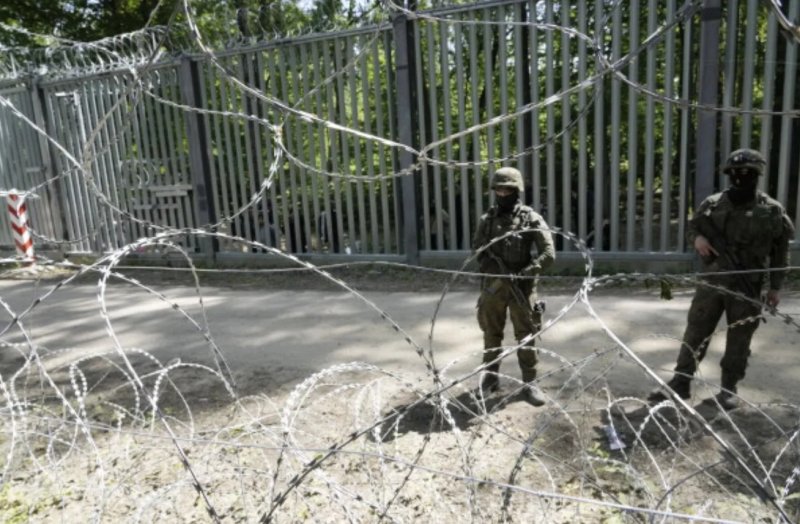
On Wednesday, the Military Garrison Court in the eastern city of Lublin acquitted a soldier, identified only as Karol S. under Polish privacy regulations, of charges of exceeding his authority and putting others at immediate risk of death or serious injury.
The case concerned an incident on March 25, 2024, near Dubicze Cerkiewne, close to Poland’s border with Belarus, News.Az reports, citing Polskie Radio.
RECOMMENDED STORIES
Prosecutors said illegal migrants had crossed into Poland after forcing apart sections of the steel border barrier with a car jack. They were carrying ladders intended to help them get past another obstacle, coils of razor wire.
According to the indictment filed by the District Prosecutor’s Office in Warsaw, the soldier fired 12 shots from his service weapon in the direction of a border road where migrants, Polish Border Guard officers, and soldiers were present.
Prosecutors said three bullets ricocheted after hitting a concrete post, the ground and wire, while the remaining nine passed near the group.
Karol S., then a 25-year-old private serving in the 1st Warsaw Armored Brigade, denied the charges throughout the investigation and trial.
He said he shouted warnings, including “Polish Army, stop” and “Polish Army, stop or I’ll shoot,” before firing what he described as warning and alarm shots in a safe direction, slightly upward, to alert nearby posts.
Judge Radosław Hunek said the court “absolutely did not agree with the indictment.”
He said soldiers have a constitutional and statutory duty to defend Poland’s borders and may use direct coercive measures firearms, and other weapons in a way proportionate to the threat.
“In the court’s view, the prosecutor’s position was entirely misguided,” Hunek said.
The judge also rejected the argument that soldiers assigned to support the Border Guard lose their military status and may use weapons only to raise an alarm or call for help.
He said such soldiers may receive certain Border Guard powers, such as checking documents or searching luggage, but that this does not remove their military powers regarding the use of weapons.
The court found that the shots were not aimed at Border Guard officers, soldiers or migrants.
Hunek said the accused was a well-trained soldier with very good shooting results.
“As the accused rightly explained, if he had wanted someone to die, someone would have died,” the judge said.
Hunek said Border Guard officers and soldiers formally listed as injured parties told the court they had not felt endangered and had not sought prosecution.
He added that expert opinions did not support the prosecution’s claim that anyone had been "exposed to loss of life or health."
The court also referred to the tense situation at the Belarus border, where Poland has accused the Belarusian authorities of encouraging migrants to cross illegally as a form of pressure on the European Union.
Hunek noted that attacks by people crossing the border illegally were frequent at the time, and that a Polish soldier was fatally stabbed a month later at the same location.
“The law cannot give way to lawlessness,” he said. “A person defending his country is not expected in such a situation to flee or call for support. A soldier was sent to the border to protect its inviolability, and that is what he did.”
After the verdict, Karol S. told reporters he had left military service but intended to return to the Polish army next year or join the French Foreign Legion.
He said the Polish state should better protect soldiers and officers serving at the border.
“I am not a politician. I was doing there what I had been appointed to do,” he said. He also appealed to politicians “not to try to do PR on our victory.”
The case became a major political issue in June 2024, when media reported that three soldiers had been detained over shots fired at the border.
It prompted a heated debate over when Polish soldiers may use firearms while protecting the frontier with Belarus, and whether they risk prosecution for doing so.
Karol S. had no previous criminal record. The verdict is subject to appeal.
By Ulviyya Salmanli


Similar news