Scientists probe link between Amazon gold mining and indigenous children’s disabilities


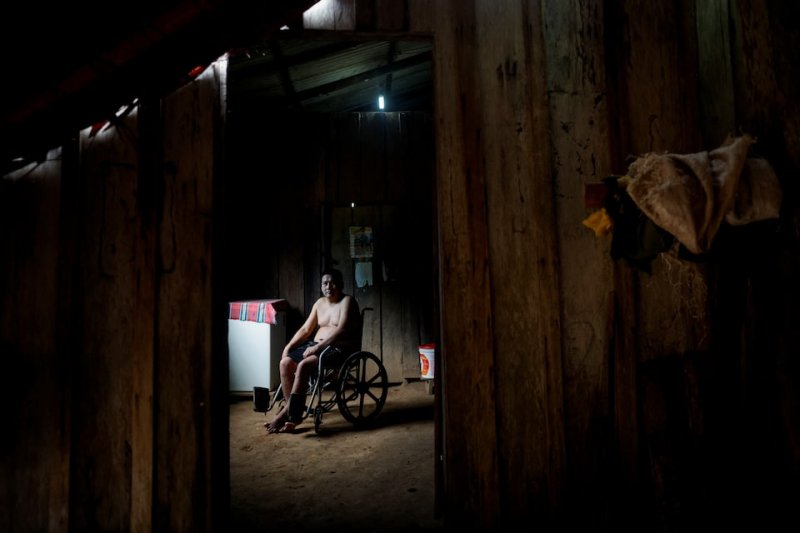
Deep in the Brazilian Amazon, scientists are racing to uncover whether mercury pollution from illegal gold mining is causing severe neurological disabilities among Indigenous children — a connection long feared by local communities but never proven by research.
For Indigenous families in the Munduruku territory, the river that once sustained generations has become a source of fear. Mercury used by miners to extract gold has contaminated waterways, fish, and — researchers now suspect — developing fetuses, News.Az reports, citing Reuters.
“Breast milk is no longer reliable,” said Alessandra Korap, a Munduruku leader, reflecting growing alarm among women afraid to become pregnant.
In the village of Sai Cinza, three-year-old Rany Ketlen has never been able to lift her head. She suffers severe muscle spasms and swallowing difficulties — symptoms doctors have not linked to genetics.
She is one of at least 36 cases of unexplained neurological disorders researchers have identified among Indigenous villagers in the region, mostly children, according to early findings from a major ongoing study by Fiocruz, Brazil’s leading public health institute.
If confirmed, this would be the first scientific proof connecting mercury exposure in Amazon Indigenous lands to developmental disabilities.
Many local families rely on fishing for survival. Carnivorous fish like surubim — a staple in the Munduruku diet — accumulate mercury. Rany’s family says she consumes fish broth regularly.
“We know it’s dangerous,” said her grandfather, who works in informal mining to support the family. “But without it, we go hungry.”
Community leaders say they cannot simply stop fishing — doing so would mean starvation.
The mercury contamination crisis is emerging as Brazil prepares to host COP30 — a United Nations climate summit focused on forests — underscoring the human toll of Amazon destruction.
Though authorities under President Luiz Inácio Lula da Silva have expelled thousands of miners from Indigenous territories since 2023, the mercury they left behind persists in soil, rivers, and even breast milk and placentas.
“Even if mining stopped today, mercury will remain for decades,” said Fiocruz researcher Paulo Basta, who has spent 30 years studying the issue.
Government monitoring shows mercury levels in some expectant mothers are five times the safe limit, and newborns in remote villages commonly test three times above safe thresholds.
While evidence strongly suggests a link, proving causation is immensely complex. Indigenous communities are often exposed to other risk factors, including limited healthcare access, infectious disease, and genetic vulnerabilities due to isolated populations.
Mercury also lacks a “signature” in the body, making long-term exposure difficult to trace.
“It’s a perfect crime — it leaves no trace,” said geneticist Fernando Kok.
Health workers warn that without urgent attention, entire generations could suffer permanent harm.
“This crisis could be forgotten,” said nurse Cleidiane Carvalho, who helps connect sick children with researchers. “Without science, it will be silenced forever.”
The Fiocruz study — following 176 pregnant women and their babies — is expected to conclude in late 2026. Its findings may determine whether Brazil confronts one of the Amazon’s most devastating public-health tragedies — or continues to overlook it.


Similar news