Shabaab captures two towns in central Somalia


Shabaab, Al Qaeda's branch in East Africa, has taken control of two towns in central Somalia over the past week.
On July 7, Shabaab ejected Somali government forces and allied clan militias, known as the Macawiisley, from the town of Moqokori in the Somali state of Hirshabelle, which comprises both the Hiraan and Middle Shabelle regions, News.Az reports citing foreign media.
The jihadist group regained control over the town following two months of heavy fighting, primarily against local militias.
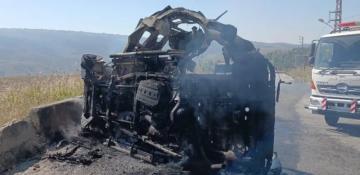
Shabaab seized Moqokori and a smaller nearby town, Gumare, following two coordinated suicide assaults, involving suicide car bombs, on government positions in each settlement. A member of the Federal Parliament of Somalia reportedly accused the government of “failing to send reinforcements or even basic supplies like water tankers, which he said left local defenders vulnerable to the insurgent assault,” the Somali Guardian reported.
One week later, on July 14, Shabaab fighters advanced on the town of Tardo, also in Hirshabelle to the south of Moqokori, and wrested control from Somali security forces and the Macawiisley, reportedly without firing a shot after the government forces withdrew.
Shabaab subsequently released several propaganda images from the town, showing its men freely walking the streets and engaging with locals. According to the group’s propaganda, the villagers welcomed its jihadists.
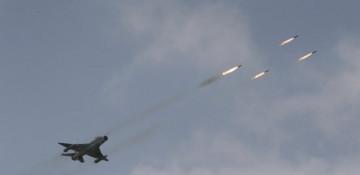
The day prior, on July 13, Somalia’s National Intelligence and Security Agency (NISA) reported that it killed seven Shabaab fighters in an airstrike on a village outside of the town of Buq-Aqable, to the west of Moqokori. The town is under Shabaab control, the Anadolu Agency reported. It is so far unclear who conducted the drone strike. NISA reported additional operations against Shabaab in nearby areas on July 14.
The towns of Moqokori, Tardo, and Buq-Aqable form a triangle of Shabaab control in central Somalia that allows the terror group to project power throughout Hiiran and most of Middle Shabelle. Moqokori is situated near the intersection of two major highways that meet at Bulobarde. Bulobarde, which remains under Somali government control, is also defended by Djiboutian troops from the African Union.
However, Shabaab has now essentially closed off Bulobarde and Jalalaqsi, a city to the south that is also host to a Djiboutian base, by road. Shabaab likely intends to encircle both areas to maintain pressure on the African Union and Somali troops and possibly mount offensives on those locales in the future.
As Shabaab gains ground in central Somalia, the US military, which has provided the Somali security forces with weapons, training, and air support, has mainly focused its renewed efforts in Somalia, including drastically increasing the rate of drone strikes, on rooting out the Islamic State in the northern region of Puntland.
According to data compiled by FDD’s Long War Journal, the US military has launched at least 32 airstrikes against the Islamic State so far this year in the Cal Miskaad Mountains, a known stronghold of the terror group southeast of the northern coastal city of Bosaso. In comparison, the US has launched at least an additional 22 airstrikes on Shabaab this year.
US Africa Command, which issues press releases announcing the strikes, has usually provided scant details on the nature of the targets or how many terrorists were killed or wounded during the operations, in addition to the exact number of strikes. As a result, it is difficult to know exactly how many strikes the US has conducted in Somalia since President Donald Trump retook office in January.


Similar news