Sri Lanka rate decision surprises markets as rupee slides


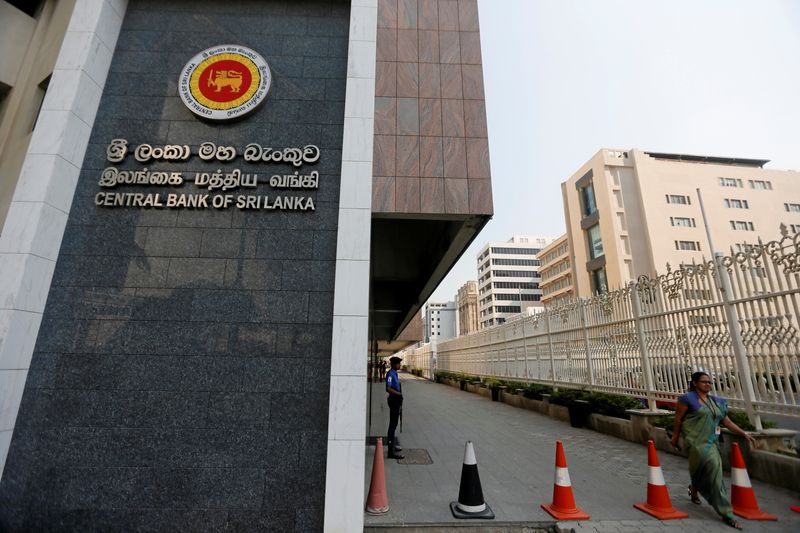
Sri Lanka's central bank shocked financial markets on Tuesday after raising its policy interest rate by a substantial 100 basis points, marking the largest increase in three years.
The move also signalled the likelihood of further monetary tightening as rising energy costs fuel inflation and continue to weaken the country’s currency, News.Az reports, citing Reuters.
The South Asian nation’s economic growth, which had only recently begun recovering from the devastating 2022 financial crisis that severely impacted businesses and households, is now expected to face additional pressure due to instability linked to the Middle East conflict.
The Central Bank of Sri Lanka (CBSL) increased its overnight policy rate to 8.75% from 7.75%, citing higher inflation and a depreciating rupee driven by the U.S.-Israeli war with Iran.
According to a Reuters poll, seven out of twelve economists and analysts had expected a much smaller adjustment of 25 basis points or slightly more, pointing to concerns over declining foreign reserves and the rupee’s 8.7% fall since early March.
“Today’s sharp increase in interest rates in Sri Lanka highlights the country’s vulnerability to the crisis in the Middle East, and is unlikely to be the last unless the crisis subsides soon,” said Capital Economics senior Asia economist Gareth Leather.
At a post-policy press briefing, CBSL Governor P. Nandalal Weerasinghe said the rate hike “will help stabilise exchange rates and inflation.” He added that the central bank “will take action to curb demand side pressures” after reviewing incoming economic data and emerging risks.
The CBSL stated that it expects both economic growth and inflation to continue at a “reasonable” pace going forward.
Sri Lanka, which is heavily dependent on imported fuel, has been severely affected by the energy shock stemming from the Iran war. This has led to a 40% increase in fuel prices, rationing measures, and even the introduction of public holidays on Wednesdays.
Annual inflation rose from 2.2% in March to 5.4% last month, although this remains significantly below the 70% peak reached during the earlier financial crisis.
The central bank said in a statement that headline inflation is expected to remain above the 5% target in the near term before gradually easing and stabilising around the target level.
Following the announcement, Sri Lanka’s stock market fell by 0.75%, while the rupee remained relatively stable, trading at around 321 per US dollar.
The rate hike on Tuesday was the first policy change since a 25-basis-point cut in May 2025, which had been introduced to support economic growth. It also marked the largest increase since a similar move during the height of the financial crisis in March 2023.
“This 100bps rate hike suggests the CBSL is shifting gears from supporting growth to defending price stability,” said CAL Group strategy head Udeeshan Jonas. He added that he has reduced his 2026 growth forecast to 3.0% from 4.2% following the decision.
In January, both the central bank and the finance ministry had projected economic growth of between 4% and 5%. Governor Weerasinghe said Sri Lanka could still achieve growth at the “lower band of the 4%-5%” range.
Emerging economies are increasingly affected by the Iran war, as rising energy prices, supply disruptions, and capital outflows heighten the risk of stagflation. India, which relies heavily on imported crude oil, is also facing pressure from a weakening rupee, prompting its central bank to intervene to support the currency.
Sri Lanka’s foreign reserves fell by 3.8% to $6.7 billion in April after the country spent $1.5 billion on fuel imports in the first four months of the year. Fuel costs surged by 77% in March alone.
The island nation, supported by a $2.9 billion International Monetary Fund (IMF) programme, is still recovering from the 2022 economic collapse caused by a severe shortage of foreign currency. The IMF executive board is scheduled to meet on Wednesday to decide on the approval of a $700 million tranche under the programme, which would further strengthen Sri Lanka’s reserves.
By Nijat Babayev


Similar news